
Table of Contents
- Why Plants Need Protection During Pressure Washing
- How to Protect Plants When Pressure Washing
- Pressure Washing Chemicals and Plants
- Choosing the Right Pressure and Method
- Rinsing Plants After Pressure Washing
- Post-Wash Plant Care and Recovery
- When to Call Professional Cleaners
- Frequently Asked Questions
Last Updated: October 12, 2026
Why Plants Need Protection During Pressure Washing
Protecting garden plants during pressure washing is essential because the force of the water can damage leaves, stems, and roots. High-pressure jets strip protective waxes from foliage, bruise delicate growth, and compact soil around plant bases. Even soft-leaved perennials and newly planted specimens suffer injury when exposed to direct spray.
Careless pressure washing can damage gardens. The harm isn't always immediate. Stressed plants may wilt days later, develop disease, or fail to recover through the growing season. Root damage from soil compaction can take months to manifest as stunted growth.
Chemical cleaners used in pressure washing also pose risks. Residues can alter soil pH, harm beneficial microorganisms, and poison delicate plant roots. Even biodegradable products can overwhelm a small planting area.
The good news is straightforward: with proper planning and technique, you can pressure wash driveways, patios, and other hard surfaces safely while your garden thrives. The key is understanding where the real risks lie and taking practical steps to prevent them.
How to Protect Plants When Pressure Washing
Physical Barriers and Coverings
The most effective way to protect plants is physical separation. A barrier between the spray and your plants stops damage before it starts.
Use sturdy coverings:
- Clear plastic sheeting secured with tape or pegs
- Plywood boards leaned against plant groups
- Heavy-duty cardboard panels for larger shrubs
- Hessian fabric for delicate specimens
Cover plants completely. Spray finds gaps, so ensure all exposed foliage is shielded. For climbing plants on walls or fences, drape protective fabric over the vines and secure it firmly at the base.
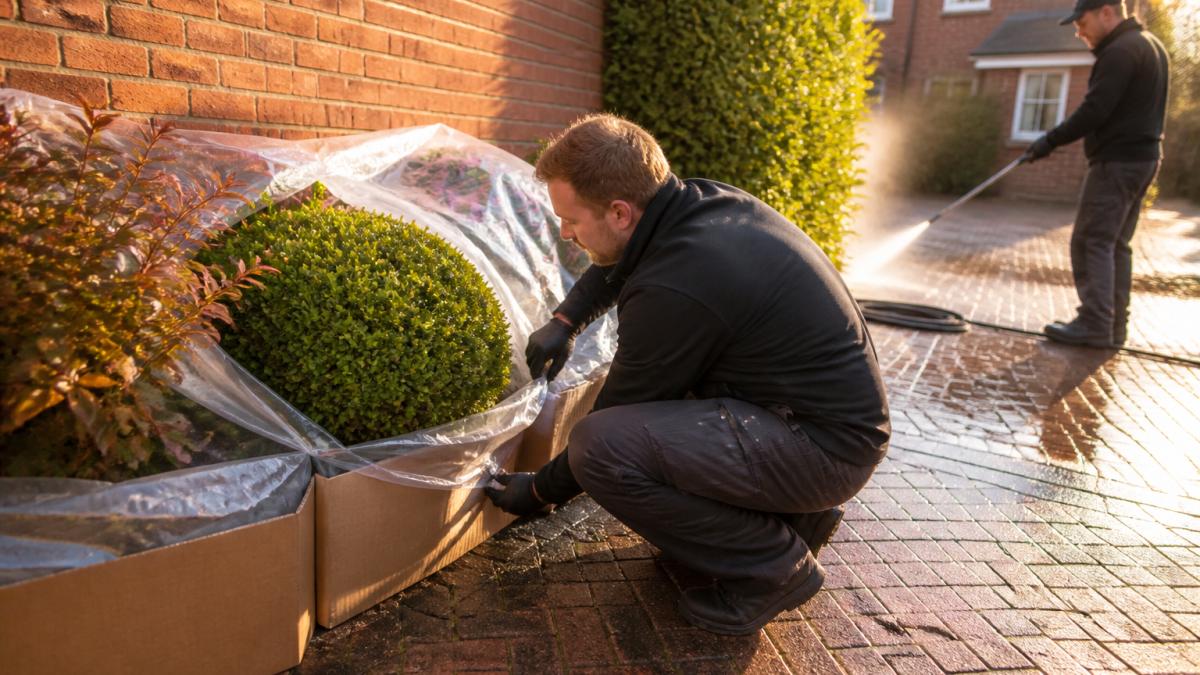
Cover soil and root zones too. Spread landscape fabric or cardboard around the base of shrubs and trees. This prevents soil compaction and protects shallow roots from the force of the water.
Allow time for setup. Rushing this step means missed gaps and preventable damage. Take an extra 15 minutes to ensure complete coverage.
Strategic Positioning and Nozzle Control
How you hold the pressure washer matters as much as what you cover. Technique prevents accidents even in areas where you're not using full protection.
Distance is your first defence. Keep the nozzle at least 30 centimetres away from any hard surface near plants. Increase distance to 45 centimetres for softer materials like render or wood. The further the nozzle, the wider the spray disperses and the less concentrated the force becomes.
Angle the spray downward and away. Never spray horizontally toward plant beds or vertically upward where water will cascade onto foliage. Aim the nozzle so water runs away from planted areas.
Use the correct nozzle type:
- 0-degree nozzles deliver the narrowest, most forceful jet. Avoid these near any plants.
- 15-degree nozzles offer more control than wide spray but still concentrate force. Use only on tough surfaces far from vegetation.
- 25-40 degree nozzles spread the water wider and reduce impact. Better for general work where plants are nearby.
Start with lower pressure and increase only if needed. Many outdoor surfaces clean effectively at moderate pressure. Testing on a hidden area first prevents surprises.
Pressure Washing Chemicals and Plants
Cleaning solutions used in pressure washing can harm plants if they run off into soil or contact foliage. Understanding which products are safe matters when your garden is close by.
Common pressure washing chemicals include:
- Alkaline degreasers for oil and grease removal
- Acidic cleaners for mineral deposits and rust stains
- Biocides to prevent regrowth of algae and moss
- Surfactants to improve cleaning action
Many of these are toxic to plants at full strength. Even diluted products can damage foliage or disrupt soil chemistry if they pool around root zones.
Safer chemical practices:
- Use the gentlest product that achieves your cleaning goal
- Avoid applying chemicals in rain or when soil is saturated (runoff risk is high)
- Keep chemical spray away from plants entirely
- Rinse treated surfaces thoroughly to remove residues before water reaches planted areas
- Consider treatment-led cleaning instead, where low-pressure water follows a pre-applied product
Treatment-led methods allow chemicals to work overnight before rinsing. This reduces the volume of chemical-laden water you're spraying and gives you better control over where the rinse water flows.
Heavy rainfall means runoff happens quickly. Plan chemical applications carefully and allow drying time before rain forecasts arrive.
Choosing the Right Pressure and Method
Not every exterior surface requires high-pressure washing. Matching your method to the surface and the task prevents unnecessary risk to nearby plants.
High-pressure washing (above 200 bar) suits tough jobs like removing caked mud from driveways or heavy algae from concrete. It's fast and effective but risky near vegetation.
Moderate pressure (100-200 bar) handles most routine cleaning. Patios, paving, and brick respond well without aggressive force.
Low-pressure washing (below 100 bar) works for delicate surfaces and areas where plants are close. It takes longer but minimises damage.
Soft Washing Around Garden Plants
Soft washing is the gentlest approach when plants are nearby. It combines low pressure with chemistry to clean effectively without force.
In soft washing around garden plants, water pressure stays below 80 bar. A pre-applied cleaning solution does the work. After the product sits for several hours, low-pressure rinsing removes the loosened dirt.
Why soft washing protects plants:
- Minimal water force means no bruising or soil compaction
- Chemical contact is controlled and brief
- You can shield plants during the rinse phase only, not during the entire process
- Results last longer because the root cause of dirt is treated, not just blasted away
Soft washing suits render walls, timber surfaces, and conservatory frames where plants grow near the building. It's also ideal for moss-covered roofs and gutters where you want to avoid stripping protective granules.
The trade-off is time. Soft washing takes longer than high-pressure work. For property owners where gardens are a key part of the property's appeal, the extra care is worth it.
Rinsing Plants After Pressure Washing
Once you've finished pressure washing, plants need careful attention during the final rinse stage. Residual chemicals and debris can still cause harm.