Low Pressure Roof Cleaning: Benefits & Best Practices
22 August 2026 · Last updated 30 August 2026 · Refresh Revive Exterior Cleaning — 10 years of industry experience and £5 million insurance cover.
Discover how low pressure roof cleaning protects tile integrity, removes moss and algae safely, and extends your roof's lifespan. Learn the benefits today.
Low pressure roof cleaning is the practice of removing organic matter, algae, moss, and lichen from roof surfaces using controlled water flow rates rather than high-pressure jets. Unlike traditional pressure washing, which can exceed 3000 PSI and cause surface damage, low pressure methods typically operate between 500-1500 PSI, or use even gentler biocide treatments combined with minimal water pressure (the CDC).
The approach prioritises tile integrity and longevity over speed. At Refresh Revive Exterior Cleaning, homeowners often assume all roof cleaning works the same way. It doesn't. The difference between a method that restores your roof and one that degrades it comes down to pressure regulation, nozzle selection, and understanding how your specific roof material responds to water and chemical treatment.
Low pressure roof cleaning works by allowing cleaning solutions to dwell on the roof surface, breaking down contaminant bonds chemically rather than physically blasting them away. This gentler approach is particularly important on delicate roofing materials like slate, clay tiles, and concrete tiles, where high-pressure damage can strip protective coatings and expose substrate to accelerated weathering.
Pro TipThe most common mistake homeowners make is assuming that "low pressure" means ineffective. In reality, properly applied low pressure methods remove moss and algae more completely than high-pressure approaches because they target the root growth without damaging the surface that the contaminants are anchored to.
Roof tiles are engineered to shed water, not resist erosion from concentrated jets. When high-pressure cleaning strikes a tile surface, it doesn't just remove moss, it can strip away the protective granule coating, compromise the tile's structural integrity, and create micro-fractures that accelerate moisture retention and freeze-thaw damage (peer-reviewed research).
Low pressure roof cleaning preserves this protective layer. The controlled flow rates allow cleaning solutions to work on the organic matter without subjecting the tile substrate to mechanical stress. This distinction matters enormously for your property's long-term value and weather resistance.
Tile integrity directly affects water ingress risk. Damaged tiles allow moisture to penetrate beneath the surface, where it can cause rot in timber support structures, promote mould growth in roof cavities, and eventually lead to structural damage requiring costly repairs. By choosing low pressure methods, you're protecting not just the visible surface but the entire roofing system beneath it.
Research shows that roof materials degrade faster when subjected to high-pressure treatment. The surface erosion from jet washing can be irreversible, once protective coatings are gone, they don't regenerate. Low pressure cleaning removes the contaminants while leaving the tile surface intact, meaning your roof maintains its defensive properties against the elements.
Key TakeawayThe real cost of high-pressure roof cleaning isn't the service fee, it's the accelerated degradation of your roof that follows. Low pressure methods can add years to your roof's functional lifespan.
Roof Tile Damage From Pressure Washing: What You Need to Know
High-pressure jet washing causes three primary types of damage to roof tiles: surface erosion, granule loss, and substrate exposure. Understanding these helps explain why low pressure roof cleaning is worth the investment.
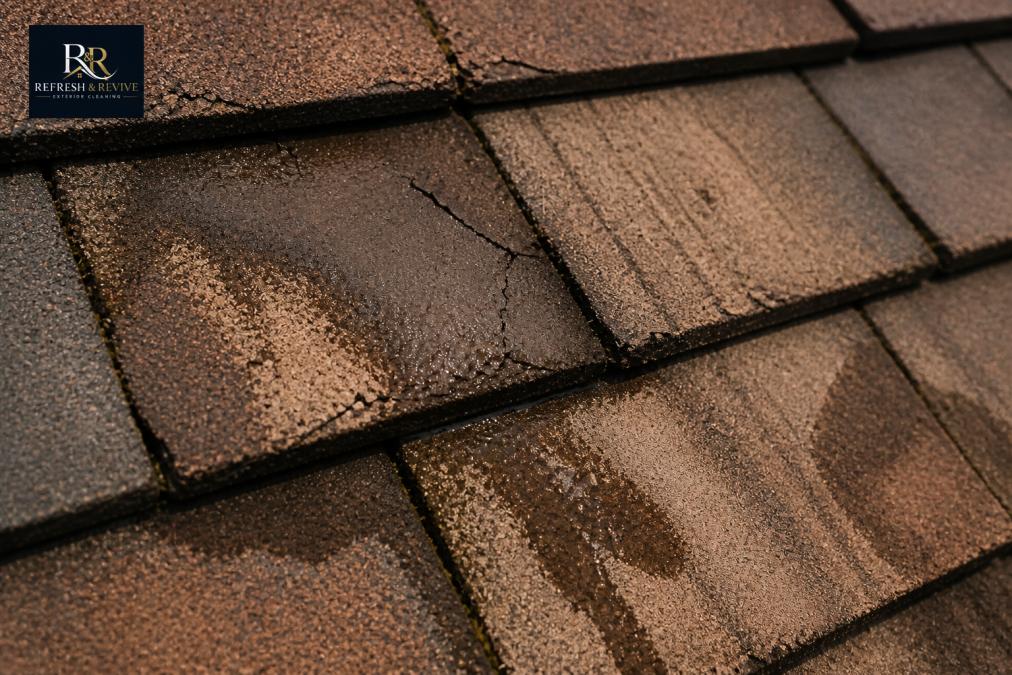
Close-up of roof tiles showing surface granule loss, hairline fractures, and water staining on areas damaged by high-pressure jet washing
Surface erosion occurs when the jet pressure exceeds the material's compressive strength. Concrete and clay tiles are porous materials, they're designed to absorb and shed water gradually, not to withstand concentrated force. A 3000 PSI jet creates a stress point that can chip, crack, or create divots in the tile surface.
Granule loss is particularly damaging on modern composite tiles and some concrete products. These tiles have a protective granule coating that provides UV protection and weather resistance. High-pressure washing blasts these granules away, exposing the substrate beneath to direct sunlight and moisture. Once granules are gone, the tile's lifespan shortens dramatically.
Substrate exposure is the long-term consequence. When the protective surface is compromised, water penetrates deeper into the tile material. During freeze-thaw cycles, this moisture expands and contracts, causing internal stress that leads to cracking and spalling. What started as a surface clean becomes a structural problem within one to three seasons.
Low pressure roof cleaning avoids these outcomes entirely. The chemical treatment breaks down organic matter at the molecular level, while the gentle water flow rinses away debris without mechanical impact. Your tiles remain intact, their protective coatings preserved, and your roof's weather resistance maintained.
Watch OutIf you've already had high-pressure cleaning done on your roof, watch for signs of damage: missing granules, visible cracks, discolouration patterns, or areas where moss returns unusually quickly. These indicate substrate exposure and warrant professional inspection to assess whether tile replacement is needed.
How to Remove Moss From Roof Safely
Moss removal requires understanding what you're dealing with. Moss doesn't just sit on the surface, it develops root-like structures (rhizoids) that anchor into the tile material and can penetrate into small cracks and surface imperfections. Effective removal must address both the visible growth and these anchoring structures.
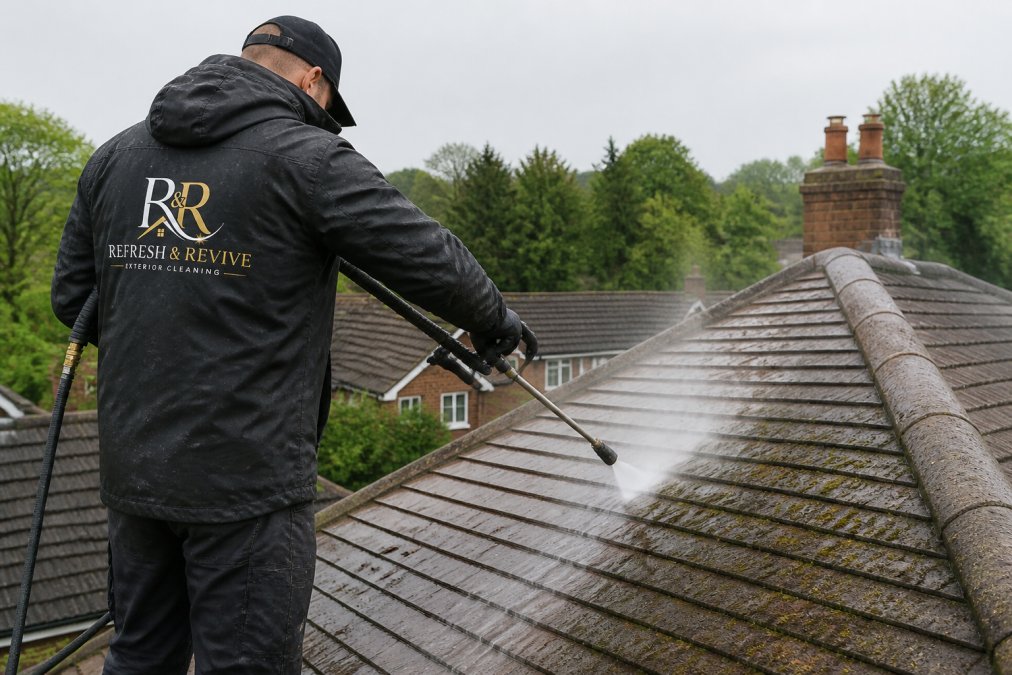
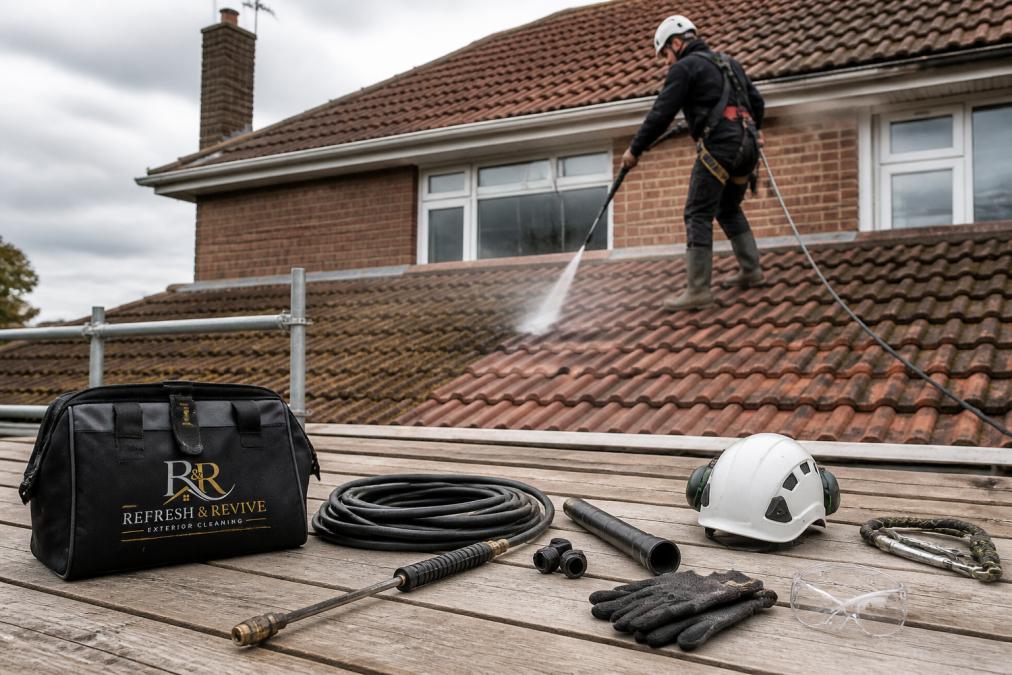
Professional technician performing low-pressure roof cleaning on moss-covered clay tiles using controlled spray nozzle and protective equipment, with clear safety harness visible
Low pressure roof cleaning removes moss through a two-stage process. First, a biodegradable biocide treatment is applied to the affected areas. This chemical solution penetrates the moss structure and kills the organism at the cellular level. The treatment is allowed to dwell on the surface for 24-48 hours, giving it time to work thoroughly.
Second, a gentle rinse with controlled water flow removes the dead moss, debris, and treatment residue. The pressure is kept low enough that it won't damage tiles but sufficient to clear away loosened contaminants. This approach ensures complete removal without the risk of substrate damage.
The key safety consideration is chemical handling. Any biocide treatment must follow the product label instructions, the manufacturer's safety data sheet, and applicable COSHH controls. Never mix cleaning chemicals or use improvised neutralisers after treatment, this creates unpredictable reactions and safety hazards. Always allow proper drying time before foot traffic on the roof, and ensure adequate ventilation in roof spaces during and after treatment.
For DIY approaches, pressure washers designed for roof cleaning operate at lower PSI than standard models, but they still carry risk if misused. Professional equipment includes pressure regulation, appropriate nozzles, and safety systems that domestic tools typically lack. The difference between a controlled application and accidental damage often comes down to equipment capability and operator experience.
Roof Cleaning Methods Comparison: Low Pressure vs. High Pressure
Understanding the practical differences between these methods helps explain why low pressure roof cleaning has become the industry standard for protecting roof longevity.
Method
Pressure Range
Dwell Time
Tile Risk
Effectiveness
Best For
High-Pressure Jet Washing
2500-4000+ PSI
Minimal
Very High
Fast initial results
Concrete/industrial surfaces
Low-Pressure with Biocide
500-1500 PSI + chemical
24-48 hours
Very Low
Complete, lasting removal
Residential tiles, delicate materials
Chemical-Only Treatment
No pressure, biocide only
48-72 hours
Minimal
Excellent for prevention
Maintenance and regrowth prevention
Manual Removal
None (hand tools)
Variable
Low
Labour-intensive
Small areas, spot treatment
High-pressure methods achieve visible results quickly. The force physically dislodges moss and debris, and the roof looks clean immediately. However, this speed comes at the cost of tile damage that may not be obvious for months or years. The structural compromise happens gradually as moisture penetrates and freeze-thaw cycles weaken the substrate.
Low pressure roof cleaning takes longer upfront but delivers superior long-term outcomes. The biocide kills the organism completely, including spores and rhizoid structures that high-pressure methods might leave behind. This is why moss regrowth is typically slower after low pressure treatment, the conditions that favoured moss growth have been chemically altered, not just physically cleared.
Chemical-only treatments without water pressure are increasingly popular for preventative maintenance. Once a roof has been professionally cleaned, regular biocide applications can suppress regrowth for extended periods, reducing the need for repeat deep cleaning. This approach minimises any water contact with the roof surface.
Best ForLow pressure roof cleaning is the best choice for residential properties with delicate tile materials, older roofs with existing wear, and situations where roof warranty protection is important. High-pressure methods may be appropriate only for concrete or industrial surfaces where tile integrity isn't a concern.
How Low Pressure Roof Cleaning Extends Roof Longevity
The relationship between cleaning method and roof lifespan is direct and measurable. A roof that's cleaned and maintained properly can function effectively for 40-50 years or longer (fema.gov). A roof subjected to high-pressure damage may need premature replacement at 20-30 years. The difference in cost and disruption is substantial.
Low pressure roof cleaning extends longevity by preventing the cascade of damage that begins with surface compromise. When tiles remain intact, they continue to shed water effectively. Moisture doesn't penetrate into the substrate. Freeze-thaw cycles don't create internal stress. The roof ages naturally rather than being accelerated by cleaning-related damage.
Preventative maintenance amplifies this benefit. Regular low-pressure biocide treatments suppress organic growth before it becomes heavy enough to require deep cleaning. This keeps the roof surface clean and dry, reducing moisture retention that promotes both biological growth and material degradation. A roof that stays dry ages more slowly than one that remains damp.
The protective coating on many modern tiles, whether factory-applied or added during installation, also lasts longer when the roof is cleaned gently. These coatings provide UV protection, water repellency, and aesthetic appeal. High-pressure cleaning strips them away. Low pressure methods preserve them, meaning your roof maintains its appearance and protective properties throughout its service life.
From a financial perspective, the cost of professional low pressure roof cleaning is an investment in extending the time before expensive tile replacement becomes necessary. Homeowners often ask whether they should clean their roof at all, or whether it's acceptable to leave moss and algae in place. The answer depends on climate and material type. In damp regions where organic growth is common, regular cleaning prevents moisture retention that accelerates deterioration. Neglecting cleaning in these conditions actually shortens roof life more than the cleaning itself would.
Improving Curb Appeal and Property Value With Low Pressure Cleaning
A moss-covered or discoloured roof significantly impacts how a property is perceived. Kerb appeal matters for both personal satisfaction and resale value. A clean roof signals that the property has been well-maintained, while visible organic growth suggests neglect or deferred maintenance.
Low pressure roof cleaning restores the original appearance of roof tiles, revealing the colour and finish that weathering and biological growth have obscured. This transformation is often dramatic, a roof that looked dark and aged suddenly appears bright and well-maintained. The effect extends to the entire property's visual impression.
Property valuation professionals consider roof condition as part of structural assessment. A clean roof with intact tiles and no visible damage supports higher valuations than one showing signs of wear, staining, or biological growth. Buyers conducting inspections often scrutinise roof condition carefully, as roof replacement is one of the most expensive maintenance items a homeowner can face. A visibly well-maintained roof reassures buyers that this major expense isn't imminent.
The psychological impact is significant too. Homeowners who invest in professional exterior cleaning often report increased satisfaction with their property's appearance and their own sense of home pride. This intangible benefit, enjoying your property more fully, is often overlooked when evaluating whether cleaning is worthwhile.
Low pressure roof cleaning also prevents the long-term staining that occurs when organic growth is left in place. Moss and algae produce pigments that can permanently discolour tiles if they remain for extended periods. Once this staining occurs, it doesn't wash away with cleaning, the colour change is chemical, not just surface contamination. Prevention through regular low-pressure cleaning maintains the original tile colour and finish.
For commercial properties, exterior appearance directly affects customer perception and business image. A property manager responsible for multiple sites knows that professional, well-maintained exteriors support tenant retention, support higher rental rates, and reflect positively on business operations. Regular low-pressure roof cleaning is part of maintaining that professional standard.
Protecting your roof's integrity while restoring its appearance requires a cleaning approach that balances effectiveness with material safety. Low pressure roof cleaning delivers both, removing organic matter and biological growth without the risk of tile damage that high-pressure methods create.
If your roof needs professional attention, request a no-obligation quotation from Refresh Revive Exterior Cleaning. Our White Glove Standard™ approach applies surface-specific, low-pressure methods that protect your tiles, your property, and your surrounding planting. We're fully insured, offer one working day turnaround on quotations, and provide maintenance visits to prevent regrowth, ensuring your roof stays clean and your investment stays protected.
=== FAQ ANSWERS (audit these too, same rules) ===
[1] Q: Can high-pressure jet washing damage roof tiles?
A: Yes. High-pressure jets strip protective granules from tiles, erode the surface, and force water into gaps, causing water ingress and structural damage. Low pressure roof cleaning avoids this by using controlled flow rates and gentler methods that remove organic matter, algae, and moss without surface degradation or compromising tile integrity.
[2] Q: How does low pressure cleaning remove moss and algae effectively?
A: Low pressure cleaning uses biodegradable solutions and controlled spray techniques to break down algae spores and organic matter at the root, rather than blasting them away. Biocide-based treatments, applied according to product labels and COSHH controls, kill contaminants and prevent regrowth. This method protects delicate roofing materials while delivering lasting results.
[3] Q: Is soft washing safe for all types of roof tiles?
A: Low pressure and soft washing methods are safe for most tile types when performed correctly, including slate, clay, concrete, and asphalt shingles. However, material compatibility varies. Older or damaged tiles, and properties with existing water ingress or structural concerns, require surface-specific assessment before treatment. Always consult a professional to confirm your roof's condition and suitability.
[4] Q: How long does low pressure roof cleaning last before moss returns?
A: Results depend on climate, shade, and moisture retention. Low pressure cleaning removes existing organic matter effectively, but preventative maintenance visits help stop regrowth. Regular inspections and timely biocide treatment extend roof longevity and keep your roofline clear longer than one-off cleaning. Professional maintenance schedules can be tailored to your property's needs.
Frequently Asked Questions
Can high-pressure jet washing damage roof tiles?
Yes. High-pressure jets strip protective granules from tiles, erode the surface, and force water into gaps, causing water ingress and structural damage. Low pressure roof cleaning avoids this by using controlled flow rates and gentler methods that remove organic matter, algae, and moss without surface degradation or compromising tile integrity.
How does low pressure cleaning remove moss and algae effectively?
Low pressure cleaning uses biodegradable solutions and controlled spray techniques to break down algae spores and organic matter at the root, rather than blasting them away. Biocide-based treatments, applied according to product labels and COSHH controls, kill contaminants and prevent regrowth. This method protects delicate roofing materials while delivering lasting results.
Is soft washing safe for all types of roof tiles?
Low pressure and soft washing methods are safe for most tile types when performed correctly, including slate, clay, concrete, and asphalt shingles. However, material compatibility varies. Older or damaged tiles, and properties with existing water ingress or structural concerns, require surface-specific assessment before treatment. Always consult a professional to confirm your roof's condition and suitability.
How long does low pressure roof cleaning last before moss returns?
Results depend on climate, shade, and moisture retention. Low pressure cleaning removes existing organic matter effectively, but preventative maintenance visits help stop regrowth. Regular inspections and timely biocide treatment extend roof longevity and keep your roofline clear longer than one-off cleaning. Professional maintenance schedules can be tailored to your property's needs.
Professional moss removal for roofs, patios and driveways. Learn which cleaning method suits the surface and when to seek a tailored quotation with care.