

Table of Contents
- Why Safe Roof Cleaning for Slate Tiles Matters
- Pressure Washing vs Soft Washing: Which Method for Slate?
- Slate Roof Moss Removal: Safe Techniques
- Safe Cleaning Solutions for Slate Roofs
- How Often Should a Slate Roof Be Cleaned?
- Signs of Damaged Slate Roof Tiles
- Common Mistakes to Avoid When Cleaning Slate Roofs
- When to Call a Professional for Slate Roof Cleaning
- Frequently Asked Questions
Last Updated: October 9, 2026
Why Safe Roof Cleaning for Slate Tiles Matters
Slate roofs are beautiful and durable, but they need careful attention. At Refresh Revive Exterior Cleaning, we understand that safe roof cleaning for slate tiles requires a completely different approach than cleaning other roofing materials. One mistake with high-pressure water can damage the slate, strip protective coatings, or create weak spots that leak.
The problem is that many homeowners and even some cleaning companies treat slate like concrete or asphalt. They don't. Slate is a natural stone that splits along grain lines. It's fragile in ways that aren't obvious until damage happens.
This guide explains exactly how to clean slate roofs safely. We'll cover the methods that work, the ones that don't, and when to call a professional.
Pressure Washing vs Soft Washing: Which Method for Slate?
The choice between pressure washing and soft washing determines whether your slate roof stays pristine or gets damaged. These are fundamentally different approaches, and slate demands the gentler option.
Understanding pressure washing risks on slate
Pressure washing uses high-force water jets to blast dirt away. It works brilliantly on concrete driveways and hard surfaces. On slate, it's dangerous.
High-pressure water can:
- Crack or split slate tiles along natural grain lines
- Force water behind tiles and under flashing, causing leaks
- Strip away the natural weathered patina that protects the stone
- Dislodge tiles from their moorings
- Create micro-fractures that weaken the roof structure
The pressure needed to remove stubborn moss and lichen from slate is the same pressure that damages it. You're choosing between incomplete cleaning and a damaged roof. Neither is acceptable.
Why soft washing protects your slate roof
Soft washing uses low-pressure water combined with biodegradable cleaning solutions. The chemicals do the work. The water rinses it away gently.
This approach:
- Removes moss, lichen, and algae without forcing water into crevices
- Protects the slate's surface and protective weathering layer
- Eliminates the root cause (spores and growth) rather than just scrubbing the surface
- Prevents regrowth for longer periods
- Keeps water from penetrating behind tiles
Safe roof cleaning for slate tiles means choosing soft washing over pressure washing. The results take slightly longer to achieve, but the roof stays intact.
At Refresh Revive Exterior Cleaning, we use controlled soft washing specifically designed for slate. The process is slower than blasting with high pressure, but it's the only method that respects the material.
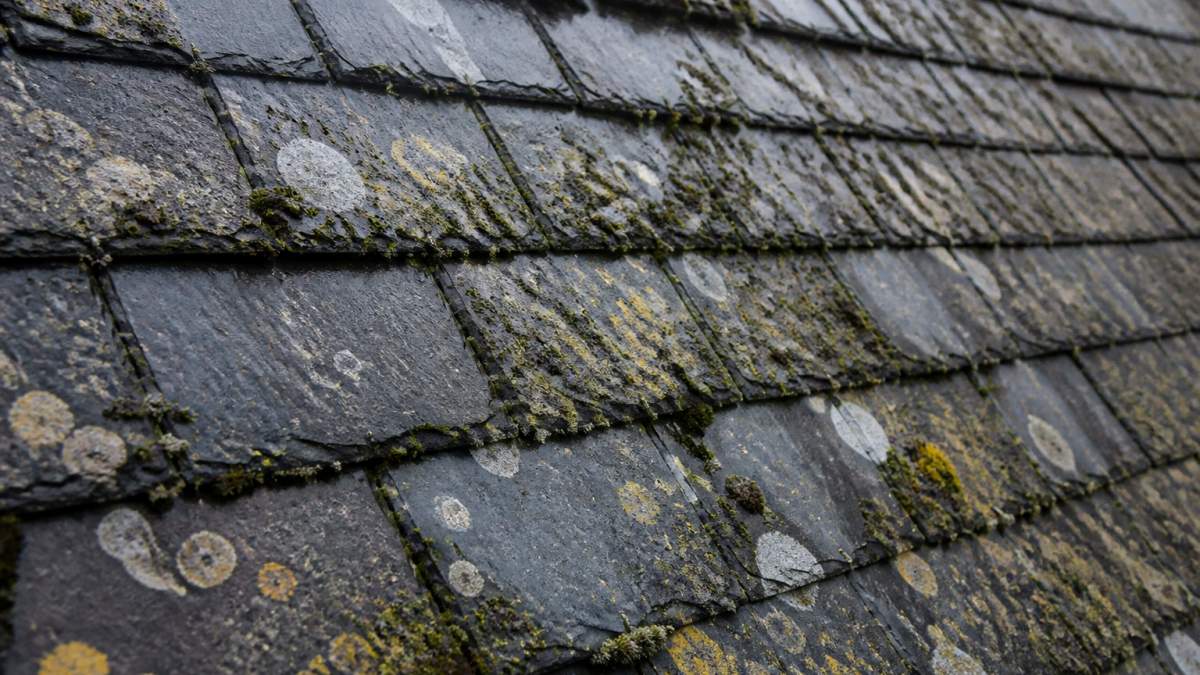
Slate Roof Moss Removal: Safe Techniques
Moss and lichen thrive on slate roofs, especially in damp climates like Lancashire and the North West. Removing them safely requires the right combination of technique and chemistry.
Treatment-led cleaning versus mechanical removal
Two approaches exist: treat the growth chemically, or remove it mechanically.
Mechanical removal means scrubbing, brushing, or using pressure to blast moss away. It's fast and visible. You see results immediately. But on slate, it damages the roof. Brushing can dislodge tiles. Pressure removes not just moss but also the protective surface of the stone.
Treatment-led cleaning applies a biocide solution that kills moss and lichen at the root. The growth dies, loosens, and washes away naturally with gentle rinsing. There's no scrubbing or forcing.
This approach takes 2-4 weeks for full results as the treatment works. But the roof remains undamaged. New growth is prevented for longer periods because the spores have been eliminated, not just the visible moss.
For slate roofs, treatment-led cleaning is the only responsible method.
Step-by-step soft washing process for moss
Here's how professional safe roof cleaning for slate tiles works:
Step 1: Inspect the roof Check for loose tiles, damaged flashing, and areas where water might pool. Identify whether you're dealing with moss, lichen, or algae; each responds best to slightly different treatments.
Step 2: Apply the biocide solution Spray a biodegradable biocide across the affected areas. This kills the growth at the cellular level. The solution is safe for plants below and for the slate itself.
Step 3: Let it work Wait for the treatment to work. The moss and lichen die and gradually loosen from the stone. You'll see a visible change as the green fades.
Step 4: Gentle rinse Use low-pressure water to rinse away the dead growth. This is nothing like pressure washing. It's more like a careful shower.
Step 5: Monitor and maintain Check the roof after rain. If new growth appears in the same spots, a second application may be needed. Many roofs stay clear for an extended period after treatment.
Safe Cleaning Solutions for Slate Roofs
What you apply to your slate roof matters as much as how you apply it. The wrong chemical can damage the stone or harm the environment.
What to use and what to avoid
Safe solutions for slate:
- Biodegradable biocides designed for roof cleaning
- Mild detergents mixed with water
These work by killing the organism causing the growth, not by scrubbing or stripping the surface.
Avoid entirely:
- Bleach (damages slate and harms plants)
- Harsh acids (etch the stone surface)
- Caustic soda (burns skin and damages vegetation)
- High-pressure rinses (even with mild cleaners)
- Oil-based treatments (leave residue and attract dirt)
The best cleaning solutions are biodegradable and pH-neutral. They won't harm your garden, gutters, or the slate itself. Professional cleaners use products tested specifically for slate compatibility.
How Often Should a Slate Roof Be Cleaned?
Frequency depends on your location, roof exposure, and how much shade and moisture the roof receives.
In Bolton and across Lancashire, where damp conditions favour moss and lichen growth, most slate roofs benefit from regular cleaning. Roofs in shadier areas or those facing north may need attention more frequently. Roofs in sunnier, drier spots might stay clean for longer.
After a professional soft wash treatment, you'll typically see an extended period of protection before regrowth becomes noticeable. Rather than waiting until moss covers the roof, preventative cleaning keeps the roof looking good and functioning properly.