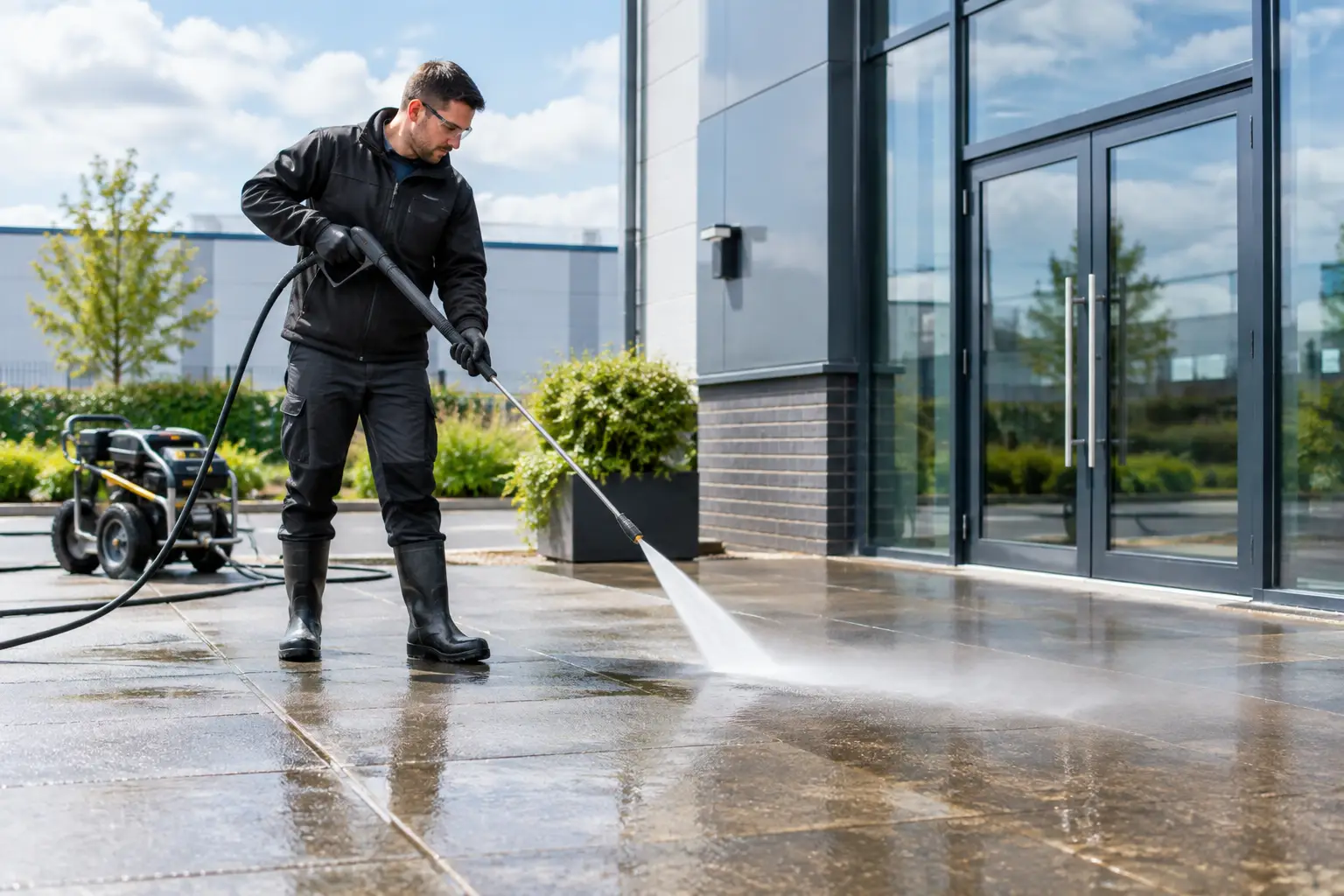
A marked entrance, slippery paving or algae-stained wall can make a well-managed site look neglected before anyone reaches reception. Commercial pressure washing Cheshire businesses and property managers can rely on is not simply a matter of applying more force. The right approach starts with the surface, the contamination and how the area is used, then selects a controlled cleaning method that improves presentation without taking cheap shortcuts.
For offices, retail premises, hospitality venues, care settings and managed blocks, exterior cleaning is part of routine property care. It helps maintain clear access routes, improves first impressions and deals with the build-up that Cheshire weather leaves behind on hard surfaces and external finishes.
What commercial pressure washing in Cheshire should address
Commercial exterior cleaning is most effective when it solves a defined problem. A paved entrance may be darkened by algae and foot traffic. A service yard can collect ingrained grime, tyre marks and organic debris. Communal paths around a block of flats may become slippery where shade and moisture allow algae to develop.
These are different conditions, even where the surfaces appear similar. Block paving, concrete, tarmac, natural stone, brickwork, rendered elevations and composite decking each need to be assessed in their own right. The cleaning method should reflect the material, its age and condition, the type of staining, drainage, nearby planting, pedestrian access and the practical requirements of the site.
High-pressure cleaning can be an effective option for durable hard surfaces, particularly where dirt and organic growth have become embedded. However, higher pressure is not automatically the better answer. On more delicate surfaces, weathered pointing, some render finishes or areas with unstable joints, a lower-pressure treatment or a different cleaning process may be more appropriate.
That distinction matters. A surface may look cleaner immediately after aggressive washing, yet be left with disturbed jointing, a patchy appearance or avoidable wear. Careful assessment is what separates a considered commercial clean from a quick wash-down.
The surface determines the cleaning method
Paving, entrances and pedestrian routes
Entrance paving often carries the greatest visual burden. It is exposed to rain, leaf debris, shoes, deliveries and constant use. Algae, moss, black spotting and general staining can make it look dull and, in wet conditions, affect grip underfoot.
Controlled pressure washing can lift accumulated surface contamination from suitable paving. Where block paving is cleaned, attention should also be given to the condition of the joints. Cleaning can remove loose material from between blocks, so re-sanding may be a sensible part of restoring the surface where appropriate. The aim is not merely a brighter colour on the day, but a tidy, stable finish that suits the area’s use.
Natural stone requires more caution. Indian sandstone, for example, can vary in density and condition, and its natural character should not be treated as dirt to be stripped away. The suitable method depends on the stone, staining and previous treatments, rather than a one-setting approach.
Walls, brickwork and render
Dirty external walls can affect how an entire building is perceived. Traffic film, algae, weather staining and biological growth often show most clearly on lighter render, painted finishes and sheltered elevations. Yet walls are also among the surfaces least suited to indiscriminate high pressure.
A soft washing or low-pressure treatment may be the more suitable route for render and sensitive finishes. This allows the cleaning process to be matched to the surface rather than forcing contamination away at high pressure. K Rend and silicone render, in particular, should be approached with care because the visible finish can be affected by unsuitable cleaning.
Brickwork also varies considerably. Sound brick and mortar may tolerate a more active clean than a weathered wall with fragile pointing, but the condition has to be established first. The objective is a cleaner elevation that still looks appropriate to the building, not a surface that appears harshly overworked.
Service areas, yards and loading spaces
Back-of-house areas are easy to defer because they are less visible to visitors, but they still influence day-to-day operations. Dirt, leaves, algae and surface deposits can build up around bins, gates, delivery points and staff entrances. These areas may need a more practical cleaning plan, with access, drainage and business activity considered before work begins.
Hot-water capability can be useful where suitable for heavier grime on appropriate surfaces. Even then, the method is selected after assessing the material and contamination. A cleaning plan should account for what can be moved, which areas need to remain accessible, and how wash water and debris will be managed on site.
Why a site assessment is worth the effort
Commercial properties rarely have one surface and one problem. A hotel entrance may combine stone paving, rendered walls, glazing and metalwork. A retail unit may have a forecourt, brick façade, painted signage areas and a rear delivery route. A managed development may include paths, steps, bin-store surrounds and communal patios.