

Table of Contents
- Is Power Washing a Driveway Worth It? The Short Answer
- What You Actually Gain From Cleaning Your Driveway
- The Real Risks of Power Washing a Driveway
- Pressure Washing Block Paving: What Changes on Jointed Surfaces
- Driveway Moss and Weed Removal That Lasts
- How Often to Clean a Driveway in the UK
- Re-Sanding Block Paving After Cleaning: The Step Most People Skip
- When Power Washing Is the Wrong Method
- Is It Worth Paying a Professional, or Doing It Yourself?
- Conclusion: Making the Call on Your Driveway
- Frequently Asked Questions
Last Updated: October 14, 2026
Is Power Washing a Driveway Worth It? The Short Answer
For most driveways, yes. Is power washing a driveway worth it? It is when the surface is sound, the method matches the material, and the clean is finished properly with re-sanding or sealing where needed. Skip it, or choose the wrong method, and you risk stripped joints, lifted blocks, and moss back within weeks.
That is the honest version. The longer answer depends on your surface, your drainage, and how much you care about kerb appeal.
This guide from Refresh Revive Exterior Cleaning covers what you actually gain, where pressure washing goes wrong, and how often a driveway in Bolton and the wider North West needs attention. We clean driveways, patios, and paving across Greater Manchester, Lancashire, and Cheshire, so we have seen both the wins and the expensive mistakes.
Here is the part most guides miss: the question is not really "is power washing worth it?" It is "is the right method being used on my surface?" Get that wrong and the answer flips to no.
The Royal Horticultural Society's guidance on hard surfaces and algae is a useful starting point for understanding why growth returns so quickly on UK driveways.
What You Actually Gain From Cleaning Your Driveway
Driveway cleaning delivers two main returns: better looks and a safer, longer-lasting surface. Most homeowners notice the visual change first, but the practical benefits usually matter more over time.
Kerb appeal and first impressions
A clean driveway changes how a property reads from the road. Block paving, tarmac, and resin all collect a film of dirt, algae, and tyre marks that dulls the colour and makes even a well-kept home look tired. Cleaning restores the original tone and lifts the whole frontage.
For anyone selling, or simply maintaining a premium property in areas like Hale or Wilmslow, that first impression carries real weight. It is one of the cheapest ways to make a home look cared for.
Safety and surface condition
Slippery algae and moss are a genuine hazard, especially on shaded north-facing drives and in wet months. A clean surface drains better and grips better.
Cleaning also lets you spot problems early:
- Cracked or sunken blocks
- Loose jointing sand
- Poor drainage or pooling
- Early weed growth in joints
Catching these early keeps small repairs small.
The Real Risks of Power Washing a Driveway
The biggest risk is using too much pressure on the wrong surface. High-pressure washing can blast out jointing sand, chip block edges, strip sealant, and etch softer stone or concrete. Once jointing sand is gone, blocks shift and weeds return fast.
Other common problems:
- Water driven under the surface, weakening the base
- Damage to nearby render, fencing, or paintwork
- Plants and lawns scorched by runoff or overspray
- Streaky, patchy results from uneven passes
This is why we match the method to the material rather than reaching for maximum power. Soft washing, controlled pressure, and treatment-led cleaning all have their place. The Health and Safety Executive guidance on pressure systems and safe working is worth reading if you plan to hire equipment yourself.
A common mistake is assuming "more pressure equals cleaner." In practice, it usually equals damage.
Pressure Washing Block Paving: What Changes on Jointed Surfaces
Block paving needs a gentler approach than a solid concrete slab. The surface is made of individual blocks with sand-filled joints, and those joints are the weak point under pressure.
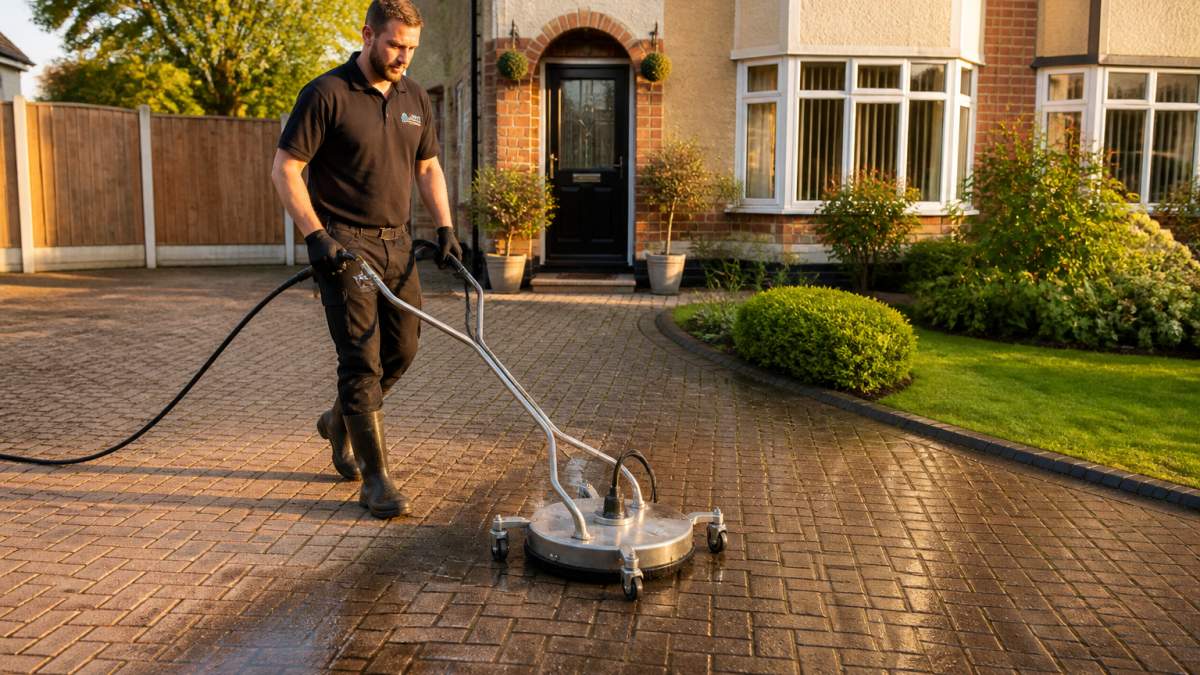
When pressure washing block paving, the key is controlled pressure and a rotary surface cleaner rather than a narrow jet. A fan of water at the right angle lifts dirt without gouging the joints. Too much pressure in one spot strips the sand and leaves a permanent scar.
What changes on jointed surfaces:
- Jointing sand must be topped up after cleaning
- Pressure stays lower than on solid concrete
- A pre-treatment helps loosen algae before washing
- Edges and borders need extra care
Get this right and block paving comes up like new. Get it wrong and you will be re-sanding within days.
Driveway Moss and Weed Removal That Lasts
Moss and weeds come back because the conditions that grew them have not changed. Shade, damp, and organic build-up in joints create the perfect home for regrowth. Cleaning alone removes the plant, not the cause.
Lasting driveway moss and weed removal combines three steps:
- Remove the growth, roots and all
- Clean the joint and surface properly
- Treat or seal to slow regrowth
On roofs, the same principle applies. We remove moss without aggressive high-pressure roof washing, because blasting a roof strips granules and shortens its life. Treatment-led cleaning is safer and lasts longer.
How Often to Clean a Driveway in the UK
Most UK driveways need a proper clean every 12 to 24 months. Shaded, north-facing, or tree-lined drives may need it yearly. Sheltered surfaces with poor drainage often need attention sooner.
Signs it is time:
- Algae or green film on the surface
- Moss or weeds in the joints
- Sand loss between blocks
- Slippery patches in wet weather
- Dull, grey, or stained paving
For commercial sites, car parks, and communal areas, a regular maintenance schedule keeps surfaces safe and presentable year-round. If you are searching for jet wash driveways near me, a quick assessment usually tells you whether it is a routine clean or a deeper restoration.
Re-Sanding Block Paving After Cleaning: The Step Most People Skip
Re-sanding is not optional on block paving. Cleaning removes some jointing sand, and without replacing it, the joints open up. Open joints mean movement, weeds, and water damage.
After cleaning, the surface should be dry before sand goes back in. Kiln-dried sand is swept into the joints, worked in, and compacted. This locks the blocks, blocks weeds, and firms up the whole drive.