
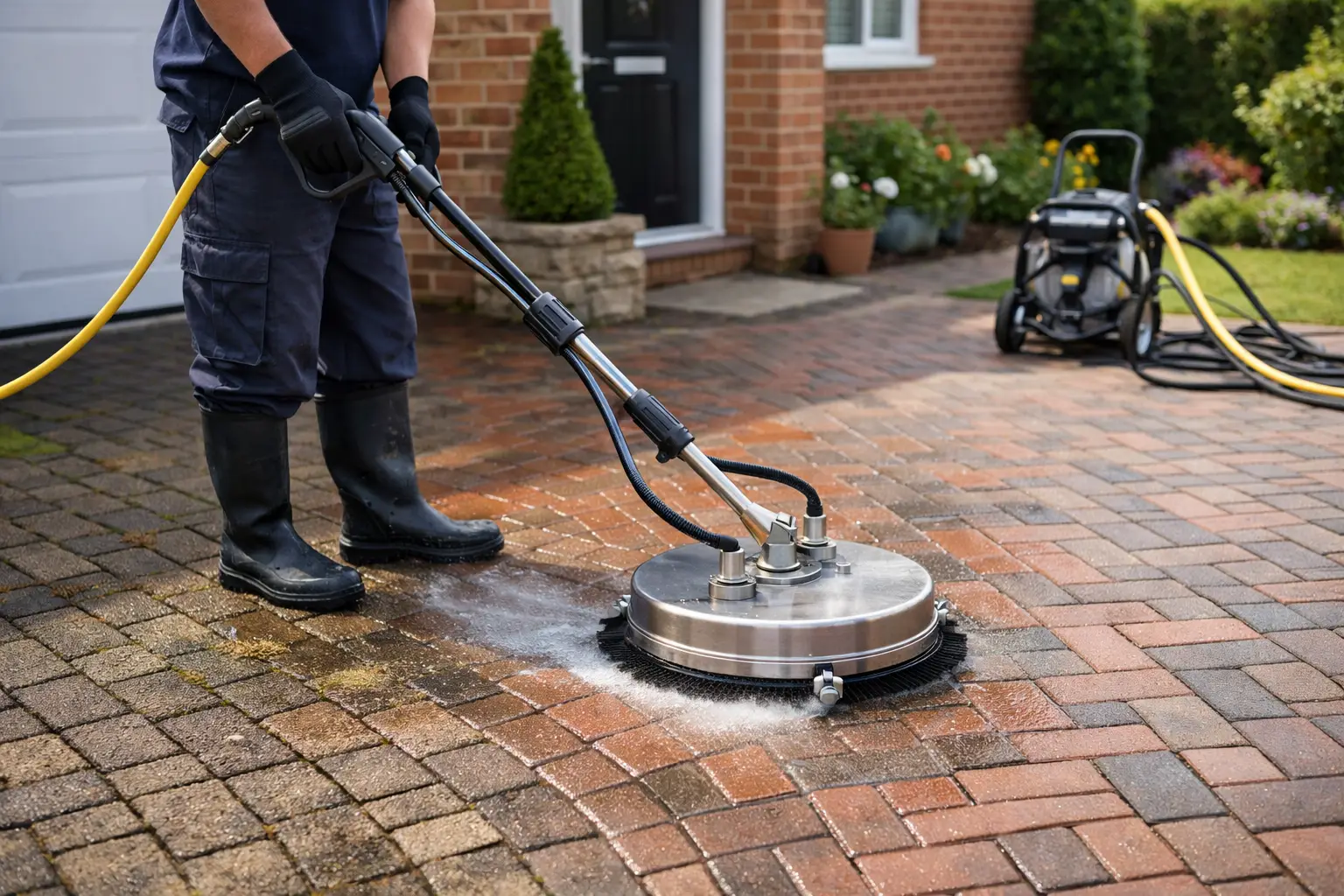
Block Paving Cleaning and Re-Sanding: What a Proper Professional Clean Should Include
A block-paved driveway can often be transformed with professional cleaning.
But achieving a good result involves much more than simply pointing a pressure washer at the paving and blasting away the visible dirt.
Over time, block paving can collect moss, algae, weeds, traffic grime and organic debris. The surface gradually becomes darker and patchier, while the joints can fill with dirt and unwanted growth.
Once professionally cleaned, the original colour and pattern of the paving can become much more noticeable again.
At Refresh Revive Exterior Cleaning, we believe the important part isn't using the most pressure possible.
It's understanding the paving, identifying what's causing the problem and choosing the appropriate combination of cleaning, treatment and re-sanding.
Why does block paving become dirty?
Block paving naturally contains lots of joints, edges and textured surfaces.
Unfortunately, those same characteristics also provide plenty of places for dirt and biological growth to settle.
Here in the North West, regular rainfall combined with shaded areas can keep paving damp for long periods.
That creates good conditions for:
Moss Algae Weeds Lichen and black spotting General dirt Leaf debris Mud from vehicles Traffic film Oil staining
The change normally happens gradually.
You may not notice how much darker the driveway has become until part of it is cleaned and you see the difference.
Why do weeds grow between block paving?
It's easy to assume that weeds are growing upwards from underneath the driveway.
That isn't always the case.
Seeds can settle into the joints from above. As jointing sand becomes contaminated with soil, leaves and organic debris, those joints can provide somewhere for seeds to germinate.
Pulling out the visible weeds may improve things temporarily, but it doesn't necessarily remove the moss, organic contamination and ingrained dirt across the rest of the paving.
That's why a full clean can make such a noticeable difference.
What does professional block paving cleaning involve?
Before cleaning anything, we assess the surface.
We're looking at things such as:
The overall condition of the blocks Moss and algae growth Weeds Black spotting or lichen Oil or other staining Existing jointing sand Loose or sunken blocks Damaged edging Drainage Surrounding walls and planting Access around the property
This matters because cleaning isn't the same as repairing.
If paving is badly sinking, moving or suffering from an underlying sub-base problem, pressure cleaning won't correct that.
We'd rather identify those limitations before we start.
Controlled pressure instead of simply maximum pressure
Professional equipment gives us considerably more cleaning capability than many domestic pressure washers.
But machine power alone doesn't determine the quality of the result.
Water flow, working distance, nozzle choice, cleaning pattern and operator experience all matter.
Where appropriate, we can use professional surface-cleaning equipment to cover a wider area evenly rather than relying entirely on the narrow fan of a pressure-washer lance.
By overlapping each pass, we can achieve much more consistent coverage across the blocks.
That's particularly important because one of the most common DIY cleaning problems is an uneven striped finish.
A driveway can technically be cleaner and still look worse if it hasn't been cleaned evenly.
Why pressure alone isn't always enough
Some contamination sits loosely on the surface.
Other staining can become established within the texture of the paving.
Think of a block almost like a piece of sandpaper.
Dirt and organic contamination can sit down within that textured surface rather than simply resting on top.
In those situations, simply increasing the pressure isn't necessarily the answer.
Where appropriate, we may use a professional treatment to help loosen or deal with organic growth before or alongside the cleaning process.
Read more about professional driveway and block paving cleaning.
The important principle is:
Use the right treatment and technique rather than relying on force alone.
What happens to the sand between the blocks?
This is one of the most important things homeowners need to understand about block paving cleaning.
Professional pressure cleaning will normally remove some of the existing jointing sand.
That's expected.
The sand in those joints isn't simply there to make the driveway look finished. It plays an important role within the paving system.
That's why block paving cleaning and re-sanding should usually be considered together.
Why re-sanding block paving matters
Once the driveway has been professionally cleaned, it needs sufficient time to dry before new kiln-dried sand can be introduced.
The sand is then brushed into the joints between the blocks.
This helps:
Refill joints emptied during cleaning Restore the finished appearance Support the interlock between the blocks Reduce open spaces where debris can quickly gather Leave the driveway properly finished rather than simply washed
We don't see re-sanding as an optional cosmetic extra where the existing jointing sand has been removed.
It's part of completing the job properly.
However, re-sanding doesn't repair an underlying structural problem.
If blocks are moving, badly sinking or the edging has failed, those issues may need separate attention.
Can re-sanding stop weeds coming back?
It can help, but we'd never tell somebody they'll never see another weed.
Fresh kiln-dried sand fills the joints and removes many of the open spaces where organic material can collect.
But seeds can still be carried onto the driveway by wind, birds, vehicles and surrounding vegetation.
Regular maintenance therefore still matters.
The best approach is to remove small weeds when they first appear rather than allowing them to establish for months.
What about moss and green algae?
Moss and algae are extremely common on shaded block paving.
The problem often becomes worse in areas that remain damp for longer.
That might be:
Alongside a wall Under trees Around parked vehicles Beside hedges On north-facing sections In areas with poor drainage
Algae may appear as a green film across the blocks, while moss tends to establish more heavily around joints and edges.
Where biological growth is involved, appropriate professional treatment can sometimes help address more than just the visible surface layer.
Read more about reducing recurring algae growth on paving.
What about stubborn black spots?
Black spotting and established lichen can be considerably more stubborn than ordinary dirt.
This is where realistic expectations become important.
Some paving can improve dramatically during professional cleaning, but deeply established organic staining may require further treatment and may not always disappear completely in a single process.
We prefer being clear about that beforehand.
We'd rather tell you honestly what can and can't be achieved before we start than promise you a perfect result just to win the job.
Can oil stains be removed from block paving?
Oil staining can be difficult because block paving is porous.
Fresh surface contamination generally gives you a better chance of improvement than oil that has been soaking into the block for a long time.
Once oil penetrates below the visible surface, full removal isn't always realistic.
Specialist treatment may improve the appearance significantly, but we won't automatically promise that every historic oil mark will disappear.
Again, it's about assessing what's actually there before recommending the work.
Why the condition of the paving matters
Not every block-paved driveway is suitable for aggressive cleaning.
Before beginning, we consider whether there are:
Crumbling blocks Significant frost damage Loose edging Unstable paving Major joint failure Damaged surrounding brickwork Weak pointing Existing drainage problems
If we believe cleaning is likely to cause more damage than improvement, we'll say so.
Sometimes the right professional recommendation is to have repairs carried out first.
Drainage and surrounding areas need consideration too
A driveway doesn't exist in isolation.
It may run alongside:
Garage doors Rendered walls Brickwork Flower beds Gates Paths Drainage channels Public footpaths
The direction in which the surface is cleaned and the way dirty water and debris are managed therefore matters.
We don't simply move contamination from the driveway into somebody else's garden or block the nearest drain with moss and sand.