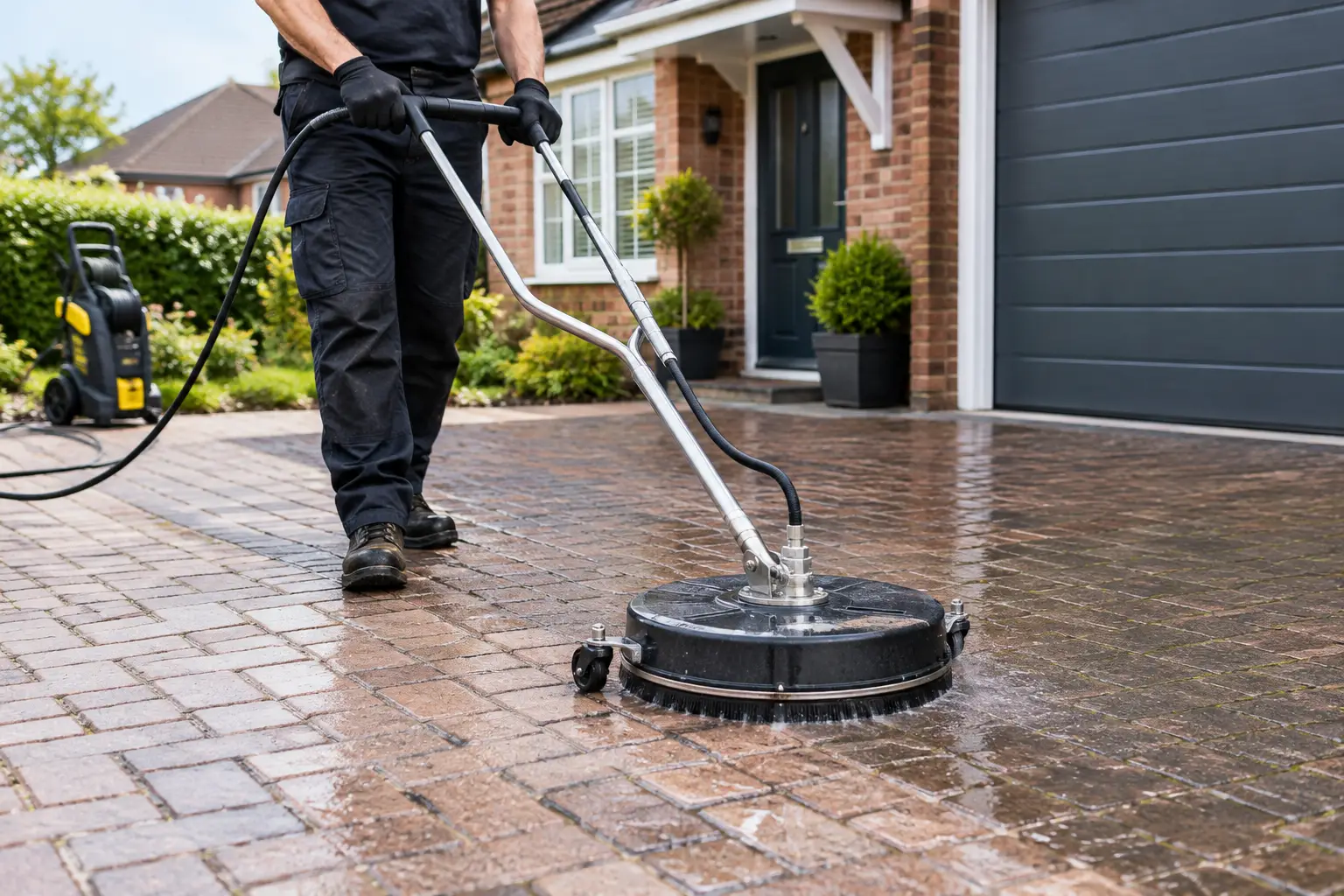
A driveway can look tired long before the rest of a property does. Green algae along the edges, black spotting on paving, tyre marks and weeds in the joints all change the first impression of a home. Professional driveway cleaning in Manchester is not simply a case of applying maximum pressure. The best approach depends on the surface, the contamination and whether the paving needs attention after it has been cleaned.
For homeowners, landlords and property managers, the aim is usually clear: remove built-up dirt and organic growth, improve the appearance of the entrance and deal with issues that can make the surface look neglected or become slippery when wet. A proper assessment comes first, particularly where block paving joints are depleted, natural stone is weathered or tarmac is showing its age.
Why driveways become dirty so quickly
Greater Manchester weather gives algae, moss and lichen plenty to work with. Shaded areas, north-facing driveways, overhanging trees and poor drainage can all hold moisture on the surface. Dust, soil, leaves, vehicle residue and everyday foot traffic then become trapped in the texture of the paving.
Block paving often develops weeds and moss between the joints, while concrete may show darker patches, oil marks or tyre staining. Tarmac can become dull and uneven in colour over time. Indian sandstone and other natural stone surfaces need particular care because their texture and mineral content can react differently to pressure, cleaning products and weathering.
The visible dirt is only part of the issue. Organic growth can make a driveway less pleasant to use, especially near steps, gates and paths. Cleaning can improve the appearance considerably, but it should be planned around the condition of the surface rather than treated as one standard job.
Driveway cleaning Manchester properties need by surface type
Block paving
Block paving is one of the most common driveway surfaces across Bolton, Manchester and the wider North West. Its joints are designed to contain kiln-dried sand, which helps interlock the blocks and supports the surface. Cleaning can remove soil, moss, algae and ingrained grime, but it can also dislodge old or loose jointing sand.
That is why block-paving cleaning often includes re-sanding once the surface has dried. Replacing the sand is not an optional finishing touch where joints have been emptied by wear, weeds or the cleaning process. It is an important part of restoring the driveway’s appearance and helping maintain the structure between the blocks.
Not every stain will disappear completely. Deep oil contamination, old rust marks, faded blocks and previous repairs may remain visible to some degree. A careful cleaner should explain this before work starts rather than promising a uniform, newly laid appearance from an older surface.
Concrete
Concrete driveways are hard-wearing, but their porous finish can hold dirt, algae and staining. Controlled pressure washing can lift surface contamination effectively, although very old marks may have penetrated beyond the top layer. The approach may need to change around expansion joints, cracked sections and areas where the concrete has already begun to wear.
A clean concrete driveway often looks brighter and more even, but cleaning cannot reverse structural cracks, spalling or discolouration caused by years of weathering. Where a protective seal is being considered, the surface needs to be properly cleaned and allowed to reach a suitable condition first.
Tarmac and asphalt
Tarmac needs a more measured approach than block paving or concrete. Excessive pressure or unsuitable treatment can disturb its surface, particularly where it is worn, softening, patched or breaking down at the edges. Low-pressure cleaning methods and appropriate products may be more suitable for removing surface dirt and organic growth.
Tarmac can also show colour variation after cleaning because weathering and vehicle use affect it unevenly. The objective is to clean the surface responsibly, not to disguise deterioration that may require separate repair work.
Natural stone and resin-bound surfaces
Natural stone driveways, including sandstone, can be attractive but demand careful method selection. Some stone is softer or more absorbent than it appears, and aggressive pressure can affect the face of the material or disrupt jointing. Low-pressure treatment may be the right option where biological growth is the main problem.
Resin-bound surfaces should also be assessed before cleaning. Their finish, age and condition matter. The same method used on heavily soiled block paving is not automatically appropriate for a resin surface.
Pressure washing is not always the answer
High-powered equipment has a place in exterior cleaning, especially on durable paving with substantial build-up. Yet pressure alone is rarely the whole solution. A surface can be made to look cleaner in the short term while weeds, algae spores or staining remain in pores and joints.