
Last Updated: 29 October 2026
Quick Summary
To clean block paving without damage, assess the joints, stains and surface first, then use low pressure with the correct treatment rather than maximum force. Treat organic growth before cleaning, and always re-sand the joints with kiln-dried sand once the paving is completely dry.
- High pressure blasts out jointing sand, chips the block face and drives water under the blocks.
- Oil needs a degreaser, rust a specialist treatment and algae a soft wash approach.
- Brush off loose moss, apply a moss and algae treatment, then clean and re-sand.
- Re-sand only when the paving is completely dry, using kiln-dried sand brushed into the joints.
- Seal only after cleaning, drying and re-sanding, and only if the sealer suits the block type.
Table of Contents
- Assess the Paving Before You Clean It
- Prepare the Driveway: A Simple Pre-Clean Checklist
- How to Clean Block Paving Without a Pressure Washer
- Low-Pressure and Soft Washing: Matching the Method to the Surface
- How to Remove Moss From Block Paving
- Block Paving Re-Sanding After Cleaning
- Block Paving Cleaning and Sealing: Is It Worth It?
- Common Mistakes That Damage Block Paving
- Book a Driveway Assessment in Bolton and the North West
- Frequently Asked Questions
Assess the Paving Before You Clean It
Learning how to clean block paving without damage starts with looking, not scrubbing. Block paving is a layered system: clay or concrete blocks sitting on a sand bed, with kiln-dried sand brushed into the joints. Disturb any layer and the surface starts to move.
At Refresh Revive Exterior Cleaning, we assess every driveway in Bolton and the surrounding North West before a drop of water goes down. The assessment decides the method, the pressure and the treatment. Skip it and you are guessing.
Walk the driveway slowly and note what you find.
What to Check: Joints, Stains and Surface Condition
- Jointing sand: is it full, or washed out to finger depth?
- Movement: do any blocks rock underfoot or sit proud?
- Surface: is the face of the block sealed, worn, or flaking?
- Stains: oil, rust, algae or moss, each needing a different treatment
- Drainage: does water pool, or run to a gully?
A common mistake is treating every mark the same way. Oil needs a degreaser, rust needs a specialist treatment, and green algae needs a soft wash approach. One method for all three usually damages the block and leaves the stain.
Prepare the Driveway: A Simple Pre-Clean Checklist
Preparation is the step most homeowners skip, and it is where damage usually begins. A few minutes of prep protects the surface, your plants and your drainage.
Work through this checklist before you start:
- Clear cars, bins, planters and mats from the driveway
- Sweep loose grit, leaves and debris into a pile
- Cover or move pots, and check nearby lawns and borders
- Check drains and gullies are clear and flowing
- Note any cracked or loose blocks and avoid direct pressure there
- Test a small hidden area first to judge the method
- Choose a mild, dry day so the paving can dry afterwards
Watch out: washing without checking gullies can push sand and debris into the drain, which is far harder to clear than it is to prevent.
How to Clean Block Paving Without a Pressure Washer
You can clean block paving without a pressure washer using a stiff brush, a mild detergent and plenty of water. It takes longer, but it is gentle on joints and ideal for older or delicate paving.
Here is the sequence we would use:
- Sweep the whole area clear of grit and leaves.
- Mix a mild, pH-neutral detergent in warm water.
- Apply with a soft brush or watering can, working in small sections.
- Scrub the joints with a stiff hand brush to lift algae and moss.
- Rinse with a hose on a gentle setting, working downhill towards drainage.
- Repeat stubborn areas rather than scrubbing harder.
For organic growth, a dedicated patio or paving treatment helps break down the algae before you scrub. Always follow the label, and keep pets and children off the area until it is dry.
This manual route suits smaller driveways and heritage paving. On larger surfaces it becomes slow work, which is where a controlled professional clean earns its place.
Low-Pressure and Soft Washing: Matching the Method to the Surface
The right method for block paving is low pressure combined with the right treatment, not maximum force. A low-pressure approach lifts dirt, while a soft wash treatment deals with algae and moss without stripping the block face.
Marshalls' guidance on maintaining block paving identifies steam cleaning as an environmentally friendly and effective option for block paving, which tells you the industry is moving away from brute force.
The difference matters. Pressure washing uses high force to blast dirt away. Soft washing uses low pressure plus a treatment to kill growth at the root. On block paving, the second approach protects joints and the block face.
Why Maximum Pressure Is Rarely the Answer
High pressure on block paving causes three problems. It blasts out jointing sand, it can chip or etch the surface, and it drives water under the blocks, which loosens the bed.
Rawlins Paints' advice on surface preparation recommends soft washing as a safer alternative to high-pressure washing for natural stone and block paving, precisely because it reduces the risk of surface damage.
Our approach at Refresh Revive is to match the method to the surface every time, using controlled pressure and the correct treatment, with protection for your planting and lawns.
How to Remove Moss From Block Paving
Moss on block paving is best removed by treating it first, then cleaning, then re-sanding the joints. Killing the growth before you wash stops it spreading and makes the clean far easier.
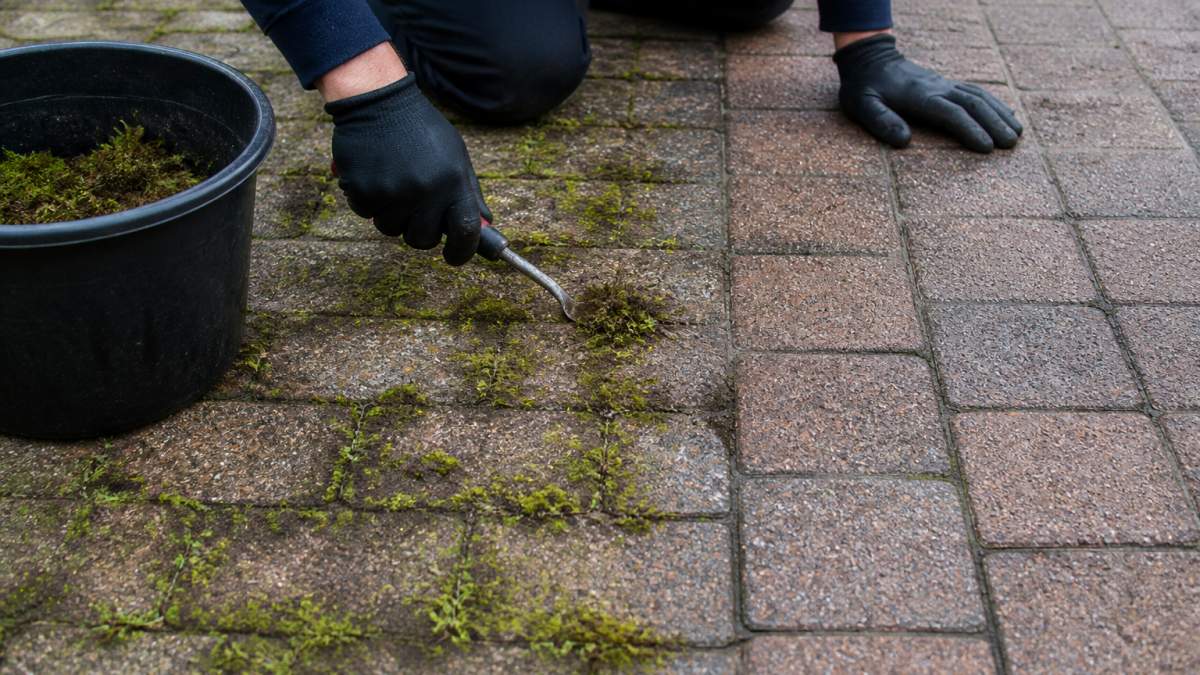
Work in this order:
- Brush off loose moss with a stiff broom.
- Apply a suitable moss and algae treatment to the affected area.
- Allow it to work for the time stated on the label.
- Clean the surface with low pressure or manual scrubbing.
- Clear the joints fully before re-sanding.
Treatment reduces growth; it does not remove it permanently. Moss returns where shade, damp and full joints give it a home. Keeping joints topped up and improving drainage helps more than any single clean.
Treating Weeds and Organic Growth in the Joints
Weeds in joints are a sign the sand has thinned. Pull them by hand where you can, then treat the joint with a suitable weed treatment. Avoid pouring strong chemicals across the whole driveway, as this can stain the blocks and harm nearby planting.
For a deeper look at keeping algae away long term, our guide on preventing algae growth on driveway pavers covers the aftercare in detail.
Block Paving Re-Sanding After Cleaning
Re-sanding should follow cleaning once the paving is completely dry, using kiln-dried sand brushed into the joints. This is the step that keeps blocks stable and the surface looking finished.
Timing is everything. Damp sand will not flow into the joints properly, and damp joints trap it. Wait for a dry spell, then:
