
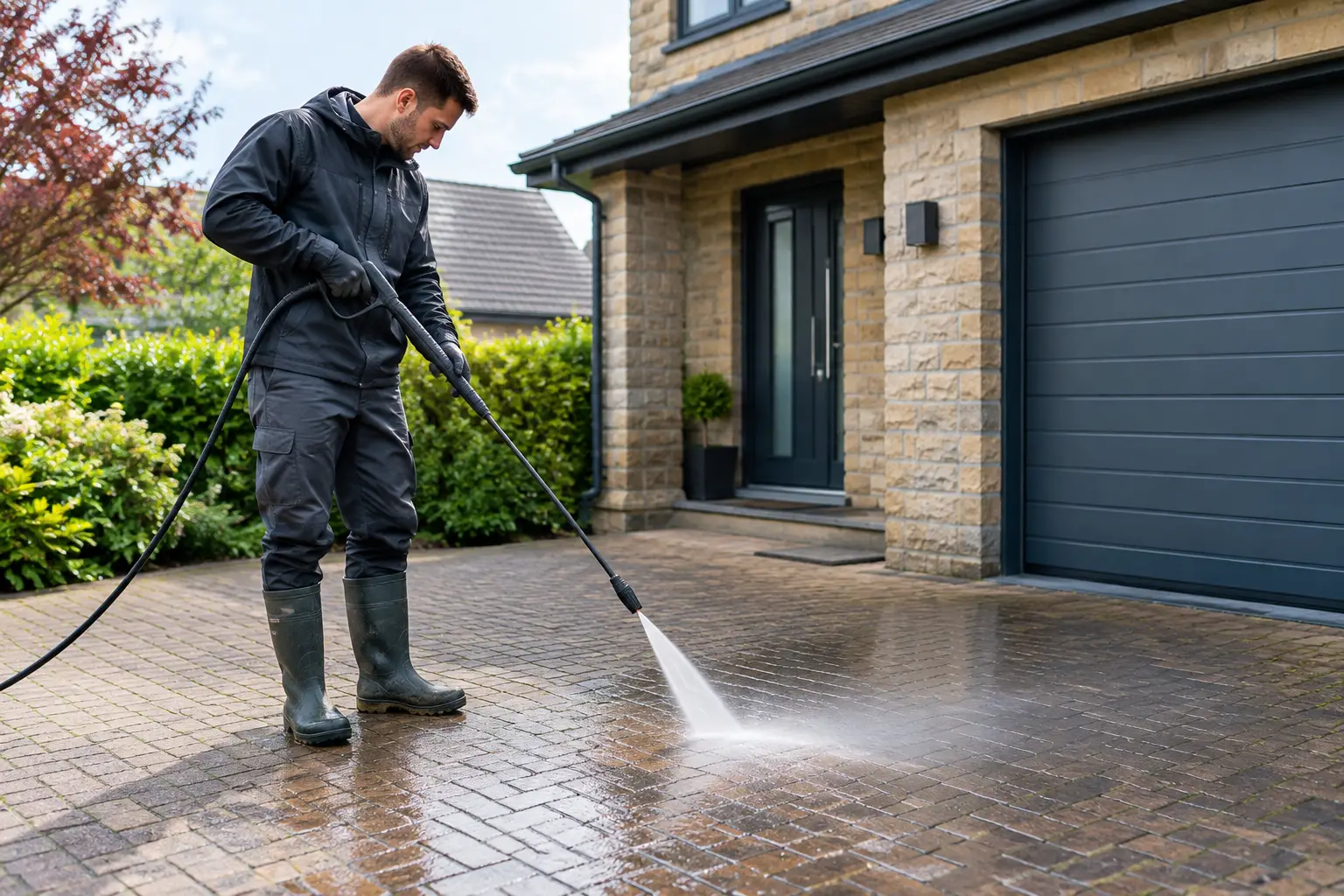
A search for driveway cleaners near me usually starts when the front of a property no longer reflects the care taken inside it. Green algae can make paving look neglected and slippery in damp weather; black spotting, oil marks, tyre tracks and weeds can make an otherwise sound driveway feel tired. The right contractor should not simply arrive with a high-pressure washer. They should assess the surface, the contamination and the condition of the joints before recommending a method.
For homes, rental properties and managed sites across Bolton, Greater Manchester, Cheshire and Lancashire, driveway cleaning is most effective when it is treated as surface care rather than a quick rinse. A clean result matters, but so does choosing a process that suits the paving already in place.
What to expect from driveway cleaners near me
A useful quotation process begins with the basics: what the driveway is made from, how it has been laid, where the staining sits and whether there are signs of movement or deterioration. Photographs are often a sensible starting point, particularly where access, drainage, steps or several surface types need to be considered.
Driveways are not all cleaned in the same way. Block paving may need cleaning followed by re-sanding once it is dry, because pressure washing can dislodge the kiln-dried sand that helps hold the blocks in position. Pattern-imprinted concrete, tarmac, resin-bound surfaces and natural stone each need a more considered approach. The aim is to remove contamination without treating every material as if it were hard concrete.
Refresh & Revive Exterior Cleaning is based in Bolton and provides driveway cleaning and restoration across the North West. Methods are selected around the surface and its condition, using controlled pressure or lower-pressure treatment where appropriate. That distinction matters when comparing local cleaning services: more pressure is not automatically a better clean.
Start with the surface, not the machine
Block paving is one of the most common domestic driveway surfaces, and it tends to show algae, dirt and weed growth clearly. Cleaning can lift embedded grime from the face of the blocks and joints, restoring the contrast between the paving colours. Once the surface has had time to dry, re-sanding may be appropriate to replace material removed from the joints during cleaning.
The condition of the paving needs to be considered first. Loose blocks, crumbling edges, failed pointing, damaged drainage channels and existing dips will not be corrected by washing. A responsible assessment should distinguish between dirt that can be cleaned away and repair issues that need separate attention.
Concrete is generally more tolerant of pressure than some other materials, but it can still hold stubborn staining. Oil and vehicle marks may require targeted treatment, and deeply absorbed staining may improve without disappearing completely. That is a realistic trade-off worth discussing before work begins, rather than assuming every mark will lift to the same degree.
Natural stone and decorative paving need particular care. Indian sandstone, for example, can be affected by unsuitable pressure, harsh methods or poor rinsing. The appropriate approach depends on the stone, its finish, any previous treatment and the nature of the growth or staining. Where a driveway includes mixed paving, brick edging or rendered walls close by, each part of the area should be taken into account.
The contamination tells you what cleaning is needed
Most driveways suffer from a combination of ordinary traffic dirt and biological growth. Algae creates the familiar green film often seen in shaded or damp sections. Moss can establish in joints and along edges where debris collects. Lichen and black spotting can be more persistent, especially on paving that remains wet for long periods.
Cleaning removes visible soiling, but the underlying cause still matters. Overhanging planting, poor drainage, shaded areas and leaf debris can all encourage regrowth. A driveway beside a mature hedge will have different maintenance needs from one that receives open sunlight for much of the day. There is no permanent one-off answer where the conditions supporting growth remain in place.
Oil staining needs a similarly practical view. Fresh spills and surface-level marks are often easier to improve than contamination that has soaked into porous concrete or block paving over a long period. A cleaning company should explain what is achievable for the particular stain, rather than treating stain removal as an all-or-nothing promise.
Weeds are another common concern. Removing visible growth can improve the appearance of the driveway, but open joints, wind-blown seeds and nearby planting mean they can return. Re-sanding block paving where appropriate can help restore the joints after cleaning, though it does not turn a driveway into a maintenance-free surface.
Why preparation and containment matter
The visible cleaning is only one part of the job. Before work begins, a contractor needs to think about access, nearby doors and walls, drainage points, vehicles, loose objects and the boundary between the driveway and public areas. A well-planned approach keeps the work focused on the surface rather than creating avoidable mess elsewhere.