
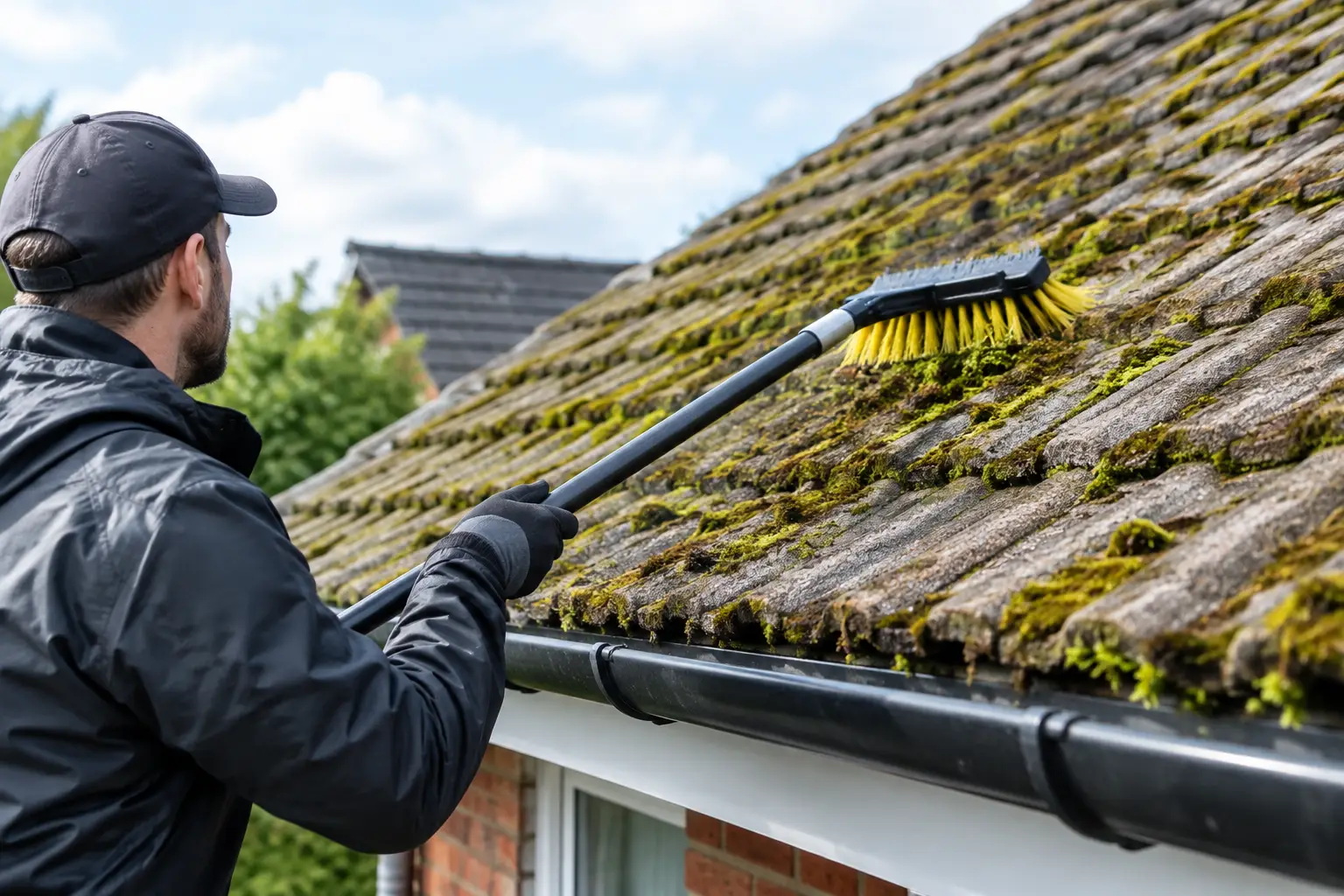
A thick patch of moss can make a tiled roof look neglected, but can moss lift roof tiles? In some cases, yes - particularly where moss has built up beneath tile edges, holds moisture against the roof or contributes to blocked gutters. Moss is rarely the only cause of a slipped or raised tile, however. Existing wear, failing fixings, damaged mortar and wind exposure can all play a part.
The sensible approach is to treat heavy roof moss as a maintenance issue worth inspecting, rather than assuming every green roof needs aggressive cleaning. The tile type, roof pitch, age, condition and extent of growth all affect what should happen next.
How moss can lift roof tiles
Moss does not have deep roots like a plant growing in soil. It attaches to a surface and spreads across it, collecting moisture and debris as it grows. On a roof, that growth often starts in shaded, damp areas or behind features where leaves and organic material settle.
As moss becomes thicker, it can work into small gaps around overlapping tiles. On some roofs, a dense mat beneath a tile edge may create slight pressure and prevent the tile from sitting as neatly as it should. Repeated wetting and drying, frost and wind can then make an existing weakness more noticeable.
This does not mean that every moss-covered roof has lifted tiles. Many tiles are held in place by nails, clips, mortar or the overlap of surrounding tiles, depending on the roof construction. But a heavy build-up can add to the conditions that allow a tile to move, especially if it was already loose or poorly seated.
Water retention is often the bigger concern. Moss stays wet for longer than a clean tile surface, and trapped debris can slow drainage between tiles. That prolonged dampness can encourage further organic growth and make it harder to spot cracked tiles, worn pointing or localised defects.
Moss, lichen and algae do not affect roofs in the same way
Homeowners often use “moss” to describe all green or dark roof growth, but the contamination may include moss, algae and lichen. Each behaves differently and may need a different cleaning approach.
Moss is the thicker, cushion-like growth that catches leaves and moisture. Algae can appear as green, dark or discoloured staining, particularly on damp roof slopes. Lichen tends to form flatter, crust-like patches that attach firmly to the tile surface. A roof may have all three at once.
The visible growth alone does not tell you whether tiles are sound. A roof can look heavily contaminated yet be structurally stable, while a relatively clean roof may have slipped tiles or deteriorating mortar. Cleaning should therefore follow a condition assessment, not replace one.
Signs that need closer attention
A few scattered moss patches are not automatically urgent. It is more sensible to arrange an assessment when moss is building up along tile laps, collecting in valleys, growing around flashing, or spilling into gutters and downpipes. These areas are more likely to affect water flow.
Look out for tiles that appear uneven, cracked or out of line with the surrounding course. Moss falling into gutters, recurring overflow during rain, damp patches in the loft or visible debris at the base of downpipes also deserve attention. These signs do not confirm moss has caused the problem, but they can point to a roof or drainage issue that should not be ignored.
Avoid climbing onto the roof to investigate. Tiled roofs can be fragile underfoot, and a loose tile, wet moss or concealed defect creates an unnecessary risk. Clear photographs taken safely from ground level can still be useful for an initial discussion.
Can moss lift roof tiles enough to cause a leak?
It depends on the condition of the roof. Moss can contribute to a localised problem where it gets beneath an already vulnerable tile edge, retains water around a defect or blocks the drainage route below. It may also hide a tile that has shifted for another reason.
A leak is more commonly associated with a broken, displaced or poorly seated tile, damaged flashing, defective underfelt, blocked gutters or another fault in the roof covering. Moss can make those faults harder to see and may worsen the damp conditions around them, but it should not be treated as the automatic explanation.
This distinction matters because roof cleaning is not a substitute for roof repair. If tiles are loose, cracked or insecure, they should be checked and addressed by a suitable roofing professional before any cleaning is considered. Cleaning around an unresolved defect can create more disruption than benefit.
Why harsh cleaning can create its own problems
The aim of roof moss removal should be to reduce contamination while respecting the roof surface and its condition. High-force cleaning in the wrong setting can dislodge loose tiles, disturb mortar, drive water where it should not go or leave a weathered tile surface looking worse.