
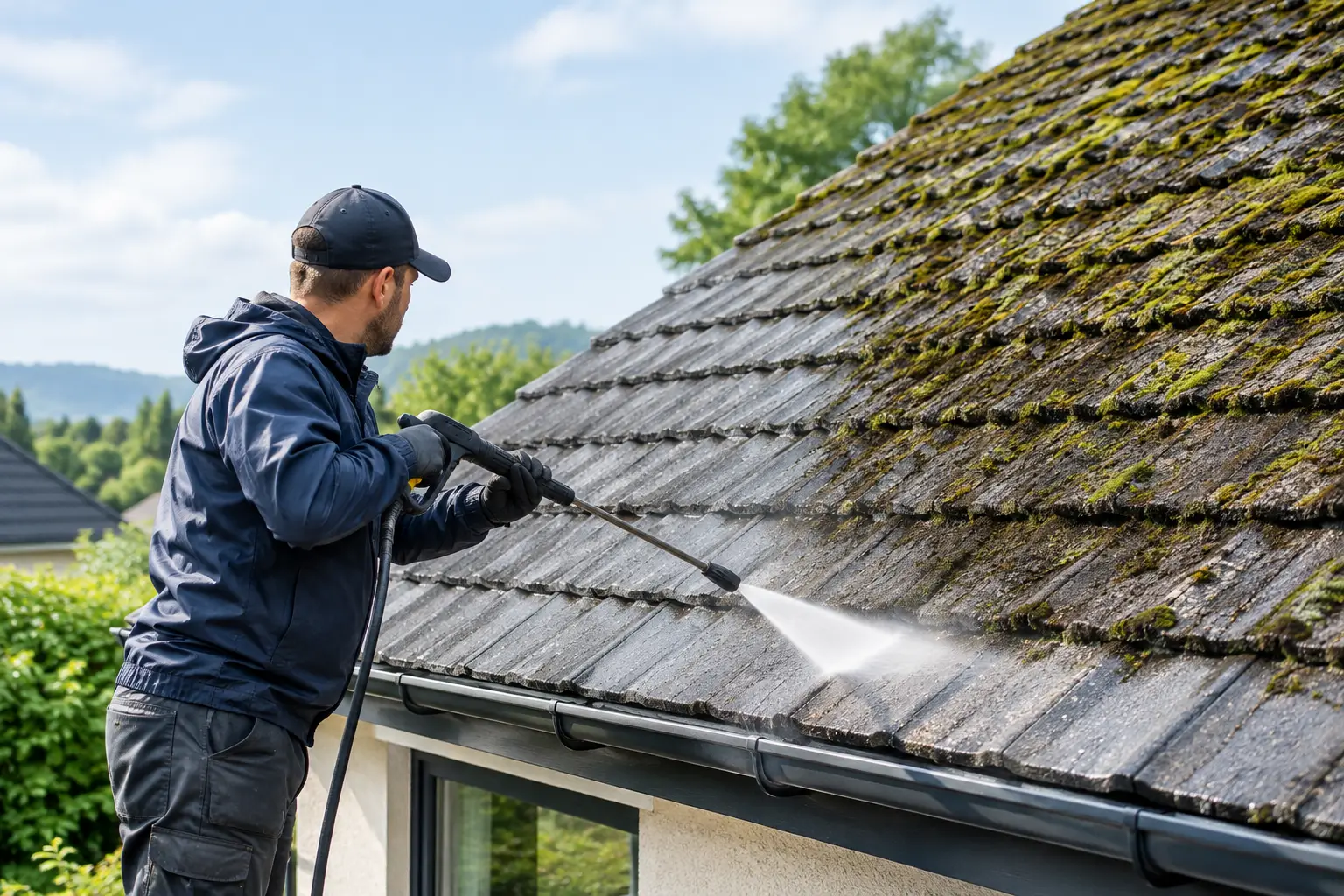
A roof can look clear after moss removal and still develop green growth again over time. So, does roof cleaning prevent moss? It can substantially reduce the conditions that allow moss to build up, particularly when loose growth and residue are properly removed, but it is not a permanent barrier against future regrowth. North West roofs are exposed to regular rain, shade and airborne spores, all of which can bring moss back.
The useful question is not whether moss can be prevented forever. It is whether cleaning can return the roof to a manageable condition, reduce the risk of blocked gutters and help you spot areas that need attention before growth becomes heavy again. For most homeowners, landlords and property managers, the answer is yes - provided the cleaning method is chosen for the roof rather than treated as a one-size-fits-all pressure-washing job.
Does roof cleaning prevent moss permanently?
No. Moss spreads by spores carried through the air, so even a thoroughly cleaned roof remains exposed to new growth. It tends to return where the surface stays damp for long periods, where overhanging trees create shade, or where leaves and debris collect at the roofline.
What roof cleaning does achieve is a reset. It removes established moss that holds moisture against tiles, sheds into gutters and makes the roof look neglected. Clearing that material also makes it easier to see the roof surface itself, including slipped, cracked or weathered tiles that may otherwise be hidden.
The result depends on several practical factors: the direction the roof faces, how much shade it receives, the surrounding trees, the tile material and condition, drainage, and the weather over subsequent seasons. A north-facing slope beneath mature trees will usually need more attention than an open, sun-exposed roof. That is normal maintenance, not a sign that cleaning has failed.
Why moss returns to some roofs faster than others
Moss does not need soil to establish itself. Fine dust, leaf fragments and damp organic residue can collect in the texture and overlaps of roof tiles, creating a foothold for spores. Once growth becomes thicker, it catches more moisture and debris, which encourages more growth.
Gutters are often part of the problem. Moss dislodged by wind and rain can gather in gutters and downpipes, while leaf build-up may slow drainage at the eaves. Water should be directed away efficiently, not allowed to sit around the roof edge. Gutter clearing is therefore a sensible companion to roof maintenance, especially on homes near trees.
Lichen and algae are often mistaken for moss, but they behave differently. Algae can appear as a green film, while lichen may form pale, crust-like patches that adhere more firmly to the tile surface. Each type of contamination needs a considered approach. Trying to remove every mark aggressively can be less sensible than selecting a method that respects the roof's age, surface and visible condition.
The right cleaning method matters more than force
A roof is not a driveway or patio. While commercial pressure equipment has a place on suitable hard surfaces, roof cleaning needs a far more controlled assessment. Tile type, pointing, flashing, ridges, roof pitch and the condition of the surface all affect what is appropriate.
For many roofs, low-pressure cleaning and moss removal are preferable to forceful washing. The aim is to remove accumulated organic material without needlessly disturbing tiles or driving water where it should not go. A roof with older, brittle, cracked or already loose tiles may need a more cautious approach than a newer roof in sound condition.
After physical moss removal, a suitable treatment may be considered to address remaining organic residue and slow regrowth. Treatments are not magic and should not be presented as permanent protection. Their role is to support a cleaner roof by dealing with material that is not always visible after the bulk of the moss has been removed.
The order of work matters too. Removing thick moss without considering where it will go can simply shift the problem into the gutters. A planned roof-cleaning service should account for debris management and leave the property exterior in a tidy, sensible condition.
Why DIY roof cleaning can create avoidable problems
The temptation to climb a ladder with a domestic pressure washer is understandable when moss is plainly visible. The risks, however, are not limited to working at height. High pressure can disturb the surface of some tiles, force water beneath overlaps, dislodge mortar or create a patchy appearance. Scraping with unsuitable tools can also crack or mark vulnerable tiles.
There is a second issue: what looks like a moss problem can reveal a roof repair issue. If tiles are damaged, ridge mortar is deteriorating or a gutter is pulling away, cleaning alone is not the remedy. A sensible assessment distinguishes between contamination that can be cleaned and defects that require a roofing professional.
For landlords and managers, this distinction is particularly helpful. A clear record of the visible roof condition before and after cleaning can support planned maintenance decisions without assuming that every mark is a cleaning issue.