
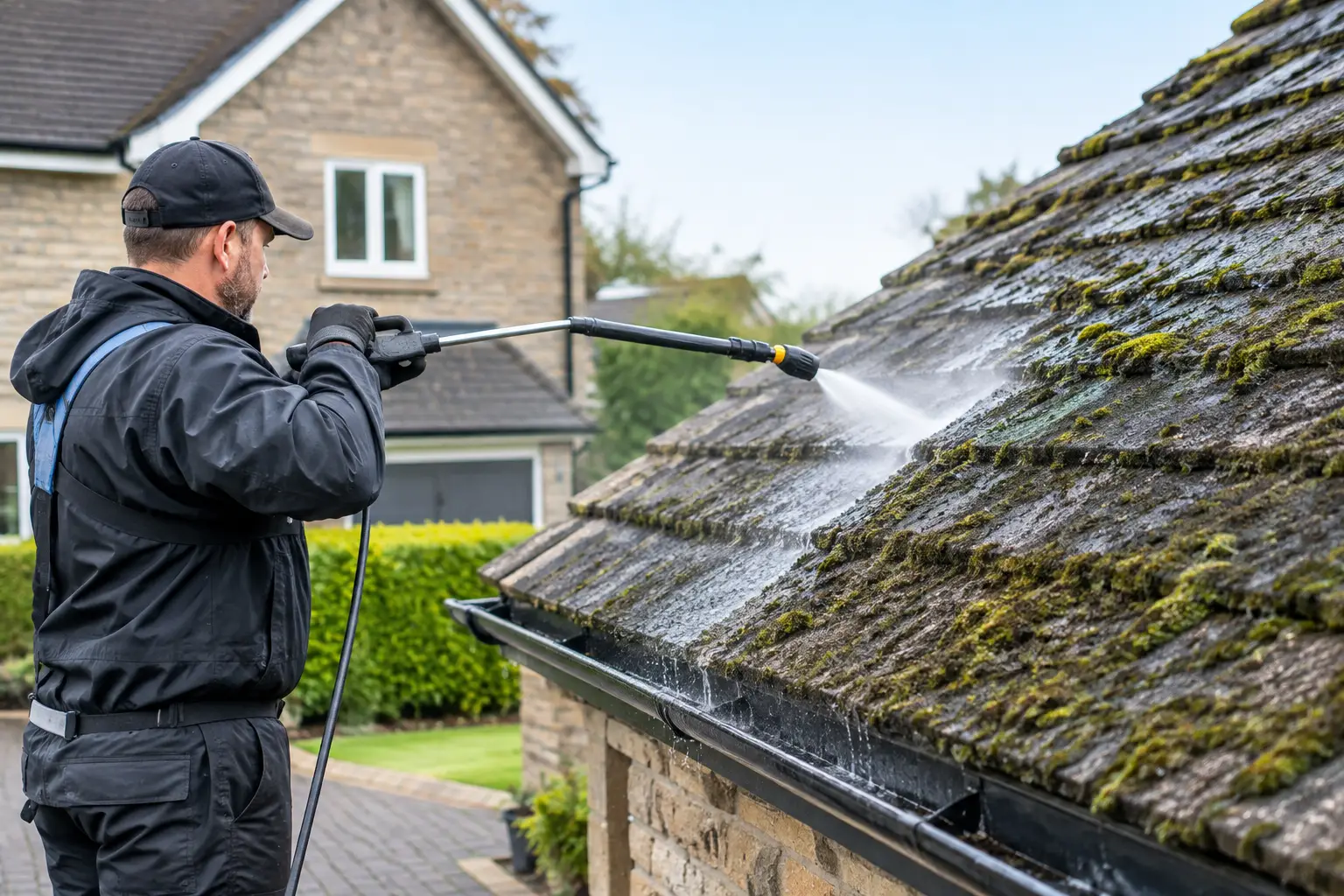
Moss can make a property look uncared for, but the bigger concern is often what sits beneath it. On a roof, it may hold moisture and shed into gutters. On paving, it can create a slippery surface and obscure the condition of the material. Effective moss removal is not simply a case of applying more pressure. The right approach depends on the surface, the amount of growth, access and whether algae, lichen, staining or accumulated debris are present as well.
For homeowners, landlords and property managers, the sensible aim is to remove visible growth thoroughly while selecting a cleaning method that suits the surface. That is particularly relevant on older paving, roof coverings, sandstone and rendered walls, where an unsuitable method can create more work than it solves.
Why Moss Builds Up Around a Property
Moss favours damp, shaded conditions and rougher surfaces where spores and debris can settle. North-facing areas, tree-lined gardens, narrow side paths and sections of roofing beneath overhanging branches are common trouble spots. Once it takes hold, leaf matter, soil and moisture can help it spread across joints, edges and drainage channels.
It is often accompanied by other forms of biological growth. Green algae can leave paths and patios slick, while lichen attaches itself more firmly and may remain visible even after the main moss has been removed. Black spotting on paving is a separate issue again and may need a different treatment or realistic expectations about what cleaning can achieve.
Moss does not always mean a surface is structurally unsound. However, leaving heavy growth in place can make routine checks harder. Paving joints, roof channels, gutter outlets and damaged areas may remain hidden until the surface is cleared.
Moss Removal Starts With the Surface
The same visible moss needs a different response on a driveway than it does on a roof. A professional assessment considers the construction and condition of the surface before deciding whether controlled pressure, low-pressure treatment, manual clearance or a combination is appropriate.
Roof moss and gutter blockages
Roof moss should be handled carefully. Different roof coverings, their age, access arrangements and the condition of tiles or slates all affect what is appropriate. Aggressive pressure is not automatically the answer, particularly where it could disturb the roof surface or force water into unsuitable areas.
A considered roof-cleaning process may involve removing loose moss and debris, then using an appropriate low-pressure treatment where suitable. Moss that has collected in gutters and valleys also needs attention, as material washed down by rain can restrict water flow. Clearing the visible roof without considering gutters can leave part of the problem behind.
There is no universal method for every roof. If tiles are cracked, loose or already deteriorating, cleaning should not be treated as a substitute for repair. The condition of the roof needs to guide the work.
Patios, paths and Indian sandstone
Patios often become green first around shaded borders, steps and areas near planting. Moss can fill joints and spread across the surface, making stone or concrete look darker and more uneven than it is. On paths and steps, grip is usually the immediate practical concern.
Cleaning a patio properly means accounting for the paving material and the state of its joints. Indian sandstone, for example, requires a measured approach rather than indiscriminate high pressure. The goal is to lift surface contamination without unnecessarily roughening or disturbing the stone. On some patios, residual marks, natural variation and weathering will remain after cleaning. A cleaner surface is not the same as a newly laid one.
Block paving and driveways
Moss in block-paving joints can make a driveway look untidy and contribute to a damp, neglected appearance. It often develops with weeds, algae and compacted debris, especially where drainage is slow or vehicles do not regularly pass over every area.
Controlled pressure washing can clear contamination from suitable block paving, but it can also dislodge jointing sand. Re-sanding may therefore form part of the restoration process once the surface has dried sufficiently. This helps refill the joints and supports the stability of the blocks. Any decision about sealing should be based on the condition of the paving and the desired finish, rather than treated as an automatic extra.
Choosing Between Pressure Washing and Low-Pressure Treatment
The best cleaning method is the one that matches the surface and the contamination. That sounds straightforward, but it matters because moss removal is often requested for several areas at once: a roof, patio, driveway, garden wall and guttering may all have different requirements.
Pressure washing can be effective on suitable hard surfaces such as concrete, some block paving and certain patios. Equipment and technique need to be controlled to avoid stripping joints, etching vulnerable finishes or sending debris into surrounding areas. It is not simply about using the highest available pressure.