A stained driveway, green patio or moss-covered roof can make an otherwise well-kept property look neglected. Exterior cleaning Manchester property owners need is not simply about using more pressure. The right approach depends on the surface, the type of growth or staining present, its condition and how water can be managed around the property.
Refresh & Revive Exterior Cleaning is based in Bolton and works across Greater Manchester, Cheshire, Lancashire and the wider North West. For homeowners, landlords, property managers and commercial sites, the sensible starting point is an assessment of the surface rather than a one-method-fits-all clean. Clear photographs and a few property details allow the team to consider the work and provide a quotation.
Exterior cleaning Manchester properties can rely on starts with the surface
Exterior contamination is rarely just loose dirt. Damp weather, shade, trees, traffic residue and everyday use all leave their mark in different ways. Algae creates a green film on paving, decking and paths. Moss can establish itself in roof tiles, gutters and block-paving joints. Lichen often clings more firmly to hard surfaces, while black spot can leave stubborn marks on patios and Indian sandstone.
The visible issue matters, but so does the material underneath it. Concrete, block paving, porcelain, natural stone, brick, render, roof tiles and uPVC all respond differently to water pressure, cleaning treatments and agitation. A method that may suit a durable driveway could be unsuitable for weathered render or delicate roof surfaces.
That is why professional exterior cleaning should begin with identifying both the contamination and the substrate. It avoids the common mistake of treating every dirty surface as a pressure-washing job.
Driveways, paving and patios: restoring a used outdoor space
Driveways and patios take the brunt of wet footwear, vehicle use, falling leaves and changing seasons. Block paving can become dull, weed-filled and slippery under algae growth. Concrete may hold tyre marks, oil staining and general grime. Indian sandstone and other natural stone surfaces can develop black spot, green growth and uneven discolouration.
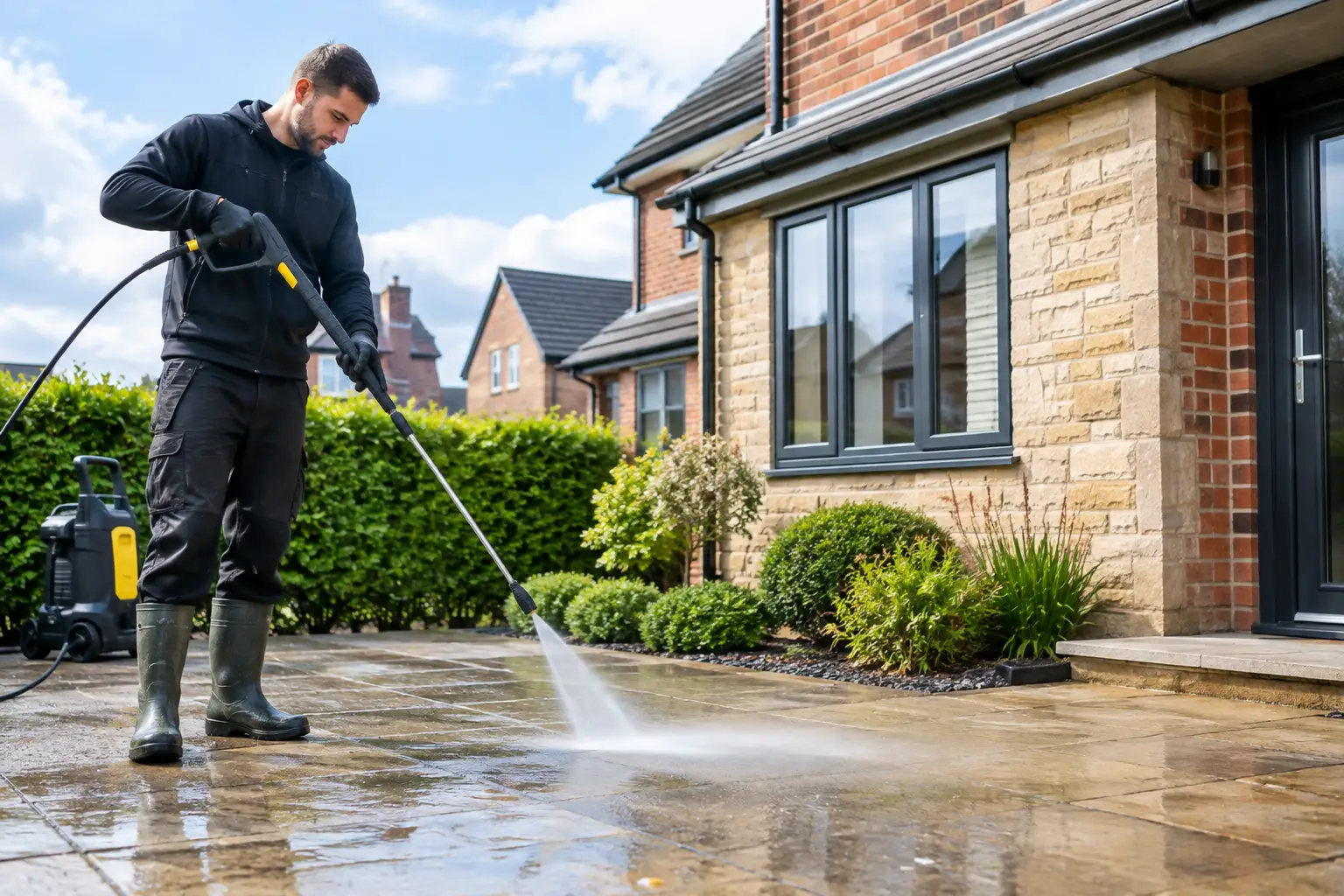
Controlled pressure washing can be effective where the paving is sound and the surface is suited to it. Commercial equipment has the power to lift embedded dirt, but pressure is only one part of the decision. Water flow, nozzle selection, the condition of joints and the drainage arrangement all need consideration.
For block paving, cleaning can remove contaminated jointing material as well as surface dirt. Re-sanding may therefore be appropriate after the area has dried, helping to refill the joints and support the blocks. It is not an optional cosmetic extra in every case, but it is often relevant where existing sand has been lost during cleaning or weathering.
Sealing may also be considered for suitable paving once it is clean and properly prepared. It can change the appearance and maintenance requirements of a surface, so it should be discussed in relation to the paving type and the result wanted. It is not a substitute for repairing unstable blocks, failed pointing or poor drainage.
Render and walls need a lower-pressure approach
Dirty render can make a property look tired long before there is a structural problem. Green algae, atmospheric staining and dark streaks are especially noticeable on light-coloured K Rend and silicone render. Yet these finishes should not automatically be subjected to high-pressure cleaning.
A low-pressure soft washing approach may be more appropriate for render and some painted or delicate external surfaces. The purpose is to address biological growth while treating the finish with greater care than a conventional high-pressure wash. The exact method depends on the render system, its age, visible condition and the contamination present.
Brick and wall cleaning also needs judgement. Older brickwork, damaged pointing, flaking paint and porous materials can all alter what is sensible. Cleaning may improve the appearance of staining and surface dirt, but it cannot correct failed mortar, underlying damp problems or permanent colour variation in the material.
Roof cleaning is about moss management, not force
Moss on a roof is easy to spot from the ground, particularly after a wet winter. It can collect around tiles, valleys and gutters, where it may contribute to blocked water routes if left unmanaged. However, roof cleaning is not the place for indiscriminate pressure washing.
The roof covering, tile condition, pitch and level of moss growth all influence the method selected. Manual moss removal and low-pressure treatment can be considered where appropriate, with attention paid to debris control and gutter clearance. The objective is to improve the roof's external condition without treating tiles as though they were driveway paving.
Homeowners should also keep expectations realistic. A roof may have pre-existing cracked tiles, worn pointing, damaged flashing or other defects that cleaning cannot resolve. If an issue is visible during an assessment, it should inform the plan rather than be ignored in pursuit of a cleaner appearance.
Gutters, fascias, soffits and windows complete the picture
Exterior cleaning is most useful when it considers the whole water-facing side of a property. Cleared gutters can help water move through the system as intended, while fascia and soffit cleaning removes the grime that builds up around roofline edges. Conservatories, cladding and frames can also collect algae, cobwebs and traffic film over time.
Pure-water window cleaning is suited to external glass, frames and sills where access and the property layout allow. It can be a practical way to finish a wider exterior clean, particularly after roofline, render or patio work has created splashback or loosened debris.