
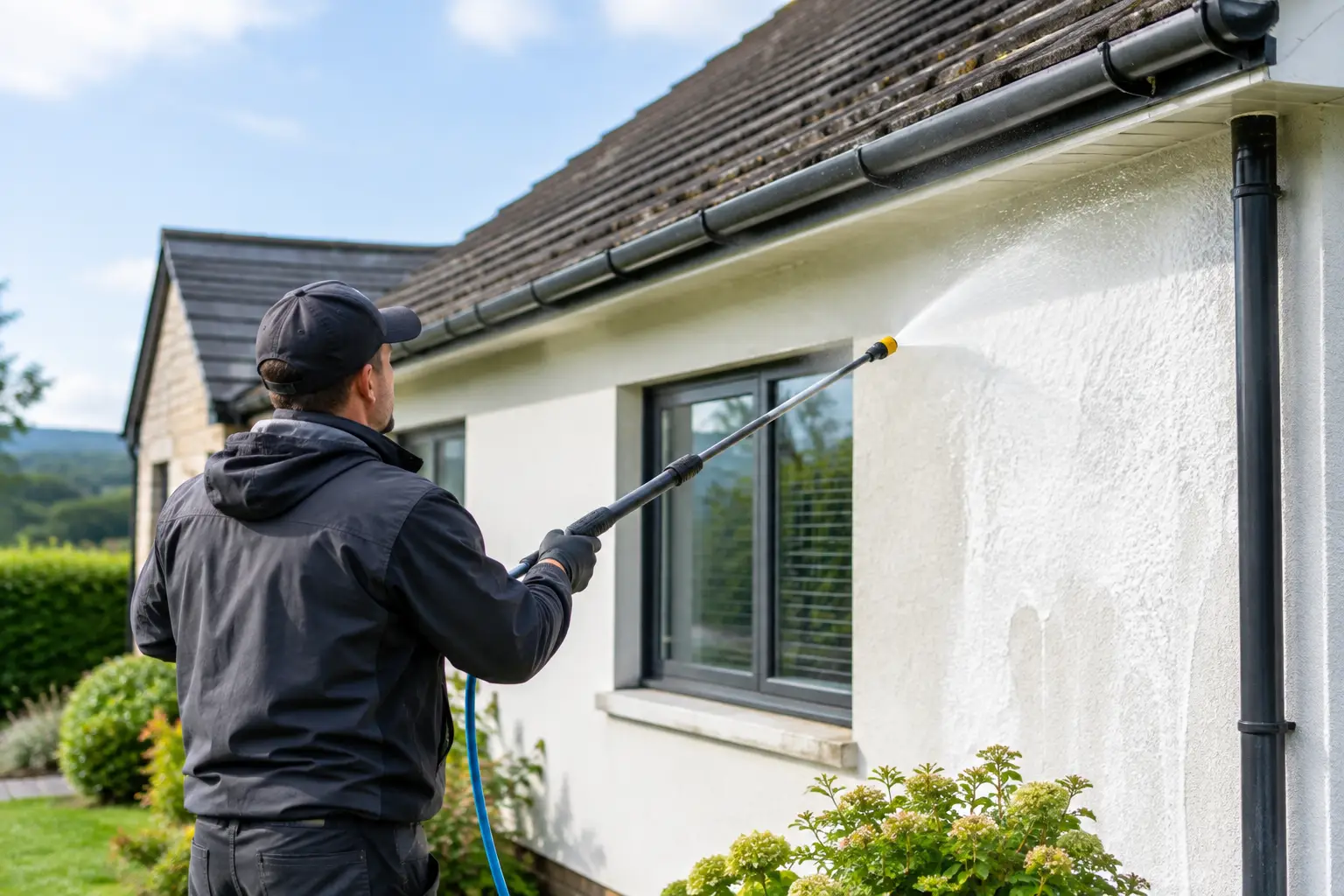
Soft washing versus pressure washing is not simply a choice between a gentle clean and a stronger one. The right method depends on the surface, the type of contamination and its condition. A patio with embedded grime needs a different approach from algae-covered render, a mossy roof or weathered block paving. Choosing the wrong one can leave staining behind, disturb jointing material or put unnecessary stress on a delicate finish.
For most properties, the sensible answer is that both methods have a place. Pressure washing is highly effective on durable hard surfaces. Soft washing is generally better suited to surfaces where biological growth needs treating without the force of high-pressure water. A proper assessment looks beyond how dirty something appears and considers what it is made from, how it was installed and what result is realistic.
What is the difference between soft washing and pressure washing?
Pressure washing removes surface dirt using water delivered at controlled pressure. It is often used for paving, concrete, some brickwork, driveways and other robust exterior surfaces. Professional equipment may be capable of 3,500 to 4,000 PSI, but the available pressure is not the setting used on every job. The operator adjusts the method, nozzle, distance and pressure to suit the material and contamination.
Soft washing uses low-pressure application to treat organic growth such as algae, moss, lichen and mould. Rather than relying on force to blast contamination away, the treatment is allowed to work on the growth itself before the surface is carefully rinsed where appropriate. This makes it a practical option for many painted surfaces, render systems, roofs, cladding and other areas where high pressure could be unsuitable.
The visible result can sometimes look similar immediately after cleaning, but the processes are different. Pressure washing is primarily about controlled physical removal. Soft washing is primarily about treatment and low-pressure cleaning. The best option is determined by the surface, not by whichever machine looks most powerful.
When pressure washing is the better choice
Pressure washing is often the right approach for hard landscaping that has collected dirt through regular use and weather exposure. Driveways, patios, paths and block paving can hold mud, tyre marks, algae, black spotting and general grime within their textured surface. On a suitable substrate, controlled pressure can lift this contamination efficiently and restore a cleaner, more even appearance.
Driveways and block paving
Block paving responds well to professional pressure washing when the blocks are stable and the joints are assessed first. The cleaning process can remove dirt, algae and weeds from the face of the paving, but jointing sand may also be displaced. Re-sanding is therefore an important consideration after cleaning block paving, helping to support the blocks and finish the surface properly.
Not every mark will vanish. Deep oil staining, old paint, mineral deposits and long-standing discolouration may need additional treatment or may remain partly visible. A credible cleaning assessment should distinguish between cleanable surface contamination and staining that has penetrated the material.
Patios, concrete and durable stone
Concrete and many patio surfaces can benefit from pressure washing, especially where foot traffic, shade and standing moisture have encouraged algae. Indian sandstone deserves more care than a standard concrete slab because its finish, jointing and existing condition can vary. Excessive pressure at close range can create an uneven appearance, so the method should be controlled rather than aggressive.
Pressure washing can also be appropriate for selected walls and brickwork, but only after considering mortar condition, paint, pointing and the source of the staining. Water ingress, loose mortar or friable brickwork changes the decision entirely.
When soft washing is the better choice
Soft washing is often chosen where the main problem is biological growth and the surface is not suited to direct high-pressure cleaning. Green algae on render, dark growth on painted masonry and lichen on roof tiles are common examples across Bolton, Greater Manchester, Cheshire and Lancashire, particularly on shaded elevations and north-facing surfaces.
Render, K Rend and silicone render
Render can look tired quickly when algae, pollution and weather staining settle into its textured finish. Pressure that is suitable for paving may be far too forceful for render, particularly where there are hairline cracks, weak areas or a decorative coating. Soft washing allows the contamination to be treated with low-pressure application, reducing the need to force water against the surface.
K Rend and silicone render should not be treated as identical simply because both are described as render. Their condition, coating history and contamination need checking before a cleaning method is selected. The objective is to improve the appearance without taking shortcuts that could make a sensitive surface look patchy or cause avoidable disruption.
Roofs affected by moss and lichen
Roofs need particular caution. Moss can retain moisture and create an untidy appearance, but roof tiles are not a surface for routine high-pressure washing. The cleaning method depends on the tile type, age, condition, access and the amount of moss or lichen present.
Soft washing and careful moss removal can form part of a roof-cleaning plan where appropriate. Loose material must be managed properly, and gutters should be considered as part of the process because dislodged debris can contribute to blockages. A roof that is already damaged, heavily worn or affected by loose tiles may need attention from a roofing professional before exterior cleaning is considered.