
Last Updated: November 13, 2026
Quick Summary
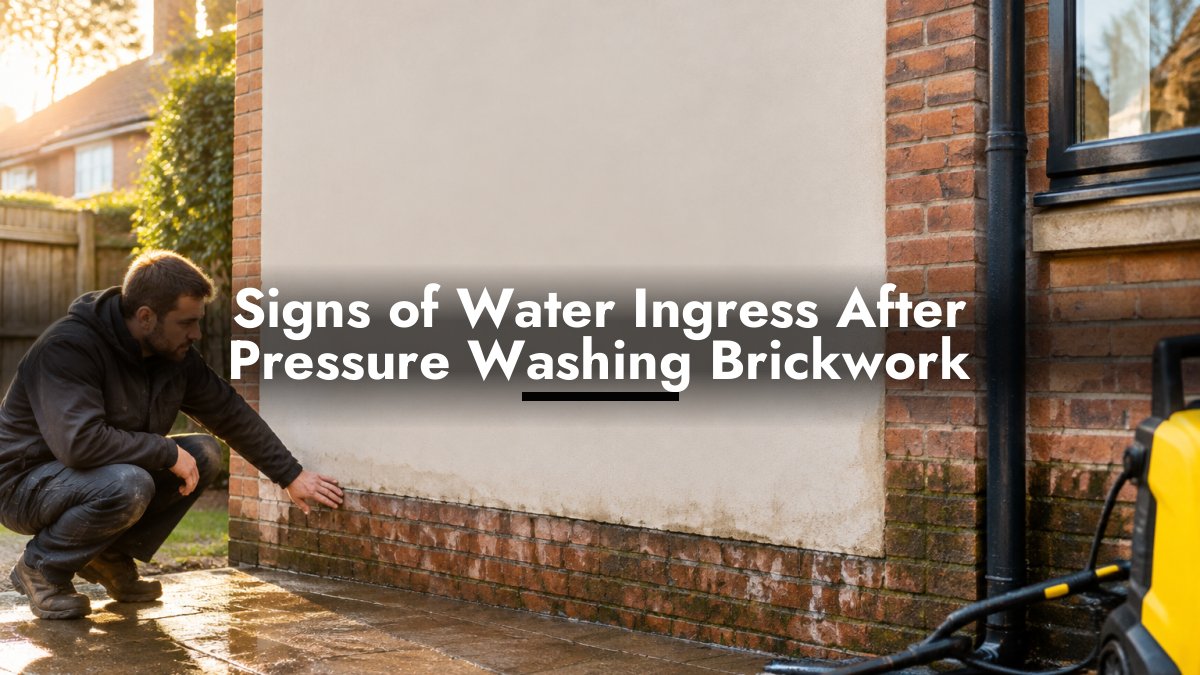
Water ingress after pressure washing brickwork shows up as damp patches on inside walls, a musty smell in upstairs rooms, crumbling mortar, or white salt blooms on the brick face. Check the inside face of the washed wall within 24 hours, then keep rechecking for a week because some symptoms arrive late.
- Brick is porous, so a jet held too close or angled upward can force water past the surface and behind the outer leaf.
- Damp patches on internal walls usually appear within days rather than hours after washing.
- Brickwork usually takes several days to a few weeks to dry, depending on weather, wall thickness and how much water soaked in.
- Never re-wash a wall to clean off a salt bloom, as this adds water to a wall that has not dried.
- Escalate if a damp patch spreads after three days, mould appears, or mortar crumbles when touched.
Table of Contents
- What Water Ingress After Pressure Washing Looks Like
- How Pressure Washing Forces Water Into Porous Brick
- Pressure Washing Damage to Brickwork and Pointing
- Damp Patches on Internal Walls After Pressure Washing
- A Timeline for Symptoms After Washing
- How Long Brickwork Takes to Dry After Cleaning
- Telling Water Ingress Apart From Condensation
- Safe Brick Cleaning Methods That Protect Your Walls
- Send Photographs for a Professional Assessment
- Frequently Asked Questions
What Water Ingress After Pressure Washing Looks Like
Water ingress after pressure washing brickwork shows up as damp patches on inside walls, a musty smell in upstairs rooms, crumbling mortar, or white salt blooms on the brick face. These are warning signs worth checking quickly, not cosmetic quirks.
Water ingress is the movement of water into a building's fabric where it should not be. In brickwork, that usually means moisture sitting inside the brick, behind the outer leaf, or in the wall cavity.
Here is the short answer most people need. If you spot symptoms within days of a clean, the washing is the likely trigger. If they appear weeks later, the wall may have had a weakness that the clean exposed.
The signs to watch for:
- Damp patches on internal walls, especially near the ceiling or under windows
- A musty smell in a room with an outside wall
- White, powdery staining on the brick surface
- Crumbling or hollow-sounding mortar joints
- Blown paint or bubbling render on the outside wall
Below, we explain how to read each sign, how long brickwork takes to dry, and when to call in a professional.
The Immediate Signs to Check First
Check the inside face of the washed wall within 24 hours. Look for darkening plaster, tide marks, or a cold, clammy feel near skirting boards.
Then walk outside and look at the brick face. Fresh pitting, sandy mortar, or a chalky white bloom are all clues. Take photos of anything you find, with a date.
A quick first checklist:
- Run a hand along the inside wall. Damp feels colder than the surrounding plaster.
- Look under windows and at the base of the wall.
- Check the loft for damp patches on rafters or felt.
- Smell the room. A musty odour points to trapped moisture.
If everything looks dry, keep checking for a week. Some symptoms arrive late.
How Pressure Washing Forces Water Into Porous Brick
Pressure washing drives water into brick because brick is porous and force pushes moisture past the surface. A jet aimed at the wall can send water into the brick face, into open mortar joints, and behind the outer leaf.
Brick is fired clay. It absorbs and releases moisture naturally. That is fine when water arrives as rain and evaporates freely.
High pressure changes the equation. Force sends water deeper than capillary action alone would carry it. Spray angle matters too. An upward spray can push water up and behind bricks, where it has nowhere to drain.
Watch out: this is the mistake we see most often. A jet pointed up at a wall, or held too close, is the fastest route to trouble.
The Brick Industry Association's brick masonry maintenance guidance makes a related point: resolve water-entry problems before cleaning, or the problem returns.
If you want the full comparison of methods, our guide on soft washing versus pressure washing explained covers where force is wrong and where it works.
Pressure Washing Damage to Brickwork and Pointing
Pressure washing damage to brickwork and pointing shows as eroded brick faces, sandy or missing mortar, and joints that crumble when touched. The damage is often worse on older, softer bricks than on modern engineering brick.
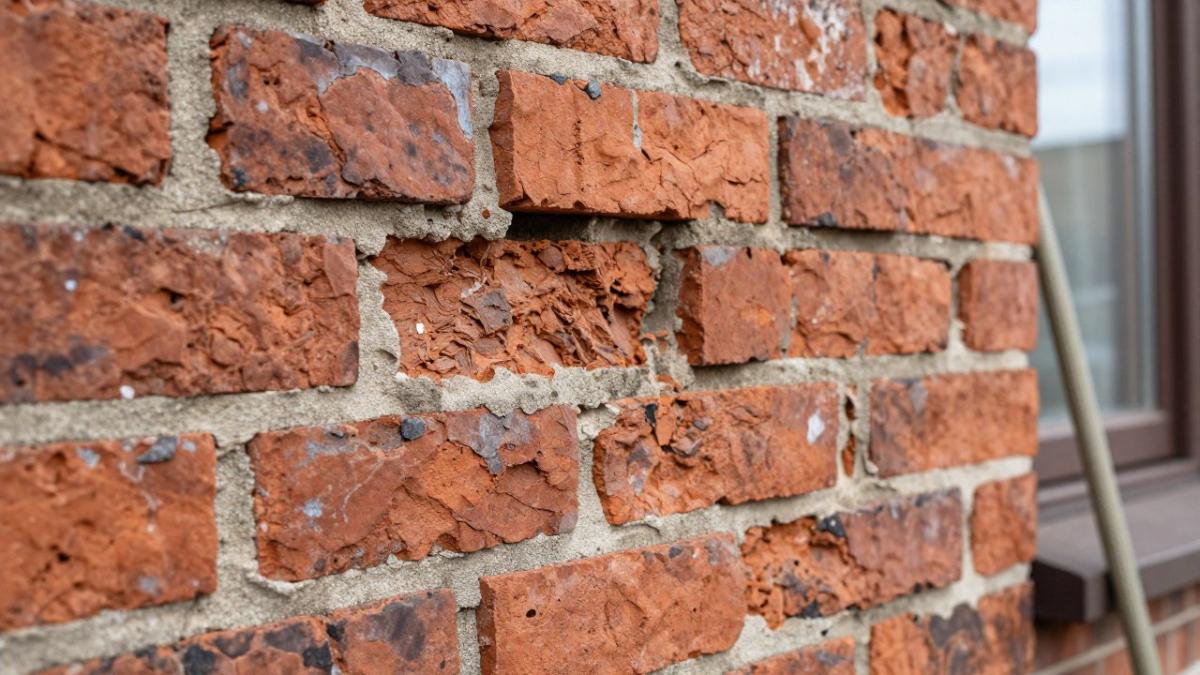
Mortar is usually softer than the brick. A jet that is safe on the brick face can still blast out the pointing. Once joints are open, water has a direct route into the wall.
Look for these:
- Pitting: small craters on the brick face where the surface has been eroded
- Mortar loss: joints recessed deeper than they should be
- Cracked mortar: hairline cracks that let water in
- Rough texture: a face that used to be smooth but now feels gritty
Older properties need extra care. If your home is period or listed, our article on cleaning listed and period property exteriors explains why condition-led assessment matters before any clean.
Damp Patches on Internal Walls After Pressure Washing
Damp patches on internal walls after pressure washing usually appear within days, not hours. They show as darker plaster, tide marks, or a cool, damp feel near the base of the wall.
This is the sign most homeowners notice first. It can be alarming, and it should prompt a check.
What the patches can mean:
- Water has crossed the wall and reached the inner leaf
- Water is sitting in the cavity and bridging to the inside
- An existing weakness, such as cracked render or failed pointing, has let water in
One important point. Water appearing inside after washing does not always prove the washing caused it. A discussion among homeowners about water inside after pressure washing makes the case that it may point to a pre-existing weakness in the brickwork or mortar. Treat it as a clue to investigate, not a verdict.
If the patches spread or do not dry, get them looked at.
A Timeline for Symptoms After Washing
Symptoms after pressure washing tend to follow a rough timeline: hours for surface darkening, days for internal damp patches, and weeks for mould or musty smells. The timing helps you work out what you are dealing with, and it also tells you when to recheck and when to act.
Here is how it usually plays out:
| Timeframe | What you may see | What it suggests | What to do |
|---|---|---|---|
| 0-24 hours | Darker brick, damp-looking mortar | Normal wetting, should dry | Photograph the wall, note the time, ventilate rooms |
| 1-3 days | Damp patches on inside walls | Water crossed the wall | Recheck morning and evening, photograph with a scale |
| 3-7 days | White salt bloom on brick face | Moisture moving through the brick | Note the location, do not seal or paint |
| 1-4 weeks | Musty smell, mould growth | Moisture trapped inside | Ventilate, avoid disturbing mould, seek assessment |
| 4+ weeks | Persistent damp, paint failure | Underlying weakness or blocked drainage | Stop further washing, arrange a professional inspection |
Use this as a guide, not a rule. Weather, wall construction, and how wet the clean made things all shift the timing.
What to Recheck and When
The timeline is only useful if you actually go back and look. A simple routine works better than a one-off glance:
- Day 1: check the inside face of the washed wall and the loft for any darkening or damp smell.
- Day 3: recheck the same spots. If a patch has grown or a new one has appeared, note it with a date and a photograph.
- Day 7: look for salt bloom on the brick face and any new musty smell in adjoining rooms.
- Week 4: if anything persists, treat it as a signal to stop washing and get the wall assessed rather than cleaned again.
A common pattern is that symptoms appear in the room directly behind the washed elevation first, then spread to adjoining rooms if moisture is trapped. Checking only the obvious room can miss the early signs.
When to Escalate
Some symptoms settle on their own as the wall dries. Others do not, and waiting too long can turn a small weakness into a bigger repair. Escalate if:
- A damp patch spreads beyond its original outline after three days
- Mould appears on plaster or skirting boards
- Mortar crumbles when touched or joints look hollow
- The musty smell persists after a week of ventilation
- Paint or render bubbles on the outside wall
Watch out: do not re-wash the wall to "clean off" a salt bloom or a damp stain. That adds more water to a wall that has not dried and can make the problem worse.
How Long Brickwork Takes to Dry After Cleaning
Brickwork usually takes several days to a few weeks to dry after cleaning, depending on weather, wall thickness, and how much water soaked in. There is no single number, and anyone who gives you one is guessing.
Drying time depends on:
- Weather: warm, breezy days dry brick far faster than cold, damp ones
- Wall type: solid walls dry more slowly than cavity walls
- How wet it got: a light soft wash dries faster than a soaked pressure wash
- Shelter: walls shaded all day hold moisture longer
Bolton and Lancashire Building Context
In Bolton and across Lancashire, the local climate and housing stock both matter. Rainfall is frequent and often driven against exposed elevations, and many older terraced and semi-detached properties have solid brick walls rather than cavity walls. Solid brick dries more slowly because moisture has to travel through the full thickness of the wall to escape.
Older brickwork in the region is also more likely to have soft, sandy mortar and weathered faces. That combination means a wall can look dry on the surface while still holding moisture deeper in. Property condition matters more than location alone, but the local pattern is worth knowing: exposed elevations, older solid walls, and damp autumn weather all extend drying time.
