
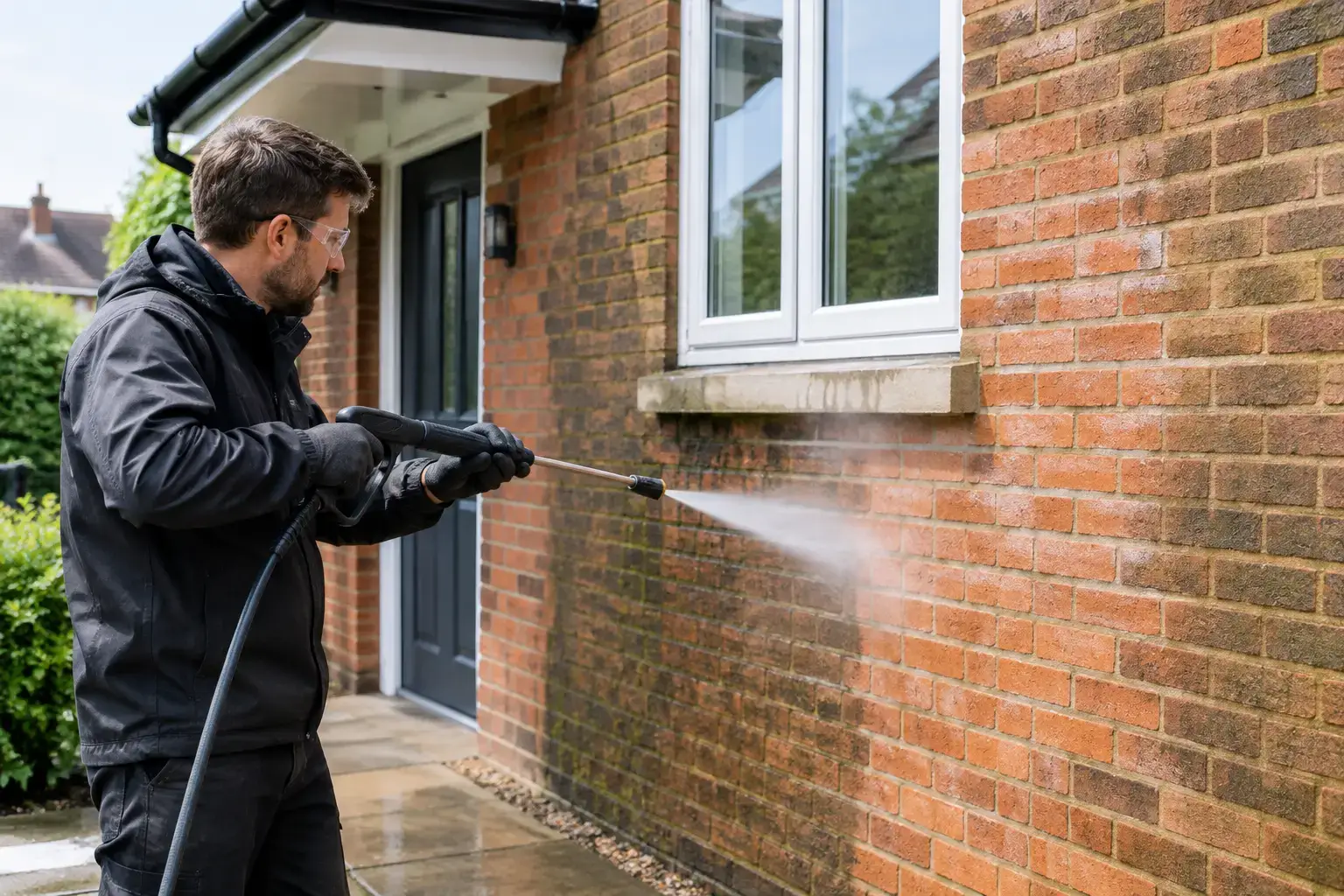
Brick walls rarely become dirty in one obvious moment. Green algae can spread across shaded garden walls, traffic film can dull a front elevation and black staining can settle beneath rooflines or around damp areas. This brickwork cleaning methods guide explains how the right approach depends on the brick, the mortar, the contamination and the condition of the wall - not simply on how dirty it looks.
For homeowners, landlords and property managers, the safest starting point is an assessment of the surface. Brickwork is durable, but it is not all the same. Older handmade brick, soft mortar, painted walls, repaired sections and modern facing brick can react very differently to water pressure and cleaning products. A method that improves one wall may be unsuitable for another.
Start with the brickwork, not the machine
The purpose of brick cleaning is to remove unwanted surface growth or staining while keeping the face of the brick and the mortar joints in good condition. That means identifying what is on the wall before choosing a cleaning method.
Algae and moss are common on north-facing walls, boundary walls and areas shaded by trees. They hold moisture against the surface and can make brickwork look persistently damp. Soot, traffic film and general atmospheric grime are more likely on front elevations, chimney breasts and commercial buildings near busy routes. White deposits may be efflorescence - salts carried to the surface as moisture evaporates - rather than ordinary dirt. Rust, paint, cement splashes and oil staining each need a different response again.
A good cleaning plan also considers the wall itself. Loose or missing mortar, spalled brick faces, cracked coping stones, failing pointing and open joints should be noted before cleaning begins. Cleaning cannot repair defective brickwork, and forcing water into existing weaknesses can make a maintenance issue more visible.
The main brickwork cleaning methods
Controlled pressure washing
Pressure washing can be effective for sound, hard-facing brickwork with accumulated grime, algae or moss. The key word is controlled. Water pressure, flow rate, nozzle choice, working distance and angle all affect the result. A close, aggressive jet can erode soft mortar, strip weathered brick faces or leave visible cleaning lines.
Where pressure is suitable, it should be adjusted to the wall rather than treated as a one-setting solution. Commercial equipment can provide the control needed for larger or more heavily soiled areas, but high capability does not mean maximum force is the right choice. Delicate areas, mortar joints, air bricks, vents, windows and adjacent surfaces need particular care.
Pressure washing is often useful on garden walls, brick paving edges and newer external brickwork. It may be less suitable for old, friable brick, poorly pointed walls or surfaces where staining has penetrated beyond the outer layer.
Low-pressure treatment for organic growth
For algae, moss and lichen, a low-pressure treatment may be more appropriate than relying on force alone. The treatment is selected for the contamination and allowed to work on the biological growth, followed by a suitable rinse or gentle cleaning process where required.
This approach can be particularly useful on textured brickwork, shaded elevations and walls with mortar that should not be exposed to harsh pressure. Results still depend on the wall’s condition, drainage, shade and the source of recurring moisture. If an overhanging tree, leaking gutter or poor drainage continues to keep the wall damp, new growth can return over time.
Hot-water cleaning for stubborn grime
Hot water can help lift ingrained dirt, oily deposits and certain heavy surface contaminants. It is not necessary for every brick-cleaning task, but it can be useful where cold-water washing alone is unlikely to shift the build-up effectively.
Temperature must be used with the same judgement as pressure. On a sound surface, hot-water cleaning may reduce the need for excessive force. On damaged, painted or sensitive brickwork, testing and careful method selection remain essential.
Specialist stain treatment
Some marks will not respond well to water-based cleaning. Rust staining, paint residues, cement marks and efflorescence require investigation before any product is applied. Using the wrong chemical can alter the colour of brick, damage mortar or create a patchy appearance that is harder to correct.
Acid-based cleaners are often presented as a quick answer to masonry staining, but they are not a general-purpose solution. They can be risky on certain brick and mortar types and should not be used casually on a visible elevation. A small test area and a method matched to the stain are more sensible than treating the whole wall on assumption.
What should not be cleaned aggressively?
Not every dirty wall needs a full wash. Some aged brickwork has a naturally varied appearance, and attempting to make it look uniformly new can remove the character of the surface or expose differences between old repairs and original brick.
Extra caution is sensible around listed or heritage properties, lime mortar, soft red brick, decorative brickwork, painted masonry and walls with existing deterioration. If the face of the brick is flaking, powdery or breaking away, cleaning may need to wait until repair work has been considered. The same applies where pointing is visibly loose or where water is entering through defective flashings, gutters or copings.
A wall can also look worse immediately after cleaning if it reveals mismatched replacement bricks, previous paint marks or long-standing staining beneath the dirt. This is not necessarily a cleaning failure. It is a reminder that cleaning improves the visible surface but does not erase the building’s maintenance history.