
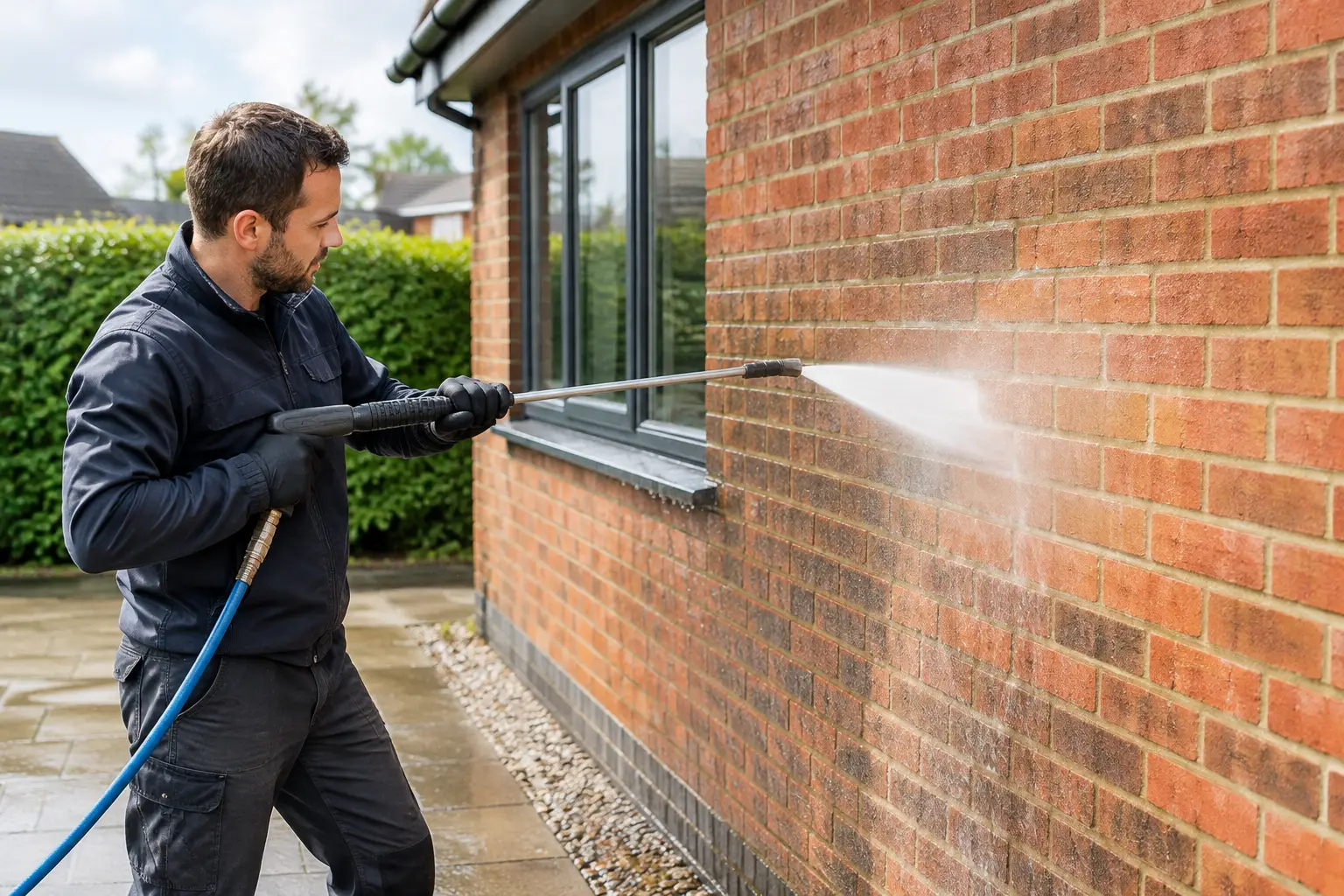
A brick wall can look tired long before the brick itself has failed. Green algae on shaded elevations, black staining below overflowing gutters, lichen on boundary walls and traffic grime on commercial frontages all change the appearance of a property. Brick cleaning can improve that appearance, but the right approach depends on the brick type, mortar condition and cause of the staining. It is not simply a case of applying the highest available pressure.
For homeowners, landlords and property managers, the sensible starting point is an assessment of the wall rather than a one-size-fits-all cleaning method. Refresh & Revive Exterior Cleaning is based in Bolton and provides wall and brick cleaning across Greater Manchester, Cheshire, Lancashire and the wider North West, selecting controlled-pressure or low-pressure treatment according to the surface and its condition.
What is causing the brickwork to look dirty?
Brickwork is porous to varying degrees, so it can hold surface contamination and moisture differently from one elevation to another. The north-facing side of a house, a wall beneath overhanging trees or brickwork close to a busy road can weather in a noticeably different way from the rest of the property.
Algae is often responsible for green discolouration, particularly where the wall remains damp or receives little direct sunlight. Moss and lichen can develop in sheltered areas, on coping bricks and around joints. Black marks may be linked to atmospheric dirt, water run-off or staining beneath gutters, downpipes and roof edges.
Before cleaning starts, it is worth considering whether there is an underlying moisture issue. A blocked gutter, leaking joint or poorly directed downpipe can keep a wall wet and encourage repeat growth. Cleaning the brickwork without addressing the source may improve the appearance temporarily, but it will not correct the condition that caused the problem.
Brick cleaning starts with the condition of the wall
Not all brickwork should be treated in the same way. Dense modern facing brick may tolerate a different process from handmade brick, soft red brick, reclaimed materials or older mortar. The age and condition of pointing matter just as much as the face of the brick.
Loose, cracked or eroded mortar needs careful consideration before any wash-down. Directing excessive pressure at weakened joints can remove material and leave the wall looking worse than it did before. Spalled brick faces, where the outer surface has begun to break away, are another sign that a gentle approach or repair advice may be more appropriate than intensive cleaning.
A professional assessment should look at the following practical points: the type and condition of brick, the strength of the mortar, the extent of organic growth or staining, access to the wall and whether water is likely to affect nearby doors, windows, air bricks, plants or neighbouring surfaces. These details determine the method, not the other way round.
When controlled pressure may be suitable
Controlled pressure can be useful for durable brickwork with established surface dirt, algae or general weathering. The aim is to lift contamination from the surface while managing water flow and avoiding unnecessary force around mortar joints, window reveals and decorative details.
Commercial cleaning equipment gives an operator greater control than domestic machines, but equipment alone does not make a method suitable. Pressure, nozzle selection, working distance and the condition of the wall all affect the result. On some surfaces, hot-water capability can assist with stubborn grime, although it is not automatically the best answer for every wall.
When a lower-pressure treatment is the better option
Low-pressure treatment is often a more suitable route where organic growth is the main issue, or where the brickwork and pointing call for a more cautious process. It can deal with algae, moss and lichen without relying on force to strip the wall clean.
This approach is particularly relevant for older properties, rendered areas adjoining brickwork and walls with fragile joints. The wall may still need rinsing or follow-up work, but the emphasis remains on treating the contamination in a way that respects the surface.
There is a trade-off. A lower-pressure method may not remove every deeply embedded mark, particularly where staining has penetrated the brick or where paint, cement residue, rust or efflorescence is involved. Setting realistic expectations before work begins is part of responsible brick cleaning.
Problems that cleaning alone may not solve
A cleaner wall is not necessarily a repaired wall. Brick cleaning can remove or reduce many visible contaminants, but certain defects and stains need separate attention.
White, powdery deposits may be efflorescence, which occurs when salts move through damp masonry and dry on the surface. It can sometimes be brushed or cleaned away, but if moisture continues to enter the wall, it may reappear. Cracked bricks, failing pointing, loose copings and penetrating damp require diagnosis or repair rather than repeated washing.
Paint, graffiti, oil marks, old cement splashes and rust staining also need a site-specific assessment. A method that works well for algae may be ineffective or unsuitable for another type of mark. Aggressive cleaning in an attempt to make every stain disappear can alter the brick face or damage mortar, so a measured outcome is often the better standard.