

Last Updated: 14 November 2026
Quick Summary
The driveway cleaning cost in Bolton depends mainly on driveway size, surface material, the amount of moss, weeds and staining, and how easily the crew can access the site. Every job is quoted individually after an assessment, so comparing quotes like-for-like matters.
- Size is usually the biggest single factor, and shape adds time around edges and corners.
- Block paving joints can need re-sanding after cleaning, which adds to the quote.
- Oil stains need specialist degreasers and may not disappear completely.
- Access, parking, water supply and nearby surfaces all affect how long the job takes.
- Send clear photographs and approximate dimensions to receive an accurate quote.
Table of Contents
- What Drives Driveway Cleaning Cost in Bolton
- How Driveway Size and Shape Change the Price
- How Surface Material Affects the Cleaning Method and Cost
- Block Paving Cleaning Cost: Why Joints and Sand Matter
- How Moss, Weeds and Compacted Dirt Raise the Quote
- Oil Stain Removal From Driveway: Why Stubborn Marks Cost More
- How Access, Parking and Site Conditions Affect Your Quote
- How Long Does Driveway Cleaning Take?
- What to Send for an Accurate Driveway Cleaning Quote
- Frequently Asked Questions
What Drives Driveway Cleaning Cost in Bolton
Driveway cleaning cost in Bolton depends on size, surface type, how dirty the driveway is, and how much access the crew has. Each job is quoted individually after the site has been assessed, so no two quotes are built the same way.
The most useful thing you can do before asking for a quote is to understand what the price is made of. Once you know the factors, a quote is far easier to read and compare.
- Driveway size and shape
- Surface material, such as block paving, concrete or natural stone
- Moss, weeds, algae and compacted dirt
- Stubborn stains, including oil marks
- Access, parking and site conditions
- Any extra work, such as weed removal or re-sanding
Watch out: a very low quote that does not mention the surface type or condition often means the work scope has not been properly assessed.
How Driveway Size and Shape Change the Price
Size is usually the biggest single factor in driveway cleaning cost. A larger area takes more time, more water and more labour. Shape matters too. A long, narrow drive with tight corners takes longer per square metre than a simple rectangle, because the team has to work around edges, walls and planting.
Measure your driveway roughly before you ask for a quote. Multiply length by width for a rectangular drive. For an L-shaped or curved drive, split it into simple sections and add them together. This gives the assessor a useful starting point, though they will confirm the final area on site.
Many people overlook the edges. Driveway edges, kerb lines and the strip along a garage door often hold the most dirt and moss. Including them in your measurement gives a more realistic picture of the work involved.
How Surface Material Affects the Cleaning Method and Cost
The surface is the first thing a professional assesses because it dictates the method, the chemistry, and the time, and therefore the cost. Block paving, concrete, tarmac, Indian sandstone and porcelain each behave differently under pressure, water temperature and detergent. Using the wrong combination can etch a surface, wash out jointing sand, strip a seal, or leave a patchy finish that is expensive to correct.
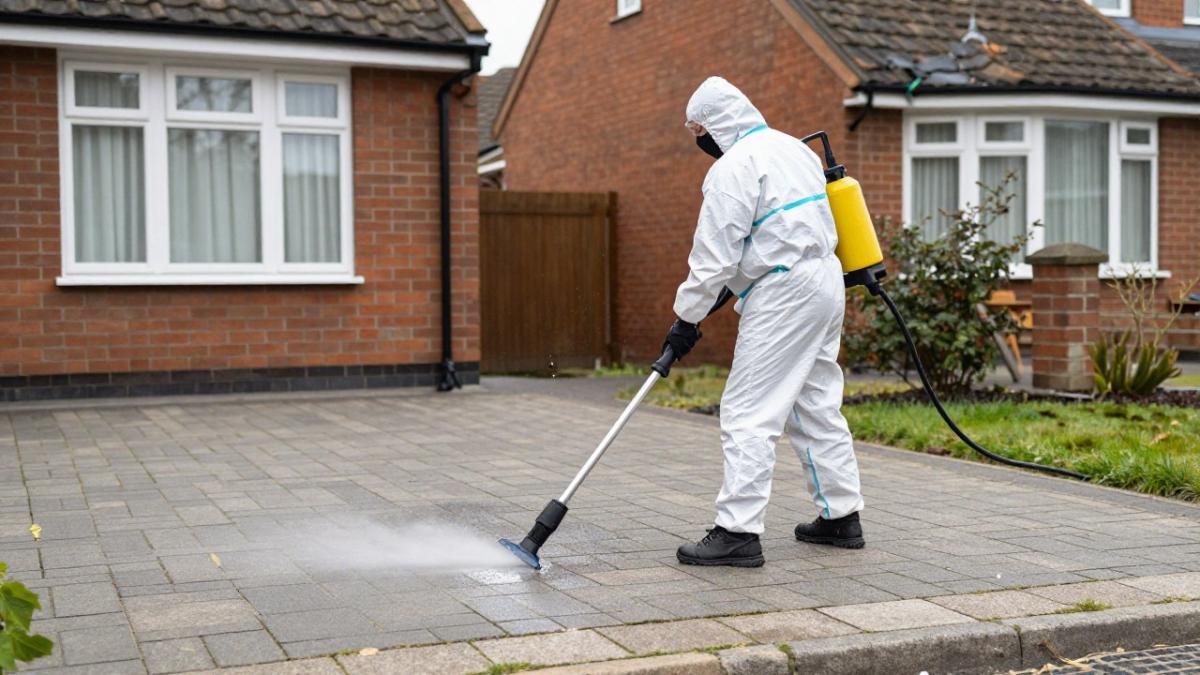
A responsible quote explains why your surface needs a particular approach.
Block paving
Block paving is a common driveway surface in Bolton and across Greater Manchester. The blocks themselves clean well with controlled pressure and a surface cleaner, but the joints are the weak point. Too much pressure can wash out the jointing sand, leaving blocks loose and weeds quick to return. A proper job removes moss and weeds from the joints, cleans the blocks, and then re-sands the joints where needed.
Concrete
Concrete is porous and often stained by algae, moss and ground-in dirt. It usually needs a pre-treatment to lift organic growth, then a controlled wash. Old concrete can be brittle and may have hairline cracks that high pressure will widen. Hot water can help with greasy contamination, but the pressure still needs to be managed.
Tarmac
Tarmac cleans quickly with low-to-moderate pressure, but it is soft and can be marked by aggressive nozzles or hot water. New tarmac should be left for several months before cleaning. The cost is often lower than block paving because there are no joints to re-sand, but the trade-off is that tarmac shows wear and staining more readily.
Natural stone, including Indian sandstone
Natural stone is porous and can be damaged by high pressure, which may strip the surface and leave a permanently etched patch. It usually needs a gentler approach, low pressure with a suitable detergent and agitation, and sometimes a seal afterwards. The labour is higher because the method is slower, which is reflected in the quote.
Porcelain and other dense tiles
Porcelain is dense and less porous, so it often cleans well with controlled pressure and can be sealed. It is less prone to staining than concrete or sandstone, but the joints still need attention and the surface can be slippery when wet.
What this means for your quote
Surface type affects cost in four practical ways:
- Method and pressure: softer or more porous surfaces need lower pressure and more time.
- Chemistry: some surfaces need a specific detergent or pre-treatment, which adds cost.
- Joint and edge work: block paving and tiled surfaces need joint attention and re-sanding.
- Aftercare: sealing or re-sanding may be recommended, and that is a separate line on the quote.
If you are unsure what your driveway is made of, send a close-up photograph with your enquiry, and the surface and suitable method can be discussed before any visit. Our driveway cleaning service in Bolton page sets out how we match method to surface across the area.
Block Paving Cleaning Cost: Why Joints and Sand Matter
Block paving is one of the most common driveway surfaces in the North West. Cleaning the blocks is only part of the job. The jointing sand between them matters just as much.
Over time, sand can wash out or become compacted with dirt. Weeds and moss take hold in the gaps. A proper clean removes the growth and debris, and then the joints may need re-sanding so the blocks stay locked together. This extra step adds to the cost, but it prevents weeds returning and blocks shifting.
If your block paving has sunken or loose blocks, that is a separate repair question, as cleaning alone will not fix it.
How Moss, Weeds and Compacted Dirt Raise the Quote
Moss, weeds and compacted dirt add time because they must be removed before the surface can be properly cleaned. Our guide on why moss keeps returning to driveways explains what treatment-led cleaning does about it and which simple habits help keep growth in check. Moss on a driveway is often treated first, then left to die back before the final clean. Weeds are best pulled or treated at the root rather than only sprayed on the surface.
Compacted dirt in joints or on the surface takes more effort to lift than loose debris.
Regular maintenance can reduce the amount of work needed over time.
Oil Stain Removal From Driveway: Why Stubborn Marks Cost More
Oil soaks into porous surfaces, and a standard wash often only spreads the stain or lightens it. Removing it usually needs a specialist degreaser, time to work, and sometimes several passes.
Older stains, large patches and stains on concrete are harder to lift than fresh drips on block paving. Some marks will improve a lot but may not disappear completely.
If you want to understand the stain removal process in more detail, our guide on oil stain removal from driveways explains what works on different surfaces and when a professional is the better choice.
How Access, Parking and Site Conditions Affect Your Quote
Access and site conditions are the factors most often left out of online price guides, yet they can change a quote as much as size or surface. They affect how long the crew is on site, how much equipment can be used, and how much protection is needed for nearby property.
Access and parking
A clear, direct route from the van to the driveway is the ideal. Narrow side gates, steps, steep slopes, or a driveway that can only be reached through a house or garage all add time. If vehicles are parked across the driveway, the team may need to work around them or ask for them to be moved, and that can extend the visit. In Bolton and the surrounding towns, terraced streets and shared access can make parking and setup slower than on a wide suburban drive.
