
Last Updated: October 29, 2026
Quick Summary
Driveway moss returns because the conditions that let it start never went away: shade, trapped moisture and debris in joints or cracks give spores somewhere to settle. Cleaning removes the growth you can see but does not change the environment that invited it, so regrowth follows unless drainage, airflow and debris are addressed.
- Moss needs moisture, shade and a rough surface to grip, so removing any one of these slows it down.
- Block paving is the worst offender because sand joints hold damp and give spores a foothold.
- High-pressure washing can leave roots behind and strip jointing sand, creating more places for water to sit.
- Clear leaves and debris every few weeks in autumn and re-sand joints when they hollow out.
- Treatment reduces growth but does not promise permanent removal, so anyone guaranteeing that is overselling.
Table of Contents
- Why Does Moss Return to a Driveway?
- The Conditions Moss Needs to Establish
- Shade, Moisture and Debris: The Three Drivers of Driveway Moss
- Does Pressure Washing Make Moss Grow Back Faster?
- How to Prevent Moss on Patio and Driveway Surfaces
- The Right Treatment for Your Surface: Block Paving, Tarmac and Concrete
- Looking for Jet Wash Driveways Near Me? What a Proper Visit Involves
- A Simple Driveway Maintenance Checklist
- Book a Driveway Assessment with Refresh Revive
- Frequently Asked Questions
Why Does Moss Return to a Driveway?
Moss returns to a driveway because the conditions that let it start never went away. Shade, trapped moisture and debris sitting in joints or cracks give spores somewhere to settle. The UK's frequent rainfall and mild temperatures make that worse, as Pure Seal Services' guide to recurring driveway growth explains. A drive cleaned in spring can look tired again by autumn if the underlying conditions are left unchanged.
Cleaning removes the growth you can see. It does not change the environment that invited it.
So the honest answer to "why does moss return to driveway surfaces so fast?" is that moss is a symptom, not the cause. For the full picture of why driveways go green in Bolton and what cleaning can realistically fix, that guide is worth reading. Fix the cause and regrowth slows. Ignore it and you will be back to square one.
Below, we explain what drives driveway moss, which treatments suit which surface, and how to keep it away for longer.
The Conditions Moss Needs to Establish
Moss needs three things: moisture, shade and a rough surface to grip. Take away any one and it struggles.
Moss absorbs water and nutrients straight from its surroundings. Even small changes in light, soil and damp decide where it takes hold, according to Field Museum research on moss colonisation. That is why one corner of a drive greens over while the rest stays clear.
Driveways offer all three in abundance:
- Moisture from rain, run-off and poor drainage
- Shade from walls, hedges, fences and parked cars
- Texture from joints, cracks and worn sealant
Block paving is the worst offender. Sand joints hold damp and give spores a foothold. Concrete and tarmac crack with age, and those cracks collect grit and water.
Shade, Moisture and Debris: The Three Drivers of Driveway Moss
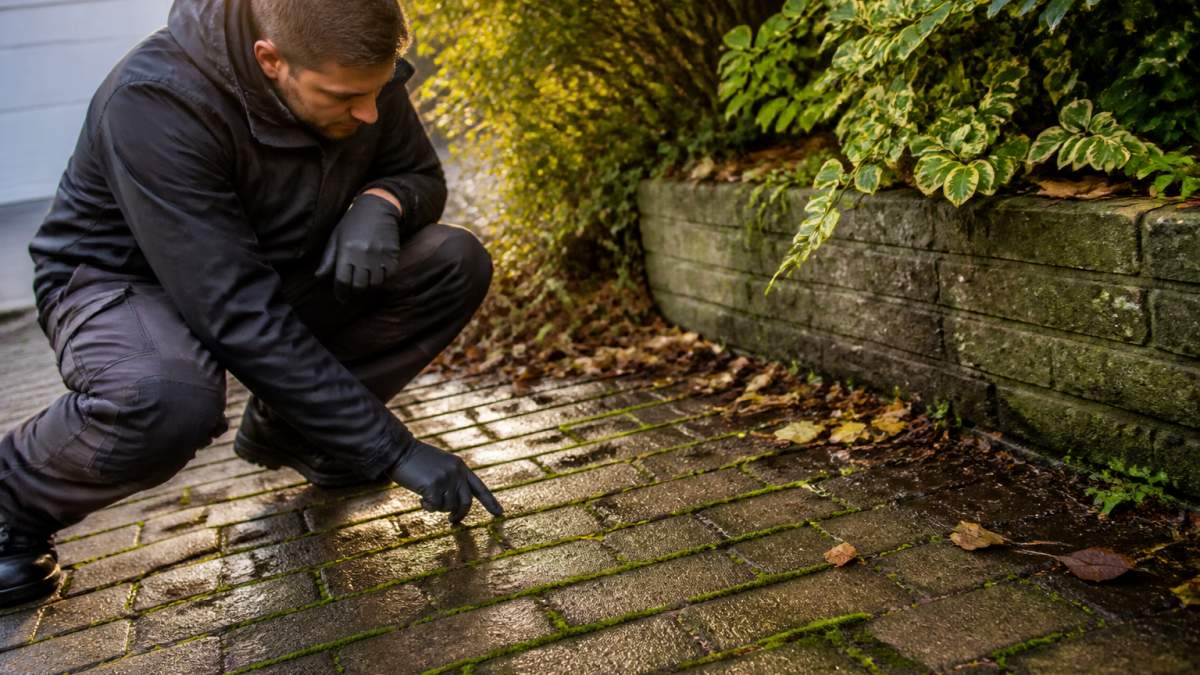
Of the three drivers, moisture does the most damage. A drive that stays wet for hours after rain will always green faster than one that drains freely.
Shade comes second. North-facing drives, or those under trees, dry out slowly. Moss loves that.
Debris is the one most homeowners overlook. Fallen leaves, soil splash and grit collect in joints. That mix becomes a thin growing medium. Clean it out and you remove the moss's bed.
Watch out: leaving leaf litter down through autumn and winter is one of the most common reasons a freshly cleaned drive regrows so quickly.
Does Pressure Washing Make Moss Grow Back Faster?
Yes, it can. High-pressure washing can blast moss off the surface while leaving roots behind in joints and cracks, and it can strip jointing sand, creating more places for water to sit.
That is why treatment-led cleaning is generally preferable to brute force. A sound approach uses controlled pressure matched to the surface, plus a treatment that targets growth at the root. On block paving, the work typically involves rotary cleaning, hand-lancing the edges and reinstating kiln-dried sand, since open, damp joints encourage regrowth.
If your joints are already hollow, re-sanding is usually needed.
How to Prevent Moss on Patio and Driveway Surfaces
Prevention starts with drainage and airflow. Clear the obvious problems first, then keep on top of them.
Here is what actually works:
- Clear leaves and debris every few weeks, especially in autumn
- Fix drainage so water does not pool in dips or along edges
- Trim back overhanging plants to let light and air reach the surface
- Re-sand joints when they hollow out
- Treat growth before it spreads, not after
For a deeper look at why drives go green and what cleaning can realistically put right, the topic is worth reading up on before booking any work. When you are ready to act on prevention, you can see the driveway cleaning service in Bolton and across the North West that puts it into practice.
The Right Treatment for Your Surface: Block Paving, Tarmac and Concrete
Different surfaces need different methods. Using one approach everywhere is how damage happens.
Block paving generally responds well to careful cleaning and fresh jointing sand. Whether a sealer suits it depends on the blocks.
Tarmac is softer and generally needs low pressure and a gentler treatment, especially in warm weather.
Concrete can tolerate more pressure but still stains and cracks. Treatment plus sealing where suitable can keep it cleaner for longer.
Indian sandstone and porcelain need care, as excessive pressure can strip the surface finish.
Sealing is worth considering on some surfaces and may not be worthwhile on others.
