
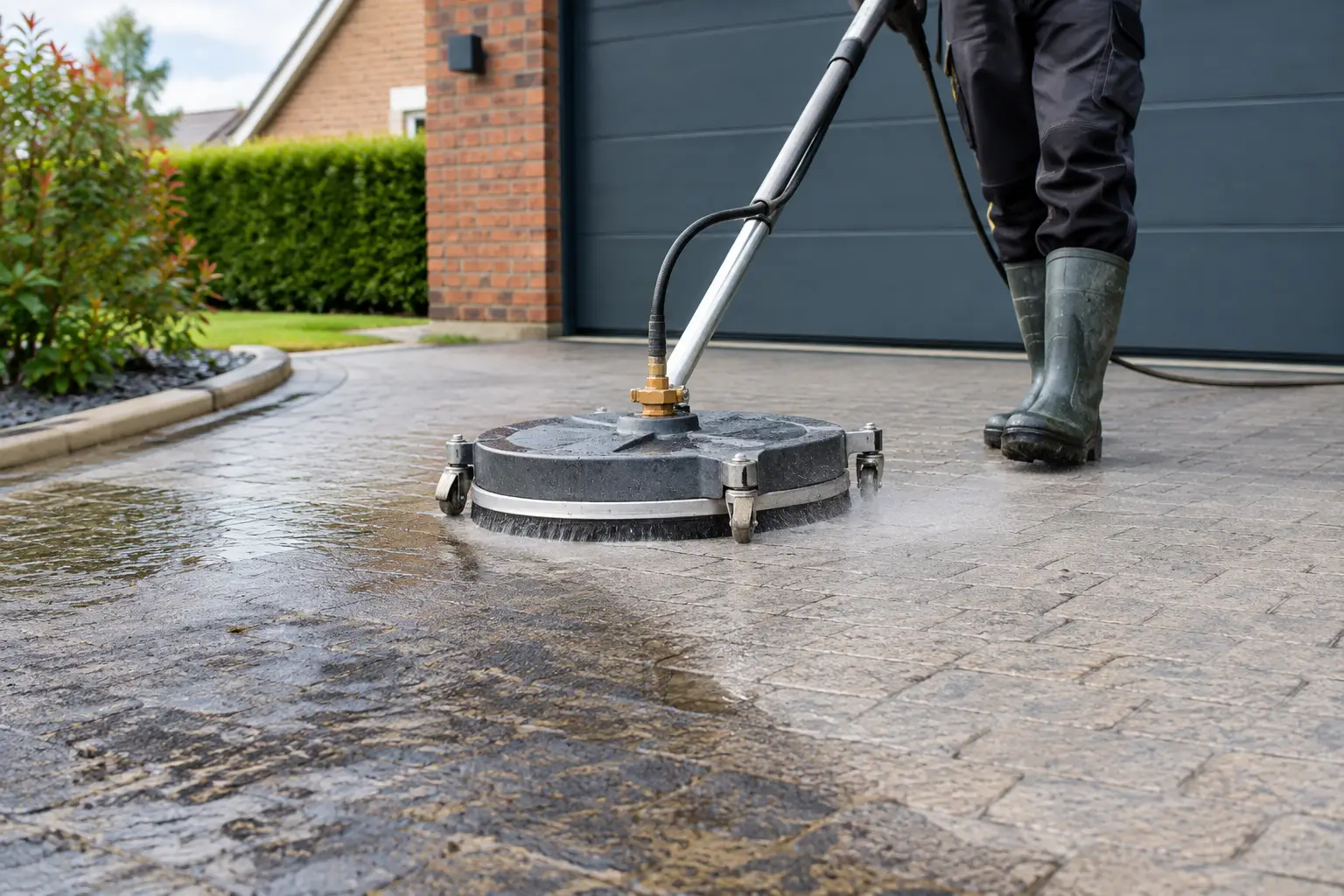
A fresh oil leak can turn a clean driveway into a stubborn black patch surprisingly quickly. To remove oil from driveways effectively, act before it has time to soak deeply into the surface: absorb the excess oil, use a cleaner suited to the paving, then rinse and assess the remaining stain. The right approach depends on whether the driveway is block paving, concrete, tarmac or resin-bound surfacing.
Oil stains are not just an appearance issue. They can make an entrance look neglected, create a slippery area in wet weather and, on some surfaces, leave a long-lasting shadow if treated with the wrong product or too much pressure.
Start by absorbing fresh oil
If the spill is recent, the first job is to lift as much liquid as possible rather than immediately reaching for a pressure washer. Cover the affected area with an absorbent material designed for oil, following the product instructions, and allow it time to draw oil from the surface. Sweep it up carefully afterwards.
Avoid hosing the spill across the driveway. Water can spread the contamination into clean joints, down slopes and towards drainage points. Scrubbing a fresh spill hard before absorbing it can also push oil further into the pores of concrete or block paving.
Once the loose oil has been removed, a suitable driveway degreaser may help break down what remains. Apply only as directed, work it into the stain with a stiff brush where appropriate, and give it time to work before rinsing. Wear suitable gloves and keep children and pets away while products are in use.
How to remove oil from block paving
Block paving has joints, textured faces and porous concrete blocks, so an oil spill can travel beyond the obvious mark. A stain may also settle into the kiln-dried sand between blocks. This is why a quick surface rinse rarely solves the problem.
For a small, recent stain, absorbent material followed by a paving-safe degreaser and careful brushing is often a sensible starting point. Rinse in a controlled way and inspect the blocks once they have dried. Wet paving can make a stain look lighter or darker than it really is.
Older stains may need professional driveway cleaning. The cleaning process should account for the condition of the blocks, the stability of the joints and any existing sealant. Controlled pressure can lift ingrained contamination from suitable block paving, but it may also dislodge jointing sand. Where sand is lost during cleaning, re-sanding may be needed once the surface is dry.
Do not assume that every dark patch is oil. Tyre marks, algae, lichen, general traffic grime and old sealant can look similar from a distance. Identifying the contamination before treatment helps avoid unnecessary chemical use or overly aggressive cleaning.
Concrete driveways need patience
Concrete is durable, but it is also porous. Engine oil, diesel and other vehicle fluids can penetrate below the visible surface, particularly on older or unsealed concrete. A cleaner may remove the surface residue while a faint shadow remains after drying.
Repeated, measured treatment is usually better than one aggressive attempt. Start with absorption if the oil is fresh, then use a concrete-suitable degreaser according to its instructions. A stiff brush can help work the product across textured concrete. Rinse carefully, allow the area to dry fully and judge the result then.
High pressure can be useful on sound concrete in experienced hands, but it is not automatically the answer. Excessive pressure held too close can etch the surface, expose aggregate or leave a noticeably cleaner patch around the stain. The aim is to reduce the contamination while keeping the overall finish consistent.
If a concrete driveway has several old oil marks, cleaning the whole surface may produce a more even appearance than treating individual spots alone. Results still depend on the age of the stains, the concrete’s porosity and whether previous products have already been applied.
Take extra care with tarmac and resin surfaces
Tarmac is particularly vulnerable to petroleum-based fluids. Oil can soften or weaken the binder, leaving a stained area that may become tacky or deteriorate. Strong solvents and aggressive pressure washing can make this worse.
Use an absorbent first and choose any cleaning product only if it is specifically suitable for tarmac. Test it on a discreet section where possible. If the surface is soft, crumbling or visibly affected, cleaning may not restore the material fully and a repair may be the more sensible route.
Resin-bound and resin-bonded driveways also require a cautious approach. The aggregate, resin and surface construction vary, so a product suitable for concrete may not be suitable here. Avoid harsh chemicals, wire brushes and uncontrolled pressure. When in doubt, ask a specialist to assess the surface before attempting stain removal.