
Last Updated: October 29, 2026
Quick Summary
To prepare your driveway for professional cleaning, clear the space, move your cars, protect what matters and tell the cleaning team about stains before they arrive. Knowing how to prepare your driveway for professional cleaning is mostly about access, safety and honesty about what is on the surface, which is the difference between a smooth visit and a wasted morning.
- Move all vehicles off the driveway, including trailers and caravans, the day before the visit.
- Water borders and lawns thoroughly the day before so plants are hydrated before cleaning.
- Blot fresh oil with an absorbent material and never rub it in or wash it towards drains.
- Clear leaves and debris from drains and channel gullies, and check where water pools after rain.
- Send two or three clear photographs, including a wide shot and a close-up of the worst area.
Table of Contents
- What to Do Before a Driveway Cleaning Visit
- Clearing the Driveway and Creating Access
- How to Protect Plants During Pressure Washing
- Removing Oil Stains from Block Paving Before the Visit
- Dealing with Weeds, Moss and Drainage
- Should You Book a Jet Wash Driveways Near Me Service or DIY?
- Professional Driveway Cleaning Cost Factors Explained
- Common Preparation Mistakes to Avoid
- Send Photographs for a Driveway Assessment and Quote
- Frequently Asked Questions
What to Do Before a Driveway Cleaning Visit
Knowing how to prepare your driveway for professional cleaning is mostly about access, safety and honesty about what is on the surface. The best preparation is simple: clear the space, move your cars, protect what matters and tell the cleaning team about stains before they arrive. That is the short answer to how to prepare your driveway for professional cleaning, and it is the difference between a smooth visit and a wasted morning.
Across Bolton and the wider North West, the same avoidable issues tend to cause delays on exterior cleaning visits. A car left on the drive. A gate that will not open. An oil stain nobody mentioned until the van was parked.
None of these are disasters. All of them cost time.
Here is a quick overview of what actually matters:
| Task | When to Do It | Why It Matters |
|---|---|---|
| Move cars off the drive | Night before or morning of | Full access to every paving course |
| Clear pots, furniture, bins | Day before | Nothing to move twice, nothing to damage |
| Check gates and side access | Day before | Equipment needs a clear route |
| Note stains and problem areas | Before the visit | Right treatment chosen first time |
| Trim back overhanging plants | Day before | Protects foliage and speeds the clean |
The rest of this guide walks through each step in a practical order.
Clearing the Driveway and Creating Access
Start with the biggest job: getting everything off the surface. A driveway clean needs the whole area, not just the middle. Cleaning equipment works best when nothing is in the way, and edges and corners are where dirt tends to collect.
Work through this list the day before:
- Move all vehicles off the driveway, including trailers and caravans
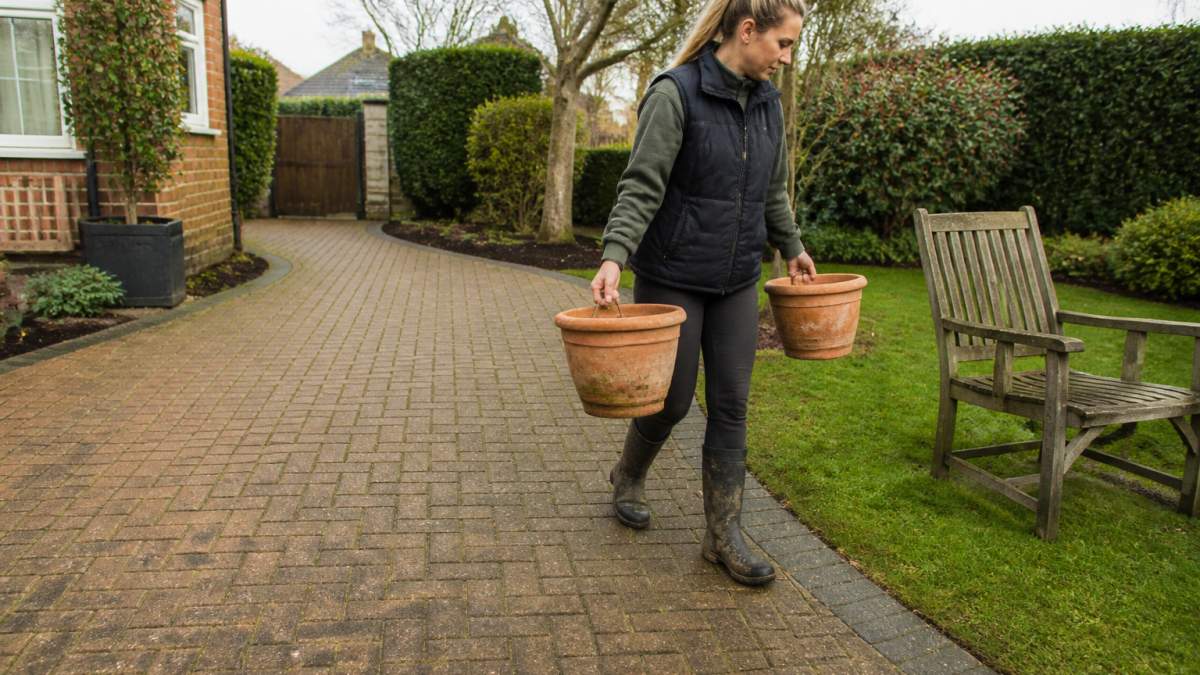
- Shift plant pots, garden furniture, bins and children's toys to the lawn or garage
- Unlock side gates and check the route to the back garden
- Clear the path to any outside tap, if one is being used
- Move washing lines and take down hanging baskets near the drive
One more thing worth doing: check for loose or sunken blocks before the visit. Point them out. A good team will adjust its method around them rather than blasting them loose.
How to Protect Plants During Pressure Washing
Protecting plants during pressure washing comes down to three things: covering them, wetting them down and keeping harsh chemicals away from roots. Plants are not fragile by default, but they do not enjoy a blast of high-pressure water or a sudden dose of strong cleaner.
The practical steps are straightforward:
- Water borders and lawns thoroughly the day before, so plants are hydrated
- Cover delicate shrubs with a light sheet, not plastic, so they can still breathe
- Move pots well clear of the working area
- Ask the team to pre-wet and rinse any planting near the drive
This is where method matters more than muscle. Soft washing uses low pressure and a suitable cleaning solution to lift organic growth, which is generally kinder to nearby planting than high-pressure water aimed at a wall or border. Our guide to soft washing versus pressure washing explains which method suits which surface.
Watch out: a common mistake is hosing down plants after the clean but not before. Pre-wetting is what protects roots from any runoff.
Removing Oil Stains from Block Paving Before the Visit
Removing oil stains from block paving is best handled as a treatment job, not a pressure job. Oil soaks into the pores of the block and the jointing sand, so blasting the surface can spread the stain and strip the sand at the same time. Tell the cleaning team where the stains are, how old they are and what caused them.
What you can do beforehand:
- Blot fresh oil with an absorbent material, never rub it in
- Avoid washing oil towards drains or borders
- Do not apply strong household chemicals, which can bleach the paving
- Note any rust marks, paint spots or tyre marks too
Oil stains on paving can sometimes be treated with a suitable degreaser and a controlled rinse. Some stains lift completely, while older, deeply soaked oil can leave a shadow.
Block paving can lose jointing sand over time, and cleaning may speed that up. If you want to understand when driveway re-sanding needs doing, our guide explains the signs to look for. If your drive has hollow joints or loose blocks, it is worth having the surface assessed.
Dealing with Weeds, Moss and Drainage
Weeds, moss and poor drainage are usually symptoms of the same problem: moisture sitting on the surface. In Bolton and across Lancashire, that is a familiar story. Shaded drives, north-facing paving and heavy rainfall all encourage green growth in joints and along edges.
Here is what to check before a visit:
- Pull or note large weeds so the team knows where growth is worst
- Clear leaves and debris from drains and channel gullies
- Check whether water pools in one spot after rain
- Look at the jointing sand, which may have washed out
Cleaning removes the growth you can see but does not fix the cause. For a closer look at why driveways go green in Bolton and what cleaning can realistically put right, read our guide. If a drive is shaded and holds water, regrowth can return, which is why regular maintenance often makes more sense than a one-off clean.
If you are also dealing with gutters overflowing onto the drive, that is worth mentioning, as gutter clearing can help establish whether the water is coming from above rather than from the paving itself.
Should You Book a Jet Wash Driveways Near Me Service or DIY?
A professional driveway cleaning service usually beats DIY for block paving, sandstone and anything with jointing sand. A hire machine and a weekend of work can look tempting, but surface damage, stripped joints and water damage to borders are common outcomes. The right method matters more than the machine.
DIY works fine for a light clean on concrete. It struggles with:
- Deep-set moss and algae in joints
- Oil and rust staining
- Delicate surfaces like sandstone or render
- Runoff control near drains and borders
A professional visit can bring the right method for the surface and proper control of water and runoff. Insurance matters too: if a DIY lance lifts a block or strips paint from a door, the cost sits with you.
If you want to see what a driveway clean involves, take a look at our driveway cleaning service across Bolton and the North West. A free quotation is available, and you can send photos first if you would rather not wait for a visit.
Professional Driveway Cleaning Cost Factors Explained
Professional driveway cleaning cost factors come down to size, surface, condition and access, not to a single flat rate. Two drives of the same size can need very different amounts of work. That is why a quote based on a photo and a postcode is only ever an estimate.
