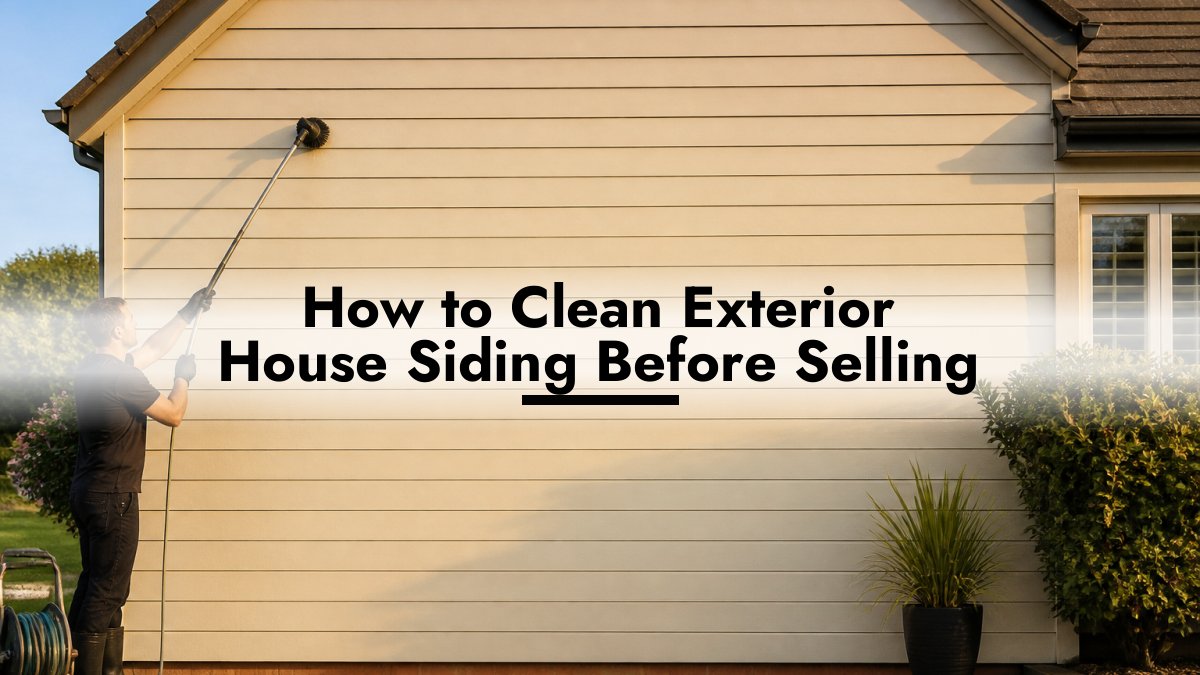
Why Exterior House Siding Cleaning Matters Before You Sell
Cleaning exterior house siding before selling is one of the cheapest ways to lift a property's first impression, and it is the job most sellers put off until the last minute. Buyers judge a house in seconds, and grimy render, green algae streaks or black spotting on a wall reads as neglect long before anyone steps inside.
This guide from Refresh Revive Exterior Cleaning covers the full process, from surveying the surface to choosing the right method for render, brick, stone and cladding. We work across Bolton and the wider North West, so we know how damp Lancashire weather feeds algae growth on north-facing walls.
Below, we'll show you exactly how to clean exterior house siding before selling without damaging the surface, the planting or the pointing.
Most guides get one thing wrong: they treat every wall as a pressure washing job. It isn't.
What You'll Need Before You Start
Gather your kit before you wet a single wall. A half-finished clean dries in streaks, and streaking is harder to fix than dirt.
Here is what a professional setup looks like:
A garden hose with a spray attachment
A soft-bristled brush on an extension pole
A pump sprayer for cleaning solution
Biocide treatment for organic growth
Plastic sheeting to protect plants and lawns
Gloves, eye protection and non-slip footwear
A ladder you can stabilise properly
Skip the hired pressure washer for now. We explain why in Step 5.
Check the weather first. Cleaning a wall in direct sun causes the solution to dry too fast and leave marks. An overcast day with light wind is ideal.
Step 1: Survey the Siding and Identify the Surface
The right method depends entirely on what the wall is made of. Survey first, then decide.
Walk the property and note every surface type. Render, brick, stone, cladding and painted finishes all behave differently.
Look for these before you start:
Cracks and blown render that water could get behind
Loose pointing between bricks
Peeling paint that will lift under any spray
Green or black growth showing organic matter
Rust or oil marks that need treatment, not washing
Fix defects before cleaning. Water forced into a crack in winter can freeze and make it worse.
Take photos as you go. If you later hire a professional exterior cleaning team, photos let them quote accurately without a site visit. You can send yours to us at refreshrevivecleaning.co.uk for a no-obligation assessment.
Knowing how to clean render on a house comes down to one rule: low pressure, correct chemistry, patience. Render is a soft, porous surface, and the wrong approach strips it.
Render, also called stucco or dash finish, holds dirt in its texture. A jet washer at close range will blast the surface away and leave a scarred, patchy wall.
Use this method instead:
Wet the wall from the bottom up
Apply a diluted biocide or render cleaner with a pump sprayer
Let it dwell for the time stated on the product
Agitate lightly with a soft brush on stubborn areas
Rinse from the top down with low pressure
The dwell time does the work. Most algae and dirt lift without scrubbing at all.
Never let cleaning solution dry on the wall. Work in sections and keep the surface wet until you rinse.
Step 3: Remove Algae from Exterior Walls
To remove algae from exterior walls properly, you need a treatment that kills the growth, not just a wash that removes the colour. Algae returns fast if the root is left behind.
That green film on north-facing walls is a living organism. Blasting it off with water removes the visible layer but leaves spores in the pores of the surface. Within weeks, it's back.
A treatment-led approach works better:
Apply a suitable biocide to the affected area
Allow it to kill the growth at the root
Rinse gently after the dwell time
Repeat on heavy black spotting if needed
Black spotting, often lichen, can take longer to shift than green algae. Expect two treatments on badly affected walls.
This is why we favour controlled soft washing over pure pressure. Killing the growth is what stops it returning so quickly.
Watch OutNever mix cleaning chemicals. Combining bleach-based products with acidic cleaners can release dangerous fumes. Use one product at a time and follow the label.
Step 4: Soft Washing Exterior Walls
Soft washing exterior walls uses low pressure and cleaning solution together, which is why it suits render, painted finishes and older brick. The chemistry does the cleaning, not force.
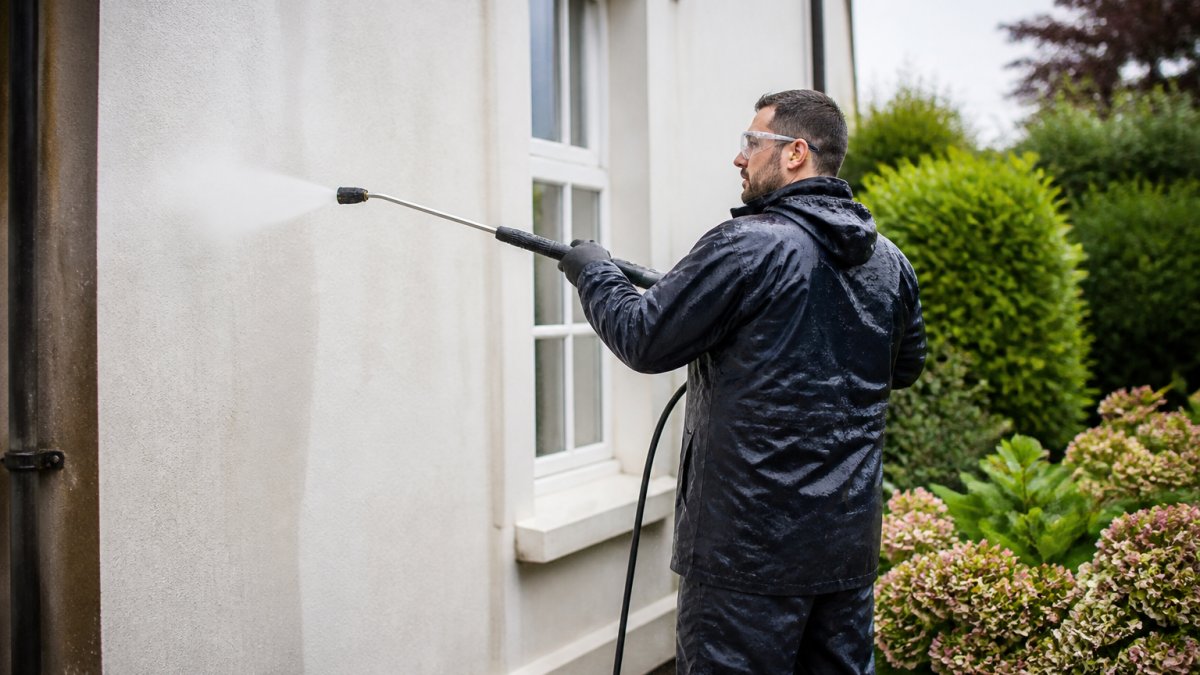
A professional exterior cleaner in protective gear using a low-pressure soft wash lance on a rendered house wall, with a garden and established plants visible nearby, demonstrating careful surface-specific cleaning
The method is straightforward. Apply the solution at low pressure, let it dwell, then rinse at low pressure. Water pressure stays gentle throughout.
Soft washing suits:
Rendered and painted walls
Older or fragile brickwork
Walls with established planting nearby
Conservatory roofs and fascias
The low pressure protects the surface and the surroundings. It also means less water is forced into gaps where it could cause damp.
For sellers, this matters. A wall that looks clean but has been damaged by high pressure can raise questions at survey.
Pro TipWet your plants and lawn before you start, then rinse them again afterwards. It dilutes any overspray before it can scorch foliage.
Step 5: Pressure Washing House Exterior Safely
Pressure washing a house exterior safely means matching the pressure to the surface and keeping the lance moving. It is the right tool for some jobs and the wrong tool for many.
Hard, durable surfaces such as paving, stone patios and concrete can take higher pressure. Render, painted timber and older brick cannot.
Follow these rules if you do use a pressure washer:
Start on the lowest setting that works
Keep the lance moving, never hold it in one spot
Stay at least 30cm back from the wall
Angle the spray downwards to avoid forcing water upwards
Never spray directly into vents, cracks or openings
Work in manageable sections. Overlap each pass so you don't leave clean stripes next to dirty ones.
If your wall is render, painted or fragile, don't pressure wash it. Use the soft wash method in Step 4 instead. This is the single biggest mistake we see sellers make.
Common Mistakes to Avoid When Cleaning Exterior House Siding
Most cleaning damage we see comes from a handful of avoidable errors. Here are the ones that cost sellers the most.
Using maximum pressure on render. It strips the surface and leaves permanent scars.
Skipping the biocide. Washing alone leaves spores behind, and growth returns fast.
Cleaning in direct sun. Solution dries too quickly and leaves streaks.
Ignoring plants and lawns. Overspray can scorch foliage and damage grass.
Cleaning top-down with high pressure. Water gets forced behind the surface.
Not fixing cracks first. Cleaning makes existing defects worse.
Rushing the dwell time. The product needs time to work.
A common mistake is treating a quick jet wash as a full clean. It isn't. A proper clean kills the growth, protects the surface and lasts far longer.
If you'd rather not risk it, a professional team can assess the surface and choose the right method. We offer free quotes across Bolton, Bury, Wigan, Chorley and the surrounding areas.
Frequently Asked Questions
How do you clean exterior house siding before selling?
Start by identifying the surface, then match the method to it. Rendered walls and painted siding usually need soft washing with a low-pressure lance and a treatment solution, while harder surfaces like concrete or stone paving may tolerate controlled pressure washing. Remove algae and organic growth with a treatment-led approach rather than blasting it off, then rinse and allow to dry. For the best finish before a sale, a professional exterior cleaning service can assess the surface and use the right method without risking damage.
What is the safest way to clean exterior walls?
The safest approach is soft washing: low pressure combined with a cleaning solution that breaks down algae, mould and dirt. This protects render, paint and pointing that high pressure can strip or crack. Always work from the bottom up, keep water away from vents and electrics, and protect plants and lawns. For delicate or weathered surfaces, a professional soft washing service will use the correct dilution and pressure for the material.
Can you pressure wash render or house siding?
You can use pressure washing on some siding, but render is best cleaned with soft washing rather than high pressure. Render is porous and can be damaged by aggressive jets, which may crack the surface or force water behind it. If pressure washing is used, it should be at low pressure with the correct nozzle and technique. For render, a treatment-led soft wash is usually the safer and more effective choice.
How do you remove algae and green marks from exterior walls?
Algae and green marks are best removed with a soft washing treatment that kills the growth at the root, rather than just blasting the surface. Apply a suitable cleaning solution, allow it to dwell, then rinse gently. This approach also helps prevent rapid regrowth. For persistent algae on render or painted siding, a professional exterior cleaning company can apply the correct treatment and protect surrounding plants and surfaces.
Commercial pressure washing Cheshire for entrances, paving, cladding and shared areas. Learn how the right method protects surfaces and daily standards.
Looking for exterior cleaning firms in Cheshire with ongoing maintenance contracts to stop render algae returning? Here's how planned render care works.
Talk to us about the surface first
Method depends on the substrate. Tell us what you have and we'll explain what we would use and why.