

Table of Contents
- Reliable Exterior Cleaning Firms in Cheshire: Ongoing Render Algae Contracts Explained
- What an Ongoing Exterior Cleaning Maintenance Contract Actually Includes
- How Often to Clean Render in the North West
- The Cleaning Methods Used for Render: Soft Washing and Treatment-Led Cleaning
- Algae Removal from Render: Why It Returns and How to Stop It
- Building a Render Cleaning Maintenance Plan That Works
- Questions to Ask a Render Cleaning Company Before You Sign
- How to Check Whether a Render Cleaning Firm Is Reliable
- Frequently Asked Questions
Last Updated: October 12, 2026
Reliable Exterior Cleaning Firms in Cheshire: Ongoing Render Algae Contracts Explained
Yes, reliable exterior cleaning firms in Cheshire do offer ongoing maintenance contracts designed to stop algae returning to render, and the difference between a one-off wash and a proper plan comes down to method and frequency rather than effort. Render algae is the green, black or reddish growth that colonises lime, cement and silicone render across the North West, and left alone it eats into the finish. At Refresh Revive Exterior Cleaning, we build maintenance visits around how render actually behaves in this climate. Below, we explain what a good contract includes, how often render needs attention, and the questions that separate a professional firm from a cowboy outfit.
The core problem is simple. Algae does not just sit on render; it roots into the porous surface and returns within months if the underlying spores and organic matter are not treated. A pressure washer at full power strips the growth and, in many cases, the render itself. A treatment-led clean removes the growth and slows its return, which is why ongoing contracts exist in the first place.
What an Ongoing Exterior Cleaning Maintenance Contract Actually Includes
An ongoing exterior cleaning maintenance contract is a scheduled agreement in which a firm returns at set intervals to clean, treat and inspect your render, rather than charging you once and disappearing. Most contracts cover the render itself plus adjoining surfaces such as fascias, soffits, gutters and window frames, because algae spreads from these areas onto the wall.
What a Planned Visit Covers
A planned visit typically involves a low-pressure soft wash to lift surface growth, an application of a biocide treatment to kill spores within the render, a rinse, and a check of gutters and downpipes for the damp conditions that feed algae. Contracts usually run annually or twice-yearly, with a fixed scope so there are no surprises.
| Contract Type | Visits Per Year | Best For | Typical Focus |
|---|---|---|---|
| Annual clean | 1 | Sheltered render, low shading | Full soft wash and treatment |
| Twice-yearly plan | 2 | North-facing walls, tree cover | Clean plus mid-year spot treatment |
| Quarterly plan | 4 | Commercial sites, heavy shading | Inspection, treatment, gutter checks |
| Treatment-only top-up | As needed | Recently cleaned render | Biocide reapplication |
How Often to Clean Render in the North West
Most render in the North West needs cleaning every 12 to 24 months, with north-facing and shaded walls often needing attention annually. The region's damp climate and high rainfall keep render surfaces wet for longer, which gives algae the moisture it needs to establish. Walls under trees, close to hedges or in constant shade are the first to show green staining.
If you have already had a professional clean and the algae returned within a season, that is a sign the treatment was too weak or the clean was pressure-led rather than treatment-led. A proper maintenance plan adjusts frequency based on how quickly your specific wall regrows. We assess shading, prevailing weather and nearby planting before recommending a schedule, because a wall in Hale behaves differently to one on an exposed Bolton hillside.
The Cleaning Methods Used for Render: Soft Washing and Treatment-Led Cleaning
Render should be cleaned using soft washing and treatment-led methods, not high-pressure washing. Soft washing uses low pressure combined with a cleaning solution to break down organic growth, while treatment-led cleaning adds a biocide that keeps working after the visit ends. This is the approach we use because it protects the render while removing the cause of the staining.
The three methods you will hear about are often confused, so here is the plain difference:
- Pressure washing uses high-pressure water to blast dirt away. It suits block paving and concrete but damages render and roof tiles.
- Soft washing uses low pressure plus a cleaning agent. It is the correct method for render, cladding and painted surfaces.
- Treatment-led cleaning applies a biocide after cleaning to kill spores and slow regrowth. It is what makes a maintenance plan worthwhile.
For commercial properties, we work to RAMS and COSHH requirements, which matters to facilities managers who need documentation before any contractor sets foot on site.
Algae Removal from Render: Why It Returns and How to Stop It
Algae returns to render because the spores survive in the surface even after cleaning, and the North West's damp climate keeps giving them the moisture they need. Removing the visible growth without killing the spores is why so many DIY cleans fail within a season. Stopping the return means treating the wall, not just washing it.
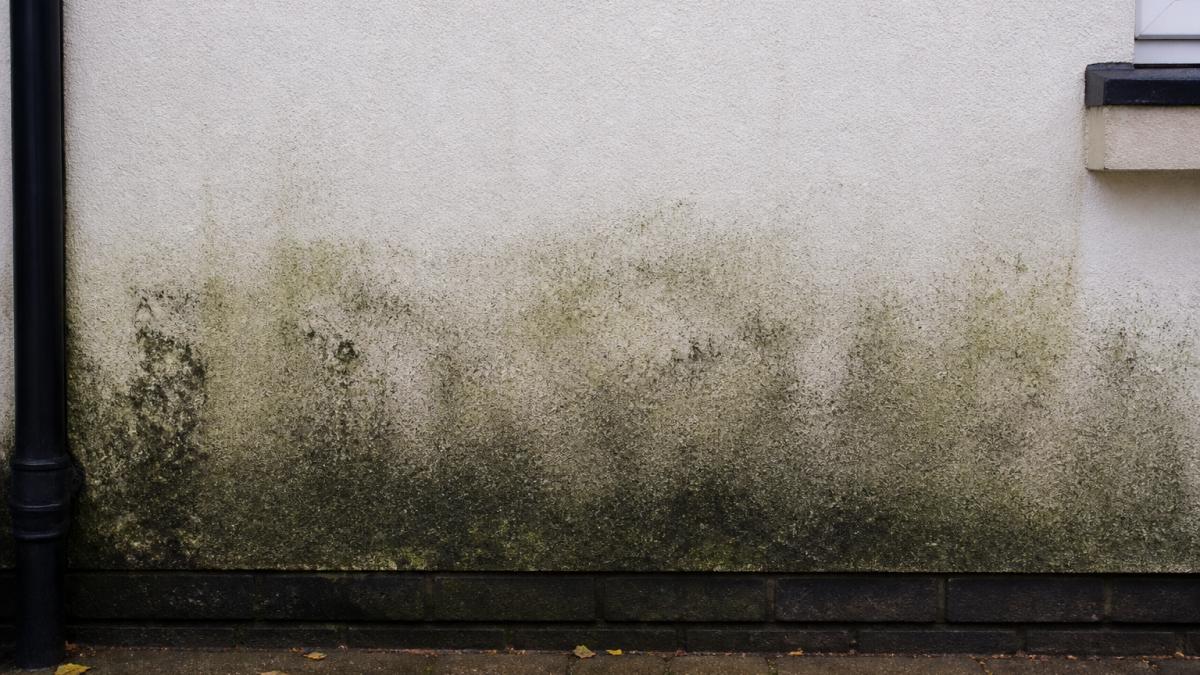
There are three reasons algae keeps coming back:
- Spores remain in the pores. A wash removes the surface growth but leaves spores embedded in the render.
- Moisture keeps returning. Shade, poor drainage and blocked gutters keep the wall damp.
- The surface is porous. Lime and cement render absorb water, which is exactly what algae needs.
The fix is a treatment-led clean followed by a maintenance schedule. According to the Royal Horticultural Society's guidance on algae and lichen, growth on hard surfaces is driven by damp conditions, which is why reducing moisture around the wall matters as much as cleaning it.
Building a Render Cleaning Maintenance Plan That Works
A render cleaning maintenance plan works when it matches the wall's exposure, not a generic calendar. Start by assessing how much shade the wall gets, whether gutters overflow onto it, and how quickly it regrew after the last clean. Those three factors set the schedule.