
Table of Contents
- Why Moss Returns After Cleaning
- Surface Porosity and Moss Recurrence
- Biocide Treatment for Exterior Surfaces
- How to Prevent Moss on Driveway
- Maintenance Schedule for Exterior Cleaning
- Pressure Washing vs. Professional Treatment
- Seasonal Timing for Moss Treatment
- Conclusion
Last Updated: August 25, 2026
Why Moss Returns After Cleaning
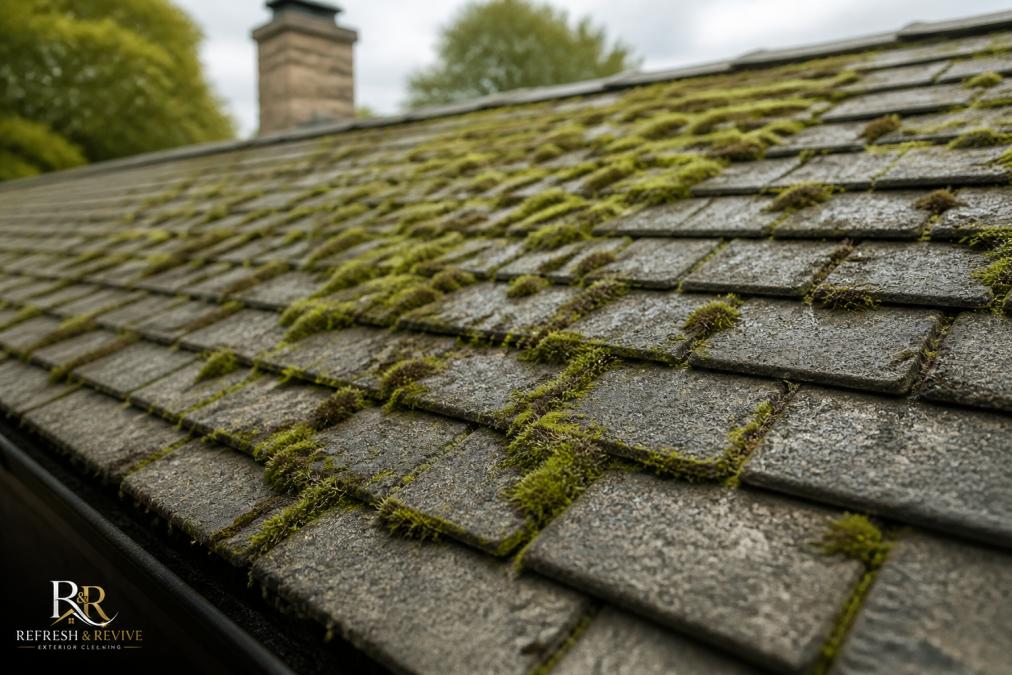
Moss doesn't stay gone once you've cleaned it away. Most homeowners discover this the hard way: they pressure wash their roof or driveway, see brilliant results for a few weeks, then watch moss creep back by autumn. Understanding why moss returns transforms how you approach prevention and maintenance.
The answer involves multiple factors working together. When you clean a roof or driveway, you remove visible moss but leave behind the conditions that allowed it to grow in the first place. A one-time clean is a temporary fix. Long-term protection requires addressing the root causes: moisture, shade, and organic matter on your surface.
The role of spores in regrowth
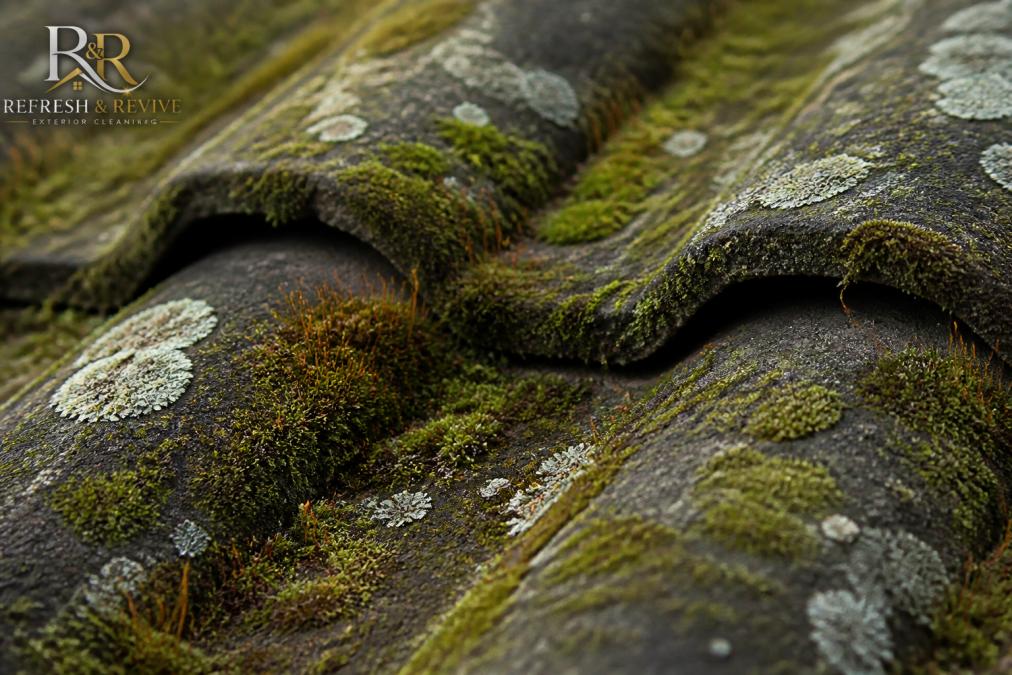
Moss reproduces through spores, not seeds (peer-reviewed research). These microscopic spores are everywhere, in the air, on neighbouring trees, in soil. When you clean a surface, you remove mature moss plants but not the spore load in your immediate environment. Within days, new spores settle on your freshly cleaned surface. If conditions remain favourable (damp, shaded, with organic debris), those spores germinate and establish new growth.
This is why timing matters. A surface cleaned in spring, when moisture is high and new growth is rapid, will see faster regrowth than one cleaned in late summer when conditions are drier. The key insight is that cleaning alone cannot prevent regrowth because you cannot eliminate spores from the environment. What you can do is make your surface inhospitable to spore germination through biocide treatment, which creates a chemical barrier that prevents spores from establishing.
Environmental conditions that favour moss
Moss grows where four conditions align: moisture, shade, nutrient-rich organic matter, and time. Your property's microclimate determines how aggressively moss will return.
Shade is the primary driver. North-facing roofs and driveways overshadowed by trees stay damp longer, creating ideal moss habitat. Sunlight dries surfaces faster and inhibits moss growth, which is why the sunniest parts of your property typically stay moss-free longer.
Moisture retention depends on surface porosity and drainage. Porous roof tiles and concrete absorb water and release it slowly, keeping the surface damp between rainfalls. Poor drainage around driveways traps water, and blocked gutters allow water to pool on roofs. In the North West, where rainfall is frequent, moisture is rarely the limiting factor; shade and drainage management become the focus.
Organic matter (dead leaves, pollen, dust) accumulates on surfaces and provides nutrients for moss spores. Gutters clogged with leaves become moss incubators. This is why regular maintenance, clearing gutters and sweeping surfaces, reduces regrowth pressure.
Surface Porosity and Moss Recurrence
Porous surfaces recur moss faster than non-porous ones. This is a material property you cannot change, but you can manage it.
Roof tiles, especially clay and concrete types, are highly porous. Their surface structure creates millions of tiny pores that trap water and provide shelter for moss spores. Once moss establishes, mechanical removal often leaves root fragments behind, which regrow quickly. Render (cement-based external finish) is also porous and moss-prone, particularly older lime mortar render.
Concrete driveways and block paving are porous too, though less so than roof tiles. Moss finds footholds in surface cracks, joints between pavers, and the slightly weathered top layer of concrete. Sealed or treated concrete resists moss better because the sealant reduces water absorption.
The porosity issue explains why pressure washing alone fails for long-term prevention. High-pressure jets remove surface moss but cannot prevent water reabsorption into pores. Within hours of washing, the porous surface is damp again, perfect for new spore germination. This is why low-pressure treatment combined with biocide application works better. A biocide penetrates porous surfaces and creates residual protection that persists even as moisture returns.
Biocide Treatment for Exterior Surfaces
Biocide is a chemical agent that kills or inhibits moss, algae, and lichen growth. It's the most effective tool for preventing regrowth after cleaning, but it must be applied correctly and safely.
Biocides work by disrupting the cellular processes of moss and algae. They're not fertilisers or growth promoters; they're active ingredients that prevent spore germination and kill young moss colonies before they establish. The best biocides for exterior use are designed to persist on the surface for weeks or months, providing ongoing protection.
How biocides work to prevent regrowth
Biocides create a hostile chemical environment on the treated surface. Moss spores that land on a biocide-treated roof or driveway cannot germinate. Existing young moss colonies are killed before they develop visible growth. This extends the regrowth-free period significantly compared to cleaning alone.
Different biocide products have different active ingredients and persistence. Some are fast-acting but short-lived (weeks of protection); others release active ingredients slowly over months. The choice depends on your surface type, local climate, and maintenance schedule.
Biocides must be applied to a clean surface for maximum effectiveness. Dirt, algae, and moss on the surface can shield spores from the biocide. This is why the cleaning step must come first. Safety is paramount. Biocides are regulated substances. Product labels specify dilution rates, application methods, safety precautions, and environmental considerations. You must follow the manufacturer's instructions exactly.
Application timing and effectiveness
Biocide effectiveness depends on timing and weather conditions. Apply biocide to a damp (not wet) surface in dry weather forecast. The product needs time to dry and bond to the surface. Rain within hours of application can wash the biocide away before it sets.
Spring and early autumn are optimal application windows. Moss grows fastest in these seasons, so preventing regrowth then delivers the most visible benefit. A spring application protects through summer; an autumn application extends protection into winter.
Biocide persistence varies by product and surface. Porous surfaces (tiles, render) retain biocide longer because the product penetrates into pores. Most quality biocides provide 6-12 months of protection on porous surfaces under typical UK conditions (hse.gov.uk). The residual effect is the key advantage: after cleaning and biocide application, your surface stays protected even as new spores land.
How to Prevent Moss on Driveway
Driveway moss prevention combines three strategies: removing shade, improving drainage, and applying preventative treatment.
Drainage and moisture management
Poor drainage is the primary cause of driveway moss. Water pooling on the surface keeps it damp, creating ideal conditions for moss spores. Check your driveway slope. Ideally, driveways should slope gently away from your property to direct water toward the road or drainage system. If your driveway is flat or slopes toward your house, water pools and moss thrives.
Gutters above driveways deserve special attention. Blocked gutters overflow onto the driveway, keeping it constantly damp. Clean gutters twice yearly (spring and autumn) to prevent this. Ensure downpipes discharge water away from the driveway, not across it.
Surface sealing also helps. A quality driveway sealant reduces water absorption into concrete or tarmac, keeping the surface drier between rainfalls. Sealed driveways stay moss-free longer than unsealed ones.
Removing shade and overhanging branches
Sunlight is moss's enemy. Shade from trees and buildings creates the damp, dark environment moss needs.
If trees overhang your driveway, pruning back branches increases sunlight exposure. This dries the surface faster after rain and reduces moss growth significantly. Even modest pruning, removing lower branches and thinning dense canopy, makes a measurable difference.
The combination of improved drainage and increased sunlight creates a driveway environment where moss struggles to establish. Add preventative biocide treatment, and regrowth becomes rare rather than inevitable.
Maintenance Schedule for Exterior Cleaning
A structured maintenance schedule prevents moss regrowth from becoming a chronic problem. The frequency depends on your property's specific conditions: shade, moisture, surface type, and local climate.
Properties in high-shade, high-moisture environments (dense tree cover, north-facing aspects, poor drainage) benefit from cleaning and biocide treatment twice yearly, spring and autumn, to stay ahead of regrowth.