
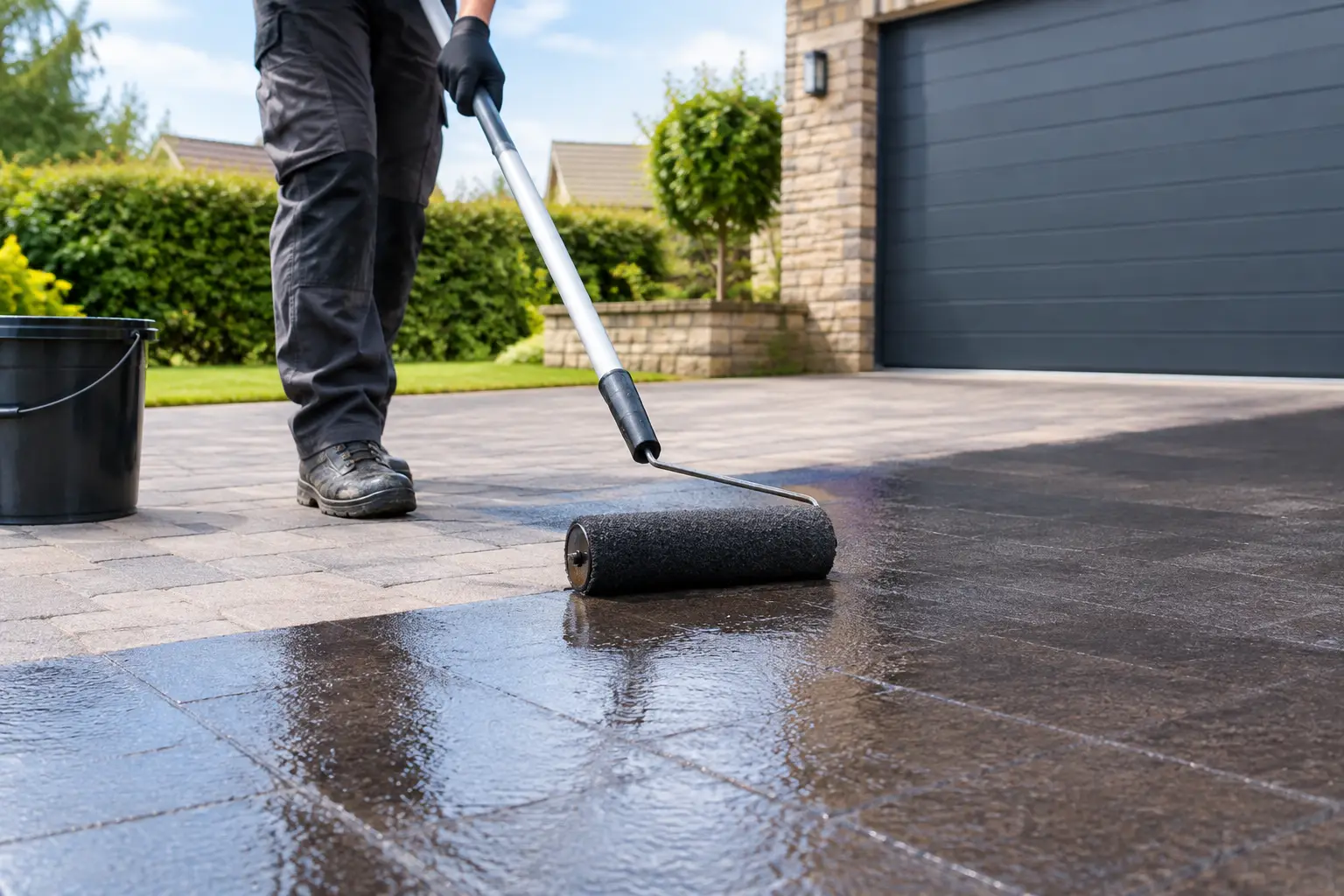
A sealer can be a sensible finishing step after professional cleaning, but surface sealing is not automatically right for every driveway, patio or path. Its value depends on the material, its condition, the type of contamination removed and how the area is used. Applied to a clean, dry and suitable surface, it may help reduce future staining and make routine maintenance more manageable. Applied at the wrong time or to the wrong material, it can leave an uneven appearance or fail to address the underlying problem.
For property owners, landlords and managers, the practical question is not simply whether a surface can be sealed. It is whether sealing will improve the long-term condition and appearance of that particular area. Refresh & Revive Exterior Cleaning assesses exterior surfaces across Bolton, Greater Manchester, Cheshire, Lancashire and the wider North West with that distinction in mind.
What surface sealing is designed to do
Surface sealing is the application of a suitable protective treatment to a prepared exterior surface. Depending on the paving or masonry involved, the treatment may be intended to limit absorption of water, oils, dirt and everyday spills. This can be useful on driveways exposed to vehicles, patios used for dining and entertaining, and paths that collect mud and leaf debris.
A sealed surface is not self-cleaning, permanently stain-proof or free from maintenance. Moss, algae and airborne grime can still settle, particularly in shaded or damp areas. The difference is that some contaminants may be less able to penetrate the surface, so cleaning can be more straightforward when it is carried out at the appropriate point.
The finish also matters. Some treatments leave the original look largely unchanged, while others can deepen colour or create a more noticeable finish. A more pronounced appearance is not automatically better. It needs to suit the surface, surrounding property and the customer's expectations before work begins.
Cleaning comes before sealing
Sealer should never be used to disguise dirt, algae, black spot, tyre marks or weathering. If contamination is trapped beneath a treatment, it remains visible and may become harder to deal with later. Proper preparation is the part that determines whether surface sealing has a sound foundation.
The right cleaning method depends on the material and contamination. Block paving may require thorough cleaning followed by re-sanding once it has dried. A patio may need controlled pressure washing, while more delicate materials can call for a lower-pressure approach. Natural stone, including Indian sandstone, needs particular care because harsh treatment or an unsuitable product can affect its appearance.
Drying is equally important. Exterior paving can look dry at the surface while retaining moisture below. Sealing before the area is ready can compromise the result. Weather, shade, drainage and the construction of the surface all affect when it is sensible to proceed.
The condition of joints and edges matters
On block paving, cleaning can disturb jointing sand. Re-sanding is therefore a practical part of restoring the surface before any consideration of sealing. The paving needs stable, properly filled joints rather than a cosmetic coating over loose or depleted material.
Cracked blocks, damaged pointing, loose slabs and failing edges are separate repair issues. A sealer cannot bind a poorly maintained patio back together or correct movement in a driveway. Identifying those limitations early helps avoid spending money on a finish that cannot solve a structural problem.
Which surfaces may benefit from surface sealing?
Block-paved driveways are commonly considered for sealing after cleaning and re-sanding. They face repeated vehicle traffic, oil drips, wet leaves and general road dirt. Where the paving is in good condition and has been prepared properly, sealing may provide an added layer of protection and improve the finished appearance.
Concrete driveways and paths can also be candidates, especially where the surface is sound but prone to staining. The precise treatment should reflect the age and porosity of the concrete, as well as whether a natural or enhanced appearance is preferred.
Some patios may be suitable, but this is where broad promises cause problems. Porcelain, concrete slabs, sandstone, limestone and other natural stones have different levels of absorbency, finishes and maintenance needs. A product that is appropriate for one may not be suitable for another. Sandstone in particular can vary considerably, even within the same patio.
Walls and brickwork are another category where care is needed. Exterior masonry needs to manage moisture correctly, so an assessment should consider the condition of mortar, signs of damp and the type of brick before any protective treatment is proposed. Cleaning and sealing are related services, but they are not interchangeable solutions.
When sealing may not be the best option
There are times when the sensible decision is to clean the surface and leave it unsealed. A very uneven, worn or heavily repaired area may not take a treatment consistently. An existing coating that is peeling or patchy may need a different approach before another product is considered.