
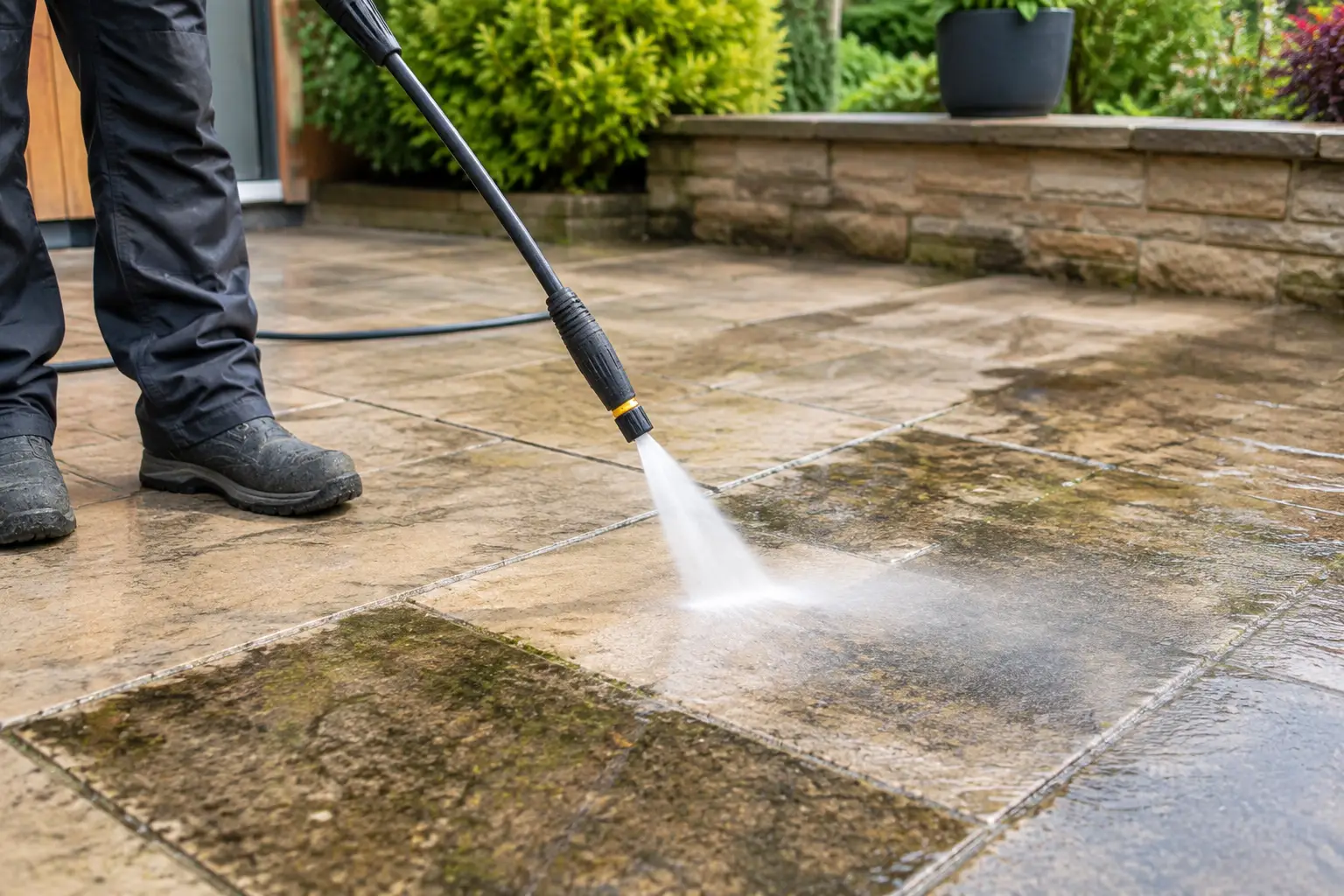
A patio can look tired long before the paving itself has reached the end of its life. The best patio stain removal options depend on two things: what has caused the mark, and what the patio is made from. Algae on concrete, black spot on Indian sandstone and an oil spill on block paving may all look like general dirt, but treating them in the same way can produce disappointing results or leave a delicate surface looking uneven.
For homeowners, landlords and property managers, the sensible approach is to identify the stain first, then choose a cleaning method that suits the paving. Some contamination responds well to controlled pressure washing, while other problems need a low-pressure treatment, a targeted cleaner or realistic expectations where a stain has penetrated deeply.
Start with the patio surface, not the product
Patios are not all built to take the same level of cleaning. Concrete flags and many block-paved areas are generally more tolerant of controlled pressure than softer natural stone. Indian sandstone, limestone, slate, porcelain and clay pavers all have different finishes, joints and levels of porosity.
That matters because high pressure can remove surface growth effectively, yet it is not automatically the right answer. Used too aggressively, it can disturb jointing material, roughen softer stone, expose an uneven finish or force water into vulnerable areas. A heavily soiled patio may need pressure cleaning as part of the process, but the machine setting, nozzle, working distance and drainage all need to suit the surface.
Porcelain is a good example. Its low-porosity finish often makes routine dirt easier to lift, but residue from unsuitable products can still leave streaks. Natural sandstone can absorb staining more readily, so oil, tannin marks and metal staining may require a more cautious, targeted approach.
The best patio stain removal options by problem
Algae, moss and green surface growth
Green growth is common on patios that stay shaded or damp, particularly through autumn and winter. It can make paving look dull and may create a slippery walking surface when wet. Moss tends to establish in joints and along edges, while algae can form a thin green film across the flags.
Controlled pressure washing can remove visible growth and embedded surface dirt on suitable paving. In other cases, a low-pressure treatment may be used to deal with biological contamination without relying on force alone. The correct choice depends on the patio material, the condition of the joints and how established the growth has become.
Simply blasting a patio clean may improve the appearance quickly, but it does not always address the source of repeated growth. Overhanging planting, poor drainage, shaded corners and organic debris all create conditions in which algae returns. Clearing leaves regularly and allowing the patio to dry where possible can make a meaningful difference between cleans.
Black spot and dark lichen marks
Black spot is one of the more frustrating patio problems. The dark, stubborn marks often seen on paving are frequently lichen rather than ordinary dirt, and they can cling tightly to textured concrete and natural stone. A single pass with a pressure washer may lighten the marks without fully removing them.
A suitable treatment can be more effective than increasing pressure, especially on Indian sandstone and other natural paving. The process may involve applying a treatment, allowing it to work as appropriate, then cleaning the surface with a method selected for the stone. Results vary with the age of the lichen, the colour and porosity of the paving, and previous cleaning attempts.
There is a practical trade-off here. Stronger cleaning is not necessarily better if it harms the finish or joints. For patios with widespread black spot, a professional assessment helps establish whether the goal should be full removal, significant improvement or a broader clean that restores a more even overall appearance.
Oil, grease and barbecue marks
Oil stains need attention early. Fresh spills from a barbecue, garden machinery or a leaking vehicle are easier to manage than oil that has been walked into porous paving over months or years. Start by absorbing excess oil with an appropriate absorbent material rather than washing it straight into drains or surrounding ground.
Once the excess has been lifted, a paving-safe degreasing treatment may help break down the remaining residue. The patio should then be rinsed and cleaned in a way that controls run-off. Repeated applications are sometimes needed, and older stains can leave a shadow even after careful treatment because the oil has moved below the surface.
Avoid reaching for a highly acidic or caustic product without knowing how it will react with the paving. A cleaner that is acceptable for dense concrete may be unsuitable for sandstone, limestone or a patio with sensitive pointing.
Rust, fertiliser and metal furniture stains
Orange-brown marks beneath metal furniture, plant pots, tools or drain covers are often rust stains. Fertiliser and certain garden products can also leave mineral marks that look similar. These stains usually need a purpose-made treatment rather than general patio cleaner.
The risk is using the wrong chemical on the wrong stone. Acidic products can alter the appearance of calcareous materials such as limestone and may create a pale, etched patch that is harder to disguise than the original stain. Test areas and product instructions matter, but a professional is often the safer route where the patio is natural stone, the mark is extensive or the paving is valuable.
Leaf, berry and timber tannin stains
Leaves, berries, wet timber and some planters can leave brown or purple organic marks. On a hard, non-porous patio, routine cleaning may be enough. On absorbent stone, the colour can settle into the surface and require a more considered treatment.