
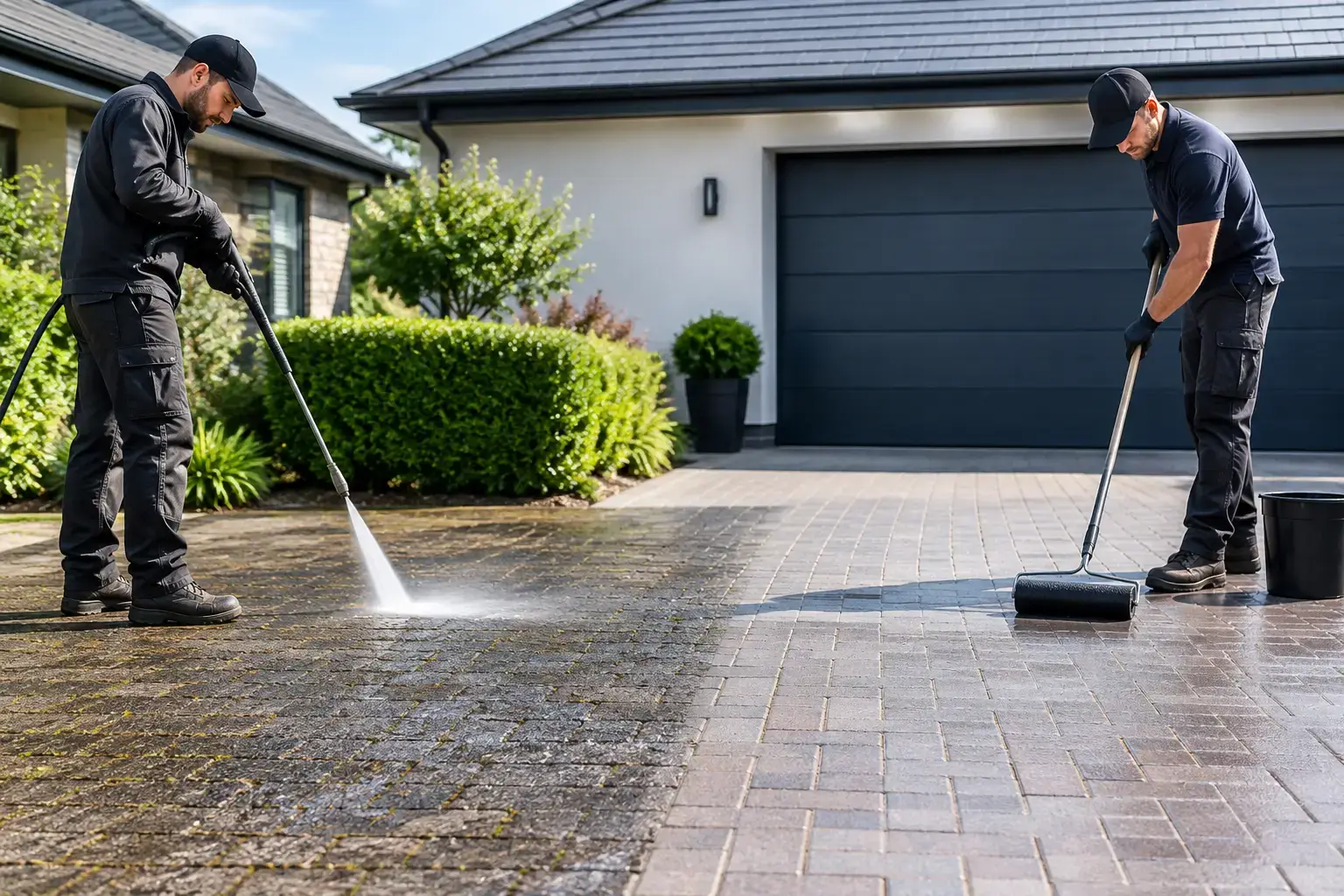
Surface sealing versus replacement is not simply a choice between the cheaper and more expensive option. A tired driveway or patio can look far worse than its underlying condition, particularly after months of algae, moss, black spot, traffic grime and weather staining. If the paving remains stable and sound, professional cleaning followed by the right sealant may be sensible. If the surface is moving, crumbling or repeatedly failing, replacement can be the more responsible decision.
For homeowners, landlords and property managers, the useful question is this: is the problem on the surface, or within the surface? The answer determines whether cleaning and sealing can improve and protect what is already there, or whether money would be better spent on new paving.
Surface sealing versus replacement: start with condition
Surface sealing is a protective treatment applied after appropriate cleaning and preparation. Depending on the material and chosen product, it may help reduce water absorption, make routine cleaning easier and improve the appearance of paving. Some sealers can enhance colour, while others aim for a more natural finish.
It is not a structural repair. A sealant cannot secure loose blocks, rebuild worn concrete, correct poor drainage or stop a patio slab from rocking. Applying it over contamination, dampness or failing joints may leave the real problem untouched and can produce an uneven result.
Replacement means removing all or part of the existing surface and installing new material. It may be the right route where a driveway base has failed, slabs are extensively damaged, concrete is breaking down, or the layout itself no longer works. It is also the greater disruption, involving decisions about materials, levels, drainage and access as well as the cost of installation.
The middle ground is often overlooked. A block-paved driveway may need cleaning, weed removal, joint repairs and fresh kiln-dried sand before sealing is considered. A patio may need isolated slabs reset rather than a complete rebuild. The condition of the surface should lead the decision, not just how it looks on a wet winter morning.
When cleaning and sealing are worth considering
Cleaning and sealing are usually most suitable when the surface is fundamentally stable but weathered. This is common on block paving, concrete paving and some patios where dirt and biological growth are masking the original colour and texture.
A professional assessment looks beyond the visible staining. Are blocks level and properly supported? Are joints largely intact? Is water draining away rather than pooling? Are there only minor chips or marks? If the answers are broadly positive, restoration may extend the useful appearance of the existing surface without the upheaval of replacement.
Block paving that has lost its finish
Block paving often responds well to a staged approach. Moss, algae, lichen and ingrained dirt can make the drive look dull and slippery, while empty joints allow movement and encourage weeds. Controlled pressure cleaning can remove accumulated contamination, but it must be matched to the paving and its condition. Once the surface is clean and dry, re-sanding the joints is normally an essential part of restoring block paving.
Only then is sealing worth discussing. A suitable sealant may help bind jointing sand and reduce porosity, but it should not be used to disguise blocks that are sinking or spreading. If vehicle traffic has caused ruts or edge restraint has failed, repairs are needed first.
Concrete and tarmac with surface-level staining
Concrete driveways can develop dark staining, tyre marks, algae and patchy discolouration that make them appear beyond saving. Where the concrete is sound, thorough cleaning can make a considerable visual difference. Sealing may then be considered to help manage future soiling and weather exposure.
However, widespread cracking, flaking, loose material or deep oil contamination changes the picture. Sealer does not restore lost concrete or resolve movement beneath it. Tarmac is another material that needs a careful approach: cleaning may be appropriate in some cases, but the treatment must be chosen for the surface rather than assuming a paving sealer will suit it.
Natural stone patios that remain stable
Indian sandstone and other natural stone patios need particular care. Their colour variation and textured finish are part of their character, but porous stone can hold moisture, algae and organic staining. Low-pressure treatment or controlled cleaning methods may be more appropriate than aggressive washing, depending on the stone and the contamination.
A sealer can be useful on suitable, fully prepared stone, but it is not automatically necessary. The wrong product may alter the appearance, affect breathability or leave a finish that does not suit the patio. A thoughtful choice matters more than a quick coating.
Signs replacement may be the better investment
Replacement is not a failure of maintenance. Sometimes a surface has reached the point where cleaning and sealing would only improve its appearance temporarily while leaving costly defects below.
Look closely for persistent movement, large cracks, broken slabs, widespread surface breakdown, significant dips, standing water and unstable steps or edges. On a driveway, repeated wheel-track sinking can indicate a base problem. On a patio, settlement towards the house or poor falls may create drainage concerns that surface treatment cannot correct.
There are also practical reasons to replace. You may need a different layout, improved access, a larger parking area, new drainage arrangements or a material that better suits the property. In these cases, spending on cleaning and sealing an unsuitable surface may not represent good value.
Replacement can also be appropriate where previous coatings have failed badly. Peeling, patchiness or an unsuitable old sealant may require specialist preparation before any new treatment is contemplated. It is better to understand what is on the surface before adding another product over it.