
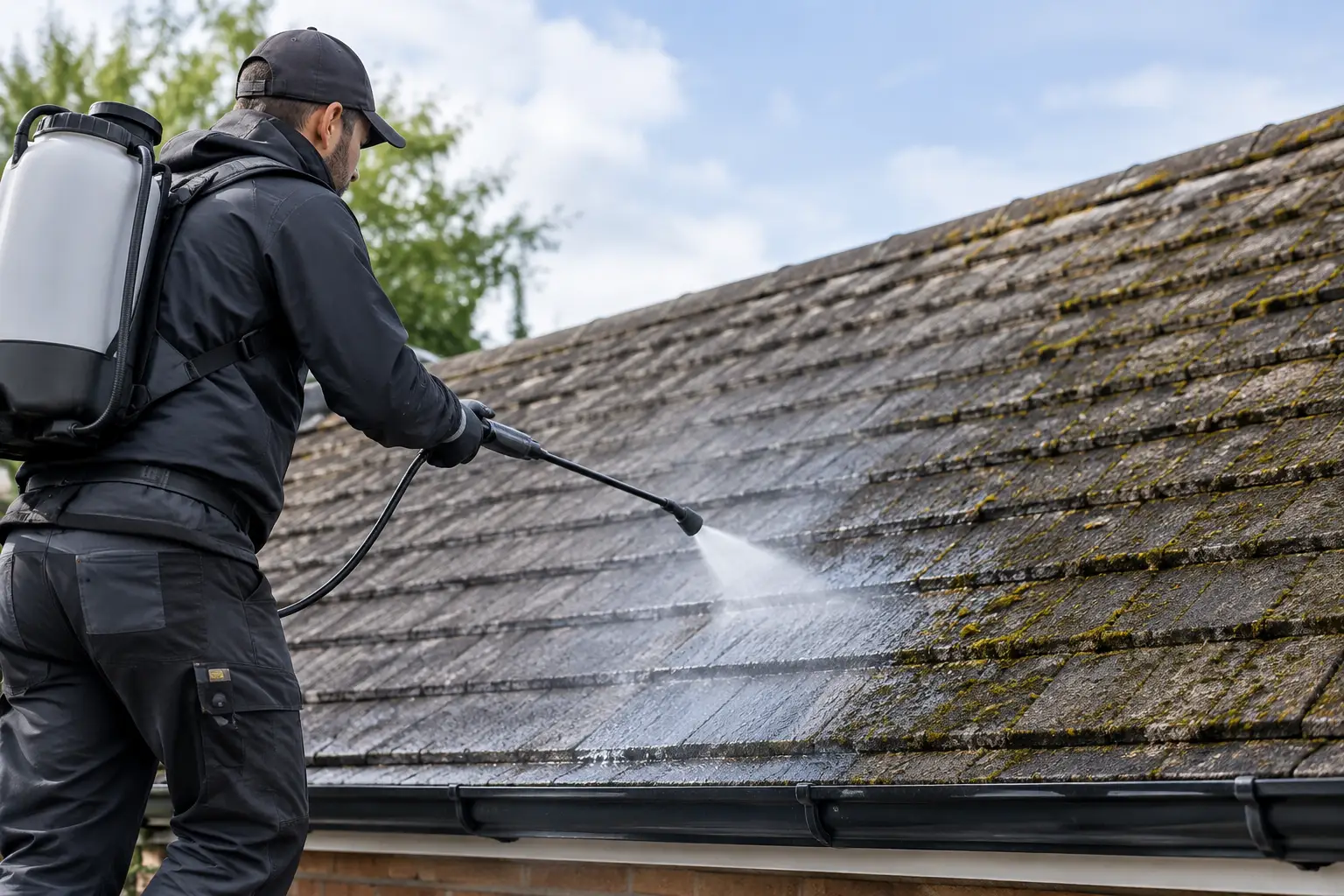
A roof treatment is not simply a way to make tiles look cleaner. Used in the right circumstances, it can address moss, algae and lichen that hold moisture against the roof surface, affect the appearance of a property and contribute to blocked gutters and downpipes. The right approach depends on the roof covering, its age and condition, the type of growth present, and whether cleaning is appropriate at all.
For homeowners, landlords and property managers, the sensible starting point is an assessment rather than a one-size-fits-all cleaning method. A roof with light algae staining needs a different approach from one carrying thick moss across older concrete tiles. Equally, a delicate roof surface should not be treated as though it were paving.
What is roof treatment?
Roof treatment usually refers to a controlled cleaning and after-treatment process intended to remove or reduce organic growth. On domestic roofs across Bolton, Greater Manchester, Cheshire and Lancashire, the most common concerns are moss, algae, lichen and general weather staining.
Moss is often the most visible issue. It collects in tile edges and overlaps, retains rainwater and can shed onto patios, driveways and into gutters below. Algae can leave green shading, particularly on damp or shaded roof slopes. Lichen tends to appear as pale, crust-like patches that can be more firmly attached to the tile surface.
A treatment may involve careful moss removal followed by a low-pressure application designed for the roof surface and the contamination present. The purpose is not to force an immediate cosmetic transformation at any cost. It is to choose a proportionate method that respects the condition of the roof while dealing with the growth that is causing concern.
Why the cleaning method matters
Roofs are exposed to years of rain, frost, sunlight and airborne dirt. Their tiles may also have become more fragile with age. That is why high-pressure washing is not automatically the right answer for a roof, even where pressure washing is appropriate for harder exterior surfaces such as driveways or patios.
Controlled pressure may be considered in certain situations, but low-pressure treatment is often the more suitable route for roof cleaning. The decision should account for the tile type, the amount of moss, the roof pitch, the state of the pointing and flashing, and any signs that the roof needs a roofer's attention rather than a cleaning service.
A professional assessment should identify obvious limitations before work begins. Cracked, loose or missing tiles, failing mortar, damaged flashing and active leaks are repair matters. Cleaning can improve a dirty roof surface, but it cannot correct structural defects or make an ageing roof new again.
There is also a practical difference between removing visible moss and treating remaining organic spores. Manual removal may be useful where growth is substantial, while an appropriate after-treatment can help deal with residue left on the surface. The visible change may not always be identical on every roof or immediate across every stained area. Lichen, in particular, can be slow to release after treatment.
When roof treatment is worth considering
The clearest sign is moss building up between tiles or falling into gutters after wet weather. Left unmanaged, this debris can contribute to blocked guttering and overflow around fascias, soffits and walls. A roof that looks green on one shaded elevation may also benefit from assessment before the growth becomes heavier.
Roof treatment can also be a sensible part of planned exterior maintenance for rented homes, managed properties and commercial buildings. It is often easier to address early growth than wait until gutters need repeated clearing and roof valleys are collecting debris.
Appearance matters too. A moss-covered roof can make otherwise well-kept brickwork, render, windows and paving look neglected. However, appearance alone should not dictate the method. A roof does not need aggressive cleaning simply because it looks weathered. Some discolouration is normal, and the right outcome is a cleaner, better-managed roof surface rather than an artificial finish.
Consider an assessment if you notice:
- thick moss collecting along tile courses, roof valleys or around chimneys
- green algae on shaded slopes
- lichen patches that are spreading across the roof
- gutter blockages or moss debris on paths, patios and driveways
- staining that is affecting the overall presentation of the property
These signs do not automatically mean urgent damage, but they are useful reasons to inspect the roof and guttering properly.
What a careful roof treatment process should consider
Safe access and the condition of the roof come first. Before any cleaning method is selected, the surface needs to be viewed closely enough to understand what is present. Tile material, roof pitch, access constraints and nearby features such as conservatories, solar panels, planted areas and neighbouring property can all affect the working plan.
The next consideration is containment and clean-up. Moss removal can create a surprising amount of debris. That material needs to be managed rather than left to wash into gutters, onto a neighbour's property or across cleaned paving below. Where gutter clearing is needed, it should be considered as part of the wider maintenance picture.
The chosen method should then be matched to the roof. Low-pressure treatment can be used where appropriate to apply a cleaning solution without relying on force. Controlled pressure can have a place on suitable surfaces and conditions, but it is not a default method for every tiled roof. A responsible contractor should explain the proposed approach in plain terms rather than treating all contamination as the same problem.
Finally, expectations should be realistic. Moss removal can produce an immediate improvement, while treated algae and lichen may change gradually as weathering takes effect. The roof's existing age, colour variation and historic staining will still influence how it looks afterwards.