A patio can look tired long before it is beyond saving. Green algae on shaded paving, black spot on slabs, moss in joints and ingrained marks from everyday use can make an otherwise well-kept garden feel neglected. A professional patio cleaning service assesses the paving material and the type of contamination first, then selects a controlled cleaning approach rather than simply applying maximum pressure.
For homeowners, landlords and property managers, the right time to arrange cleaning is usually when growth or staining is becoming established, not only when the patio looks heavily soiled. Early attention can make routine maintenance easier, while a considered assessment helps avoid using the wrong method on surfaces such as Indian sandstone, block paving or more delicate natural stone.
What a patio cleaning service should assess first
Patios are not all built from the same material, and that matters. Concrete flags, porcelain, block paving, sandstone, limestone and composite decking can all collect dirt, but they do not necessarily respond well to the same treatment. The condition of the surface is just as relevant as its material. A weathered patio with loose pointing, cracked slabs or unstable edging needs a more cautious approach than sound, well-laid paving.
Before work begins, a proper assessment should consider the paving type, drainage, nearby planting, the condition of joints and the likely cause of the discolouration. Green growth is often algae, particularly where patios sit beneath trees or receive limited sunlight. Moss can hold moisture in the joints, while lichen and black spot may remain visible even after general dirt has been lifted. Rust marks, barbecue grease, leaf staining and paint splashes each need individual consideration.
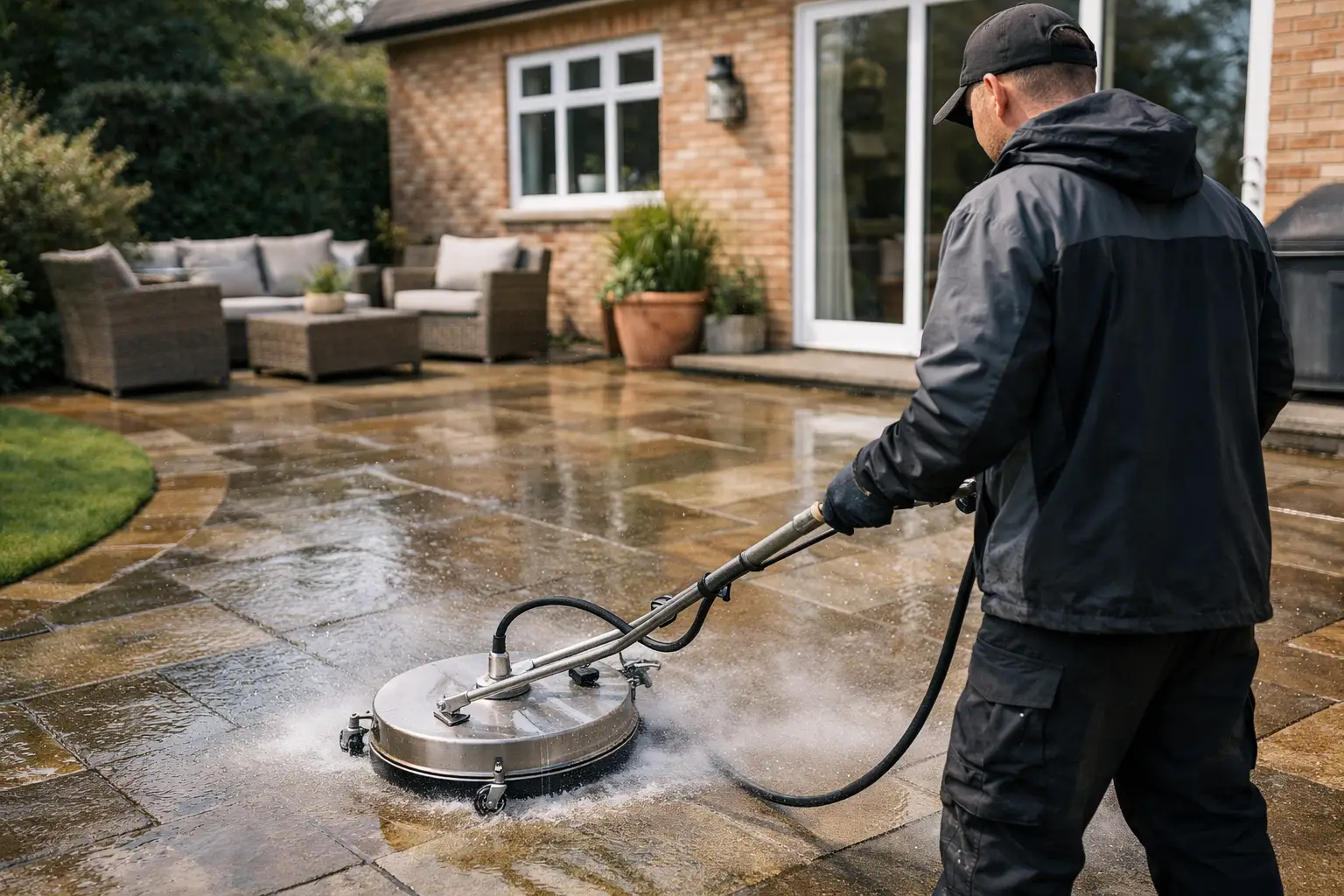
This is why a patio should not be treated as a one-setting pressure-washing job. High-pressure equipment can be useful on suitable hard surfaces, but its use needs to be controlled. Some patios benefit from pressure cleaning, while others are better suited to a lower-pressure treatment or a combination of methods.
What are the most effective treatments for cleaning and restoring patios?
The most effective treatment depends on the patio surface and its condition. Controlled pressure cleaning can suit appropriate hard surfaces, while lower-pressure cleaning is safer where the material or jointing requires it. Algae, moss, lichen and black spot may need an appropriate treatment rather than simply more pressure. Suitable block paving may need re-sanding after cleaning, while sealing should only be considered once the surface has been properly cleaned, dried and assessed.
Concrete slabs and textured paving
Concrete paving can hold dirt within its textured finish, particularly around garden furniture, plant pots and high-traffic routes between the house and lawn. Controlled pressure washing can often lift accumulated grime and surface growth effectively. However, the operator still needs to take account of damaged areas, weak pointing and drainage channels, rather than treating every section identically.
Cleaning may reveal the original colour variation of the slabs, which can make the difference between dirty areas and protected areas more noticeable at first. That is not necessarily a problem, but it is worth understanding that cleaning removes contamination - it cannot make aged or unevenly weathered paving brand new.
Indian sandstone and natural stone patios
Indian sandstone is popular across gardens in Bolton, Greater Manchester, Cheshire and Lancashire, but it needs a measured approach. Its natural texture and colour variation are part of its character, and aggressive cleaning can be inappropriate for some conditions. The aim is to lift organic growth and embedded dirt without unnecessarily disturbing the stone’s surface or the joints around it.
Natural stone can also show staining that does not disappear completely in one process. Mineral marks, deep organic staining and historic spills may have penetrated below the surface. A professional should explain the likely improvement honestly rather than promise a uniform result that the material cannot realistically deliver.
Block paving patios
Block paving often collects moss and weeds in the joints, especially when sand has been lost over time. Cleaning can restore a clearer, tidier appearance, but it may also dislodge loose jointing material. Where appropriate, re-sanding after cleaning can help stabilise the blocks and support the finished appearance.
Re-sanding is not an automatic add-on for every paved area. Its suitability depends on the block type, joint condition and whether the surface has dried sufficiently. This is one of the practical details that should form part of the quotation rather than being assumed.
Porcelain and smoother modern paving
Porcelain and other smooth paving materials can show water marks, algae and footprints clearly, despite being less porous than many natural stones. They may not need the same level of pressure as heavily textured concrete. The focus is normally on removing surface contamination cleanly and avoiding unnecessary force around grout lines, joints and edges.
Common patio problems and what cleaning can realistically change
Most patios become discoloured because moisture, shade and daily use create the right conditions for dirt and organic growth. North-facing gardens, areas beneath overhanging trees and patio sections close to lawn edges often need more attention. Poor drainage can compound the issue by allowing water to sit on the surface for longer.
Algae makes paving look green and can leave it slippery when wet. Moss commonly builds up in joints and edges. Lichen can form pale, crust-like patches, while black spot may appear as dark speckling or spotting that is more persistent than ordinary dirt. Professional cleaning can significantly improve the appearance of these issues, but the amount of improvement depends on the surface, the age of the staining and the patio’s ongoing conditions.
A clean patio will still be exposed to rain, shade, leaves and garden use afterwards. No sensible contractor should present cleaning as a permanent answer to future organic growth. Instead, it gives the surface a well-maintained starting point and makes it easier to spot areas that need routine sweeping, drainage attention or seasonal upkeep.