
Table of Contents
- Why Moss Returns to Driveways
- Step 1: Remove Existing Moss and Debris
- Step 2: Improve Surface Drainage to Stop Regrowth
- Step 3: Choose the Best Moss Killer for Block Paving
- Step 4: Seal Block Paving to Stop Moss Taking Hold
- Step 5: How Often Should You Jet Wash a Driveway
- Step 6: Increase Sunlight Exposure Where Possible
- Step 7: Create a Seasonal Maintenance Schedule
Last Updated: August 30, 2026
Why Moss Returns to Driveways
Moss thrives on your driveway because it finds exactly what it needs: moisture, shade, and organic debris. Most homeowners treat moss as a one-off cleaning job, power washing it away only to see it return within weeks or months. This happens because the underlying conditions, poor drainage, shade, moisture retention, and surface porosity, remain unchanged. Moss spores are everywhere in the air and soil; they settle on damp, shaded surfaces and germinate when conditions are right.
Block paving, tarmac, and concrete are porous materials that absorb and retain water. When sunlight is limited and debris accumulates, you create a perfect habitat for moss, algae, and liverworts. Understanding why moss returns is the first step to stopping it permanently. Cleaning alone isn't enough; you must address the environmental factors that allow moss to establish.
Step 1: Remove Existing Moss and Debris
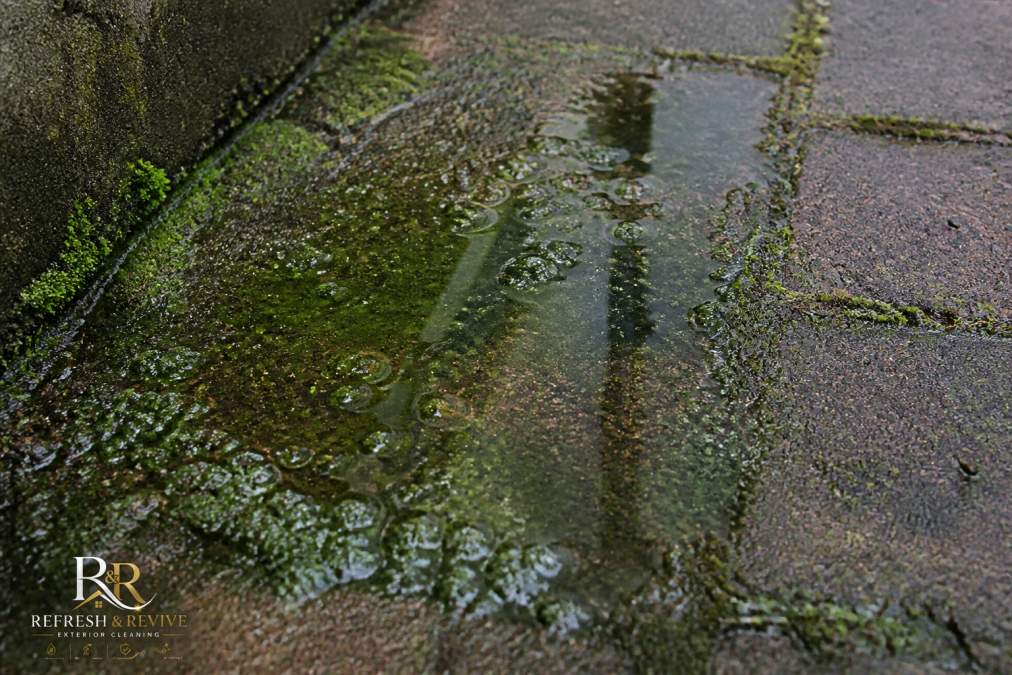
Before preventing moss returning on driveway surfaces, you must remove what's already there. This eliminates the spore base and organic matter that feeds regrowth.
Start with manual removal of loose debris using a stiff brush or broom to sweep away leaves, twigs, and accumulated matter. Pay special attention to joints between block paving and crevices where debris collects.
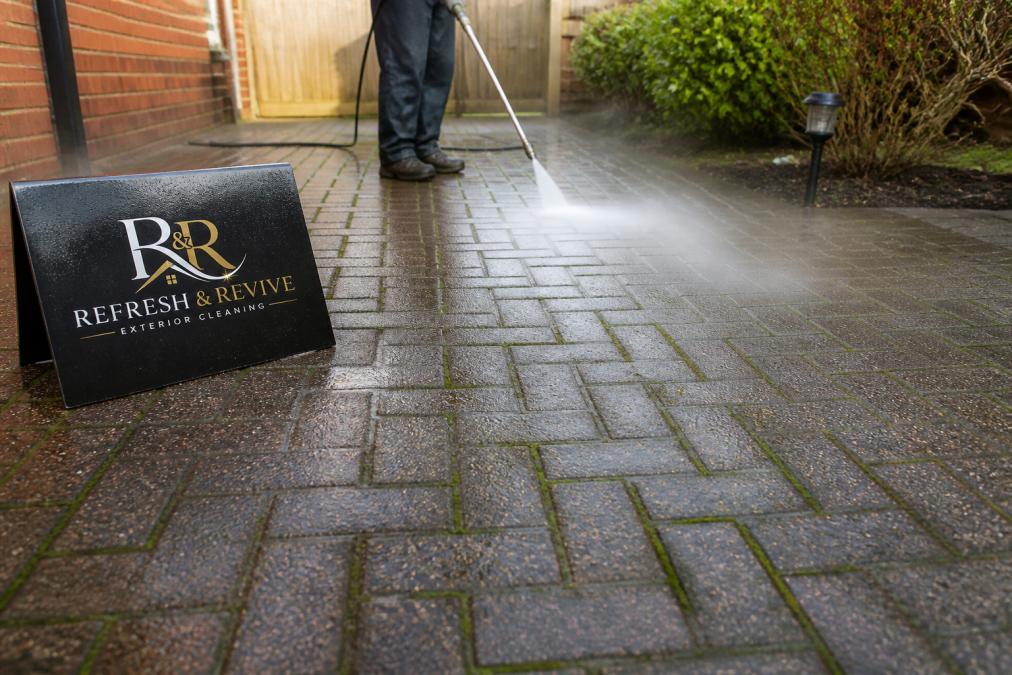
For established moss growth, a pressure washer can be effective, but method matters significantly. Low-pressure washing protects surface integrity while removing moss effectively. High-pressure methods can damage block paving, force water deeper into joints, and worsen drainage problems long-term.
Allow the surface to dry completely before moving to the next step, typically 24-48 hours depending on weather. A dry surface is essential for moss killer or sealant to bond properly with a clean substrate.
Step 2: Improve Surface Drainage to Stop Regrowth
Clearing blocked gutters and downpipes
Drainage is the single most important factor in preventing moss returning on driveway areas. If water isn't flowing away from your surface, moss will return regardless of chemical treatment.
Inspect gutters and downpipes for blockages. Blocked gutters cause water to overflow directly onto your driveway, creating constant moisture conditions. Clear out leaves, moss, and sediment. Check that downpipes direct water away from the driveway, not onto it.
Redirect downpipes so water flows away from the paved surface, ideally into a drainage system or soakaway. Even moving the discharge point 1-2 metres can significantly reduce driveway moisture.
Grading and slope adjustment
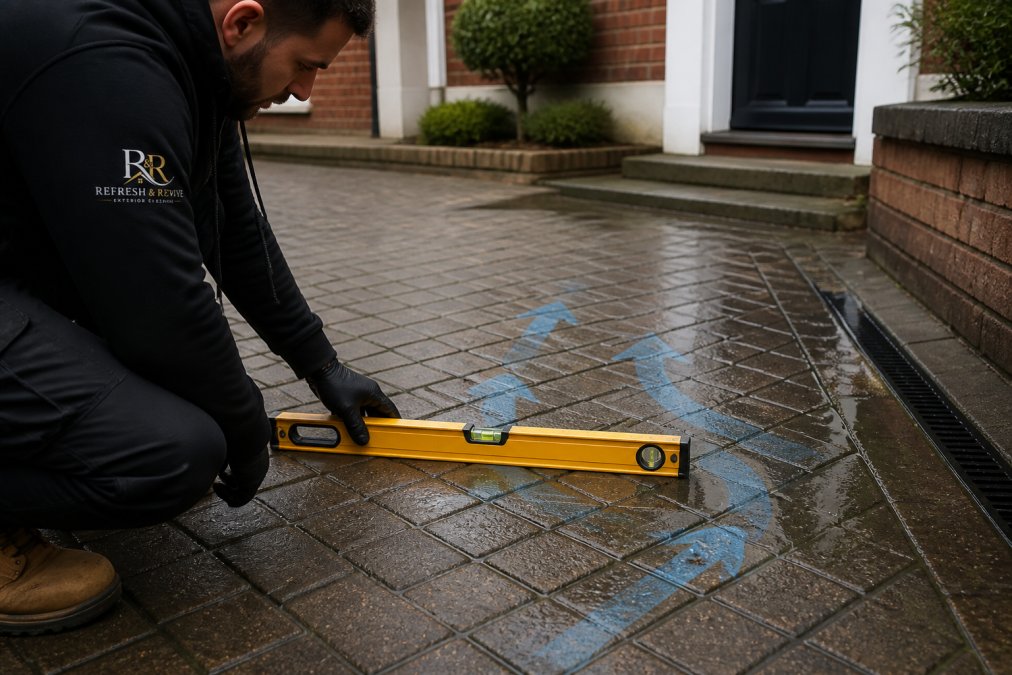
Driveways should slope away from the house at a gradient of about 1:50 to allow water to drain properly (gov.uk). If your driveway is flat or slopes toward the house, water pools and creates ideal conditions for moss growth.
Fill low spots where water collects with self-binding gravel or permeable material. For block paving, ensure joints are clear and not clogged with soil or sediment. Clogged joints prevent water from draining through the base layer. Brush out blocked joints and consider re-sanding with permeable jointing material.
Step 3: Choose the Best Moss Killer for Block Paving
Selecting the right moss killer depends on your surface type and problem severity. For block paving, biocide-based treatments are among the most effective, killing moss spores and preventing regrowth for several months (peer-reviewed research). Always follow the product label exactly. The safety data sheet will specify COSHH controls required for safe use.
Never mix cleaning chemicals or attempt to create your own moss killer using vinegar, bicarbonate of soda, or other household substances. These approaches are unreliable, potentially dangerous, and may damage your driveway. Always use products specifically formulated for your surface type and follow all safety instructions.
For block paving, choose a product safe for the material that won't stain or discolour the blocks. Test any treatment on a small, inconspicuous area first. Allow the product to work for the time specified on the label, usually 1-2 weeks, before washing it away.
Step 4: Seal Block Paving to Stop Moss Taking Hold
Sealing is one of the most effective ways to prevent moss returning on driveway surfaces long-term. A good sealant reduces porosity, making it harder for moss spores to establish and for moisture to be retained.
Before sealing, ensure the surface is completely clean and dry. Allow at least 48 hours of dry weather after cleaning before applying sealant. Apply according to product instructions; most sealants require two coats for optimal protection. Allow proper drying time between coats and before allowing traffic on the sealed surface.
Quality sealants typically provide protection for 2-3 years before reapplication is needed (peer-reviewed research). If your driveway relies on permeable paving for drainage, ensure you use a product that maintains this functionality.
Step 5: How Often Should You Jet Wash a Driveway
Jet washing frequency depends on your climate, shade levels, and how quickly moss tends to return in your location. Most driveways benefit from jet washing once or twice per year as part of routine maintenance.
In areas with high rainfall and limited sunlight, you might need to jet wash every 6 months. In drier areas with good sun exposure, annual washing may be sufficient.
Low-pressure washing is gentler than high-pressure methods and can be done more frequently without causing damage. If you're using low-pressure techniques, you can safely wash your driveway 2-3 times per year. High-pressure washing should be limited to once per year at most.
After sealing your driveway, you'll likely need to jet wash less frequently because the sealant prevents moss from establishing as readily. Many homeowners find that sealed driveways only need washing once per year, or even less frequently if conditions are favourable.