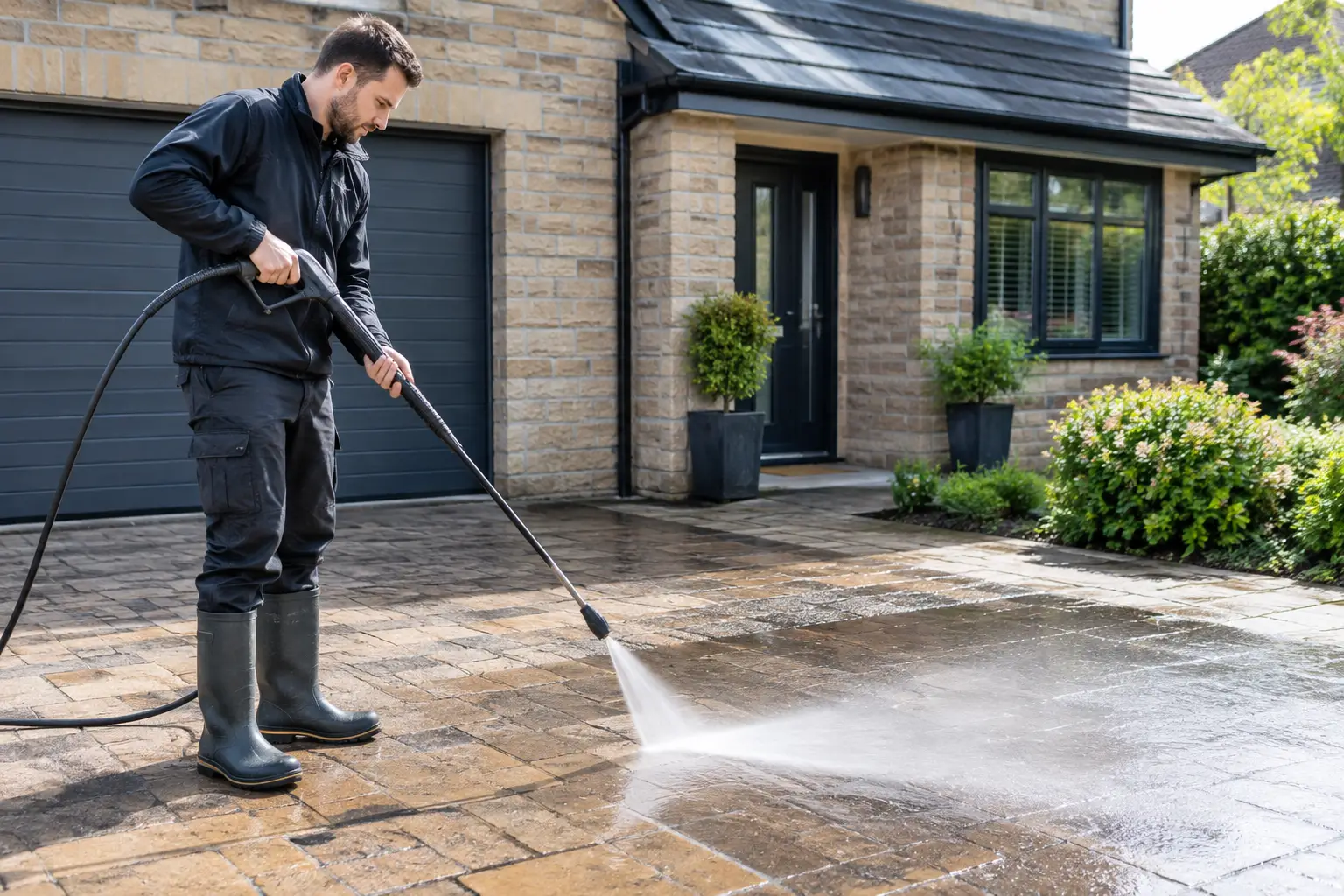
A driveway coated in black algae, a patio dulled by winter grime or brickwork marked by traffic film can make an otherwise well-kept property look neglected. Pressure washing in Cheshire can make a clear visible difference, but the right result depends on more than using a powerful machine. The surface, its age, the type of contamination and the condition of joints, mortar or coatings all need to be considered before cleaning begins.
Refresh & Revive Exterior Cleaning is based in Bolton and works across Cheshire, Greater Manchester, Lancashire and the wider North West. For homes, managed properties and commercial sites, the practical starting point is an assessment of what needs cleaning and which method suits it. Controlled pressure can be highly effective on sound hard surfaces. On more delicate materials, low-pressure treatment or soft washing may be the more sensible choice.
Pressure washing Cheshire properties: where it works well
Pressure washing is commonly used for external hard surfaces that have collected algae, moss, soil, surface staining and general weathering. In places such as Chester, Warrington, Wilmslow and Knutsford, shaded paving and north-facing driveways can stay damp for longer after rain. That moisture encourages organic growth, particularly where leaves, garden debris and poor drainage allow it to build up.
A properly selected pressure-washing method can be suitable for sound concrete, tarmac in appropriate condition, block paving, paving slabs, many patios, paths, forecourts and some brick or stone surfaces. The aim is not simply to blast away visible dirt. It is to remove the growth and staining without unnecessarily disturbing the material beneath.
Commercial equipment operating at 3,500 to 4,000 PSI has a place in exterior cleaning, but pressure alone is not the measure of a good job. Water flow, nozzle selection, working distance and operator control affect the outcome. A cleaner may need a firm approach on a heavily soiled concrete area, then a far more measured one around vulnerable edges, drainage channels or ageing jointing.
Start with the surface, not the machine
The same green staining can appear on several materials, yet the correct response can be completely different. This is why a visual assessment, often helped by clear photographs, is useful before arranging work.
Block paving and driveways
Block paving can hold dirt and moss in its joints as well as on the face of the blocks. Pressure washing can lift this contamination and improve the overall appearance, but it may also remove loose or degraded jointing sand. Where appropriate, cleaning can be followed by re-sanding once the paving is dry, helping to restore the joints and support the blocks.
Not every driveway needs the same finish. A newer, well-laid driveway may need cleaning and a straightforward re-sand, while older paving might have movement, sunken areas, damaged edging or persistent oil marks. Cleaning improves presentation, but it does not repair failed foundations, cracked blocks or drainage issues. Those limitations should be clear from the outset.
Patios, Indian sandstone and natural stone
Patios often become slippery because algae settles in textured surfaces and shaded corners. Controlled pressure washing can remove accumulated dirt and organic growth from many patio materials, but natural stone needs particular care. Indian sandstone, for example, can vary in density and finish. Aggressive cleaning can leave an uneven appearance or affect softer areas.
For this reason, the cleaning method should be adjusted to the individual patio rather than applied as a standard setting. Some staining may be embedded, especially on older stone, and a deep clean cannot always return a surface to its original colour. It can, however, remove much of the contamination that is obscuring the material and make the space more presentable for everyday use.
Render, painted surfaces and cladding
Dirty render is not automatically a pressure-washing job. K Rend, silicone render, painted masonry and certain cladding systems can be affected by excessive pressure. Their discolouration is often caused by algae, airborne dirt and biological growth rather than a layer of loose grime that needs force to remove.
In these cases, a low-pressure soft-washing approach may be more appropriate. The treatment is selected to deal with the contamination while reducing the need for forceful water application. This distinction matters on homes in areas such as Alderley Edge, Prestbury and Hale, where clean render can have a significant effect on the building's overall kerb appeal, but care is needed to avoid treating a coated surface like a concrete path.
Roofs, gutters and surrounding areas
Roofs require their own assessment. Moss can retain moisture and fall into gutters and downpipes, while roof tiles may be vulnerable to unsuitable high-pressure cleaning. Roof cleaning and moss removal should therefore not be treated as an extension of driveway washing.
Gutter clearing is also separate from washing the visible gutter line, fascia or soffit. One service addresses debris that may restrict water flow; the other focuses on external appearance. If a property has moss-covered roof areas, blocked gutters and staining below the eaves, it may make sense to consider the whole exterior maintenance picture rather than deal with each visible symptom in isolation.