
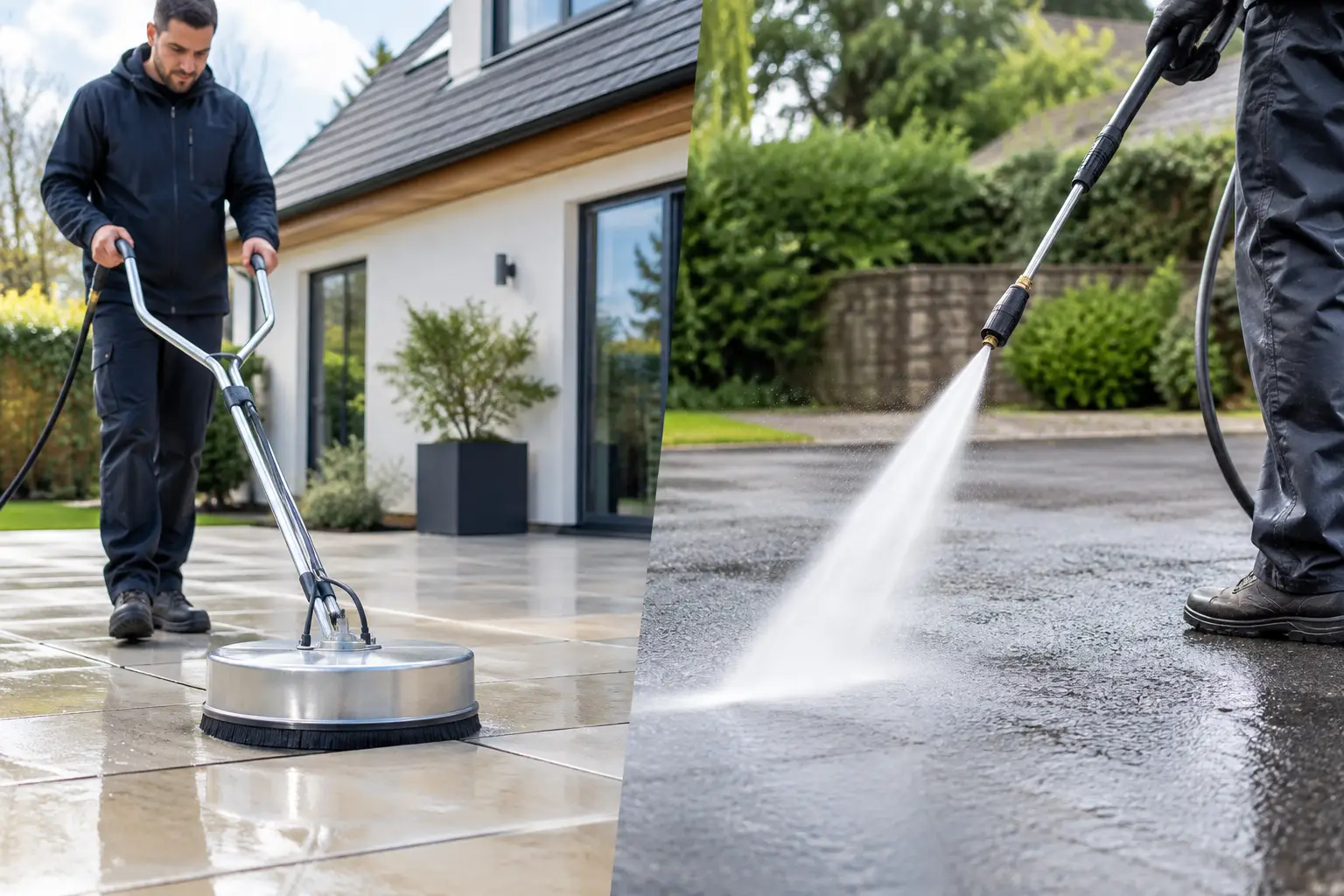
Outdoor porcelain paving is often chosen because it looks clean, contemporary and relatively low-maintenance. That does not mean it never needs attention. In the North West, damp weather, shaded areas and regular foot traffic can leave porcelain patios looking dull or streaked. Porcelain cleaning versus pressure washing is not a choice between a gentle method and an aggressive one - it is a question of using the right process for the tile, grout joints and type of soiling.
For most outdoor porcelain, controlled pressure washing can be appropriate. The tile surface is dense and non-porous compared with many natural stones, but the installation around it still needs care. Poor technique can disturb jointing material, leave uneven results or simply fail to remove the cause of the marks. A professional assessment should look beyond the visible dirt before any cleaning begins.
Why porcelain looks dirty in the first place
Porcelain does not absorb water in the same way as sandstone, concrete or block paving. As a result, algae and organic growth commonly sit on the surface rather than soaking deeply into it. This is useful when cleaning, but it can make the patio deceptively slippery after wet weather.
The most common issues are green algae, black speckling, leaf and flower staining, soil tracked in from the garden and marks around furniture or planters. Some pale patches are not everyday grime at all. They may be residue left after installation, such as grout haze or cement-based staining. Rust marks, grease and marks from plant pots also need a more considered approach than simply increasing water pressure.
It matters because different contaminants respond differently. A jet wash may lift surface algae effectively, while a residue or stubborn localised stain may need a suitable treatment first. Treating every mark as ordinary dirt is how porcelain can be left patchy, with clean-looking areas beside stains that have barely changed.
Porcelain cleaning versus pressure washing: the practical difference
Porcelain cleaning is the wider service. It begins with identifying the surface and contamination, then selecting a method that cleans the paving without taking shortcuts around the joints, edges and surrounding finishes. Pressure washing may form part of that work, but it is not automatically the whole answer.
A controlled pressure wash uses appropriate equipment, pressure settings, water flow and working distance to remove dirt from the tile face. The operator should avoid lingering in one place or working too closely to vulnerable areas. Care is especially relevant at cut edges, steps, drainage channels, thresholds and joints, where poor technique can create problems even if the tile itself appears sound.
For organic growth, a low-pressure treatment may be used where suitable to deal with the biological cause before or alongside a rinse. This can be more effective than relying on force alone, particularly in consistently shaded sections of a patio. The exact approach depends on the tile, the jointing material, drainage and the extent of the contamination.
Pressure washing is therefore a tool, not a cleaning plan. Used with control, it can restore the appearance of a porcelain patio. Used indiscriminately, it can make a straightforward cleaning job less straightforward.
When pressure washing is usually suitable
Surface dirt, mud, light algae and general weathering can often be removed with controlled pressure. Large, open porcelain terraces may benefit from specialist equipment that produces an even finish rather than the striped appearance sometimes left by a narrow lance.
Professional exterior cleaning equipment offers more control than a basic domestic machine, but the result still comes down to method. Refresh & Revive Exterior Cleaning uses controlled pressure or low-pressure treatment according to the surface and its condition, rather than assuming one setting suits every patio.
When pressure alone may not be enough
Black spot, stubborn organic staining, greasy deposits and installation residue can require more than water pressure. Where a product is considered, it should be suitable for porcelain and used with attention to nearby planting, walls, doors and drainage. Acidic or harsh cleaning products should never be selected casually, particularly where the precise cause of the staining has not been identified.
If the joints are already loose, incomplete or deteriorating, cleaning will not repair them. The work may still improve the tile faces, but it is sensible to understand that joint repairs or reapplication of the appropriate jointing material could be needed afterwards. A clear assessment separates what cleaning can achieve from what needs maintenance.
Risks of treating porcelain like ordinary paving
Porcelain is hard-wearing, but outdoor installations are not identical. Tile thickness, adhesive coverage, joint type, the age of the patio and the quality of the original installation all affect the sensible cleaning approach. A heavy-handed blast at close range can remove loose joint material and may force water into areas where it is not wanted.
There is also the question of appearance. A patio can look cleaner immediately after a rushed wash, yet retain lines, swirls or isolated darker areas once it dries. This is often caused by inconsistent passes, incomplete removal of surface film or cleaning around objects without treating the full area evenly.