A patio can look tired long before it needs replacing. Green algae can make paving slippery, black spot can darken the surface, and moss or wind-blown soil can fill joints and hide the original colour. When you search for patio cleaners near me, the sensible choice is not simply the nearest pressure washer. It is a company that will assess the paving, the staining and the condition of the surrounding area before choosing a cleaning method.
For homes, rental properties and managed sites across Bolton, Greater Manchester, Cheshire and Lancashire, the right approach depends on what is underfoot. A well-laid concrete patio may respond differently from Indian sandstone, block paving, porcelain or older natural stone. The goal is a cleaner, more presentable outdoor surface without treating every patio as though it is made from the same material.
What patio cleaners near me should assess first
A proper patio assessment starts with the surface itself. Concrete slabs, textured paving, sandstone and porcelain have different finishes, porosity and jointing arrangements. Age matters too. A patio that has weathered for years, has loose pointing or contains cracked slabs needs a more considered approach than recently installed paving in sound condition.
The type of contamination matters just as much. Algae and moss often sit on the surface and in the joints, particularly in shaded or damp areas. Lichen can adhere more firmly. Black spot is a common concern on patios and may need more than a quick rinse to improve its appearance. Rust marks, oil staining, leaf tannins and paint residues each call for a different conversation, and not every stain can be removed completely.
A reliable cleaner should also look at drainage, nearby walls, doors, planted borders and the route for hoses and equipment. These details influence how the work is prepared and carried out. They are not minor extras: poor drainage can contribute to recurring surface growth, while unstable edges or failing joints may limit the pressure that is appropriate.
Pressure washing is not the whole answer
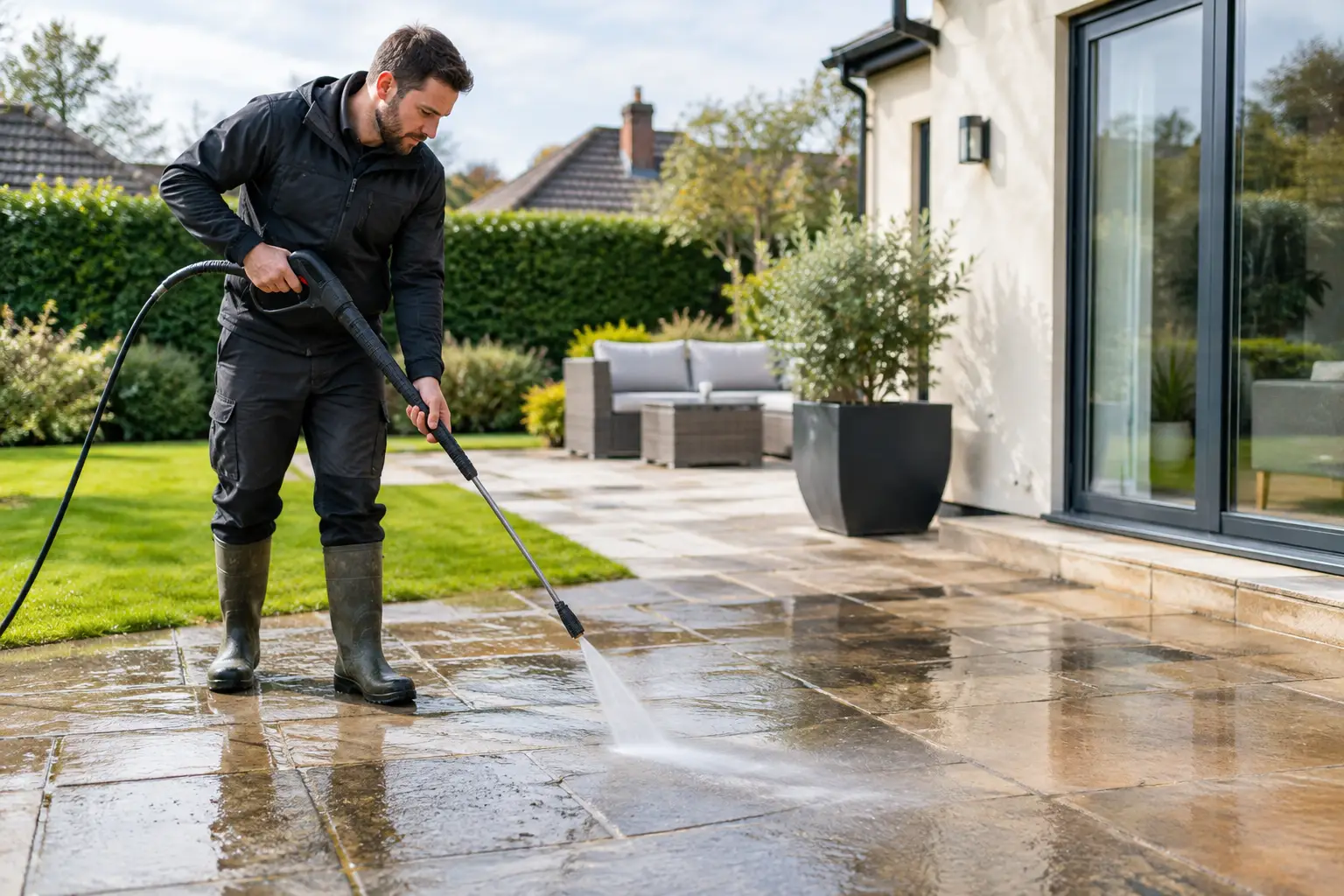
Pressure washing has a clear role in patio cleaning, but pressure alone is not a method. The machine, water flow, nozzle choice, working distance and operator control all affect the result. Commercial equipment can make light work of embedded surface dirt when it is used carefully, but excessive pressure can disturb jointing material, roughen vulnerable surfaces or create an uneven finish.
For durable paving with sound joints, controlled pressure washing may be suitable to lift dirt, algae and accumulated grime. Hot-water capability can also be useful where particular staining or heavy soiling calls for it. On other surfaces, lower-pressure treatment or a soft-washing approach may be the better option. This is particularly relevant for delicate stone, weathered patios and areas where the issue is biological growth rather than thick, bonded dirt.
Indian sandstone deserves particular care. It is popular because of its natural variation and warm appearance, but it is not a surface to attack with the strongest possible setting. Its condition, previous treatment and the state of the pointing should inform the process. A cleaner should explain the proposed method rather than assuming that a dramatic pressure-washing video represents the right solution for every patio.
Porcelain presents a different set of considerations. Its low-porosity finish can make routine dirt easier to remove, yet textured porcelain can hold grime in its surface profile. Grout lines, edges and surrounding materials still need attention. The best method is the one that is appropriate for the complete paved area, not merely the central slabs.
Know what a realistic result looks like
Patio cleaning can make a marked visual difference, especially where algae, moss and surface dirt have obscured the paving. It can reveal the original tone and pattern of the slabs, improve the appearance of paths and seating areas, and make an outside space feel ready to use again.
It is equally important to set realistic expectations. Long-standing black spot, deep oil marks, permanent discolouration, damaged coatings, mortar stains and wear within the stone may remain visible to some degree. Cleaning removes contamination; it does not repair cracked slabs, reverse erosion or make an aged patio look newly laid.
This distinction helps when comparing quotations. A lower-cost proposal based on a quick surface wash may not allow for preparation, careful treatment of affected areas, joint work or a suitable method for the paving. Equally, the most intensive process is not automatically the best value if the surface does not need it. The right scope is based on the actual condition of the patio.
The detail around the patio matters
A clean patio can be undermined by neglected edges. Moss and weeds often return first around borders, steps, drainage channels and joints. Soil washed from planters, overhanging vegetation and water that sits after rainfall can all contribute to recurrent growth.
Where block paving forms part of the same outdoor area, cleaning can remove material from between blocks. Re-sanding may therefore be an important part of restoring the surface once it is clean and dry enough for the work. That is a separate consideration from cleaning a slab patio, where the focus may be on mortar joints or pointing instead.