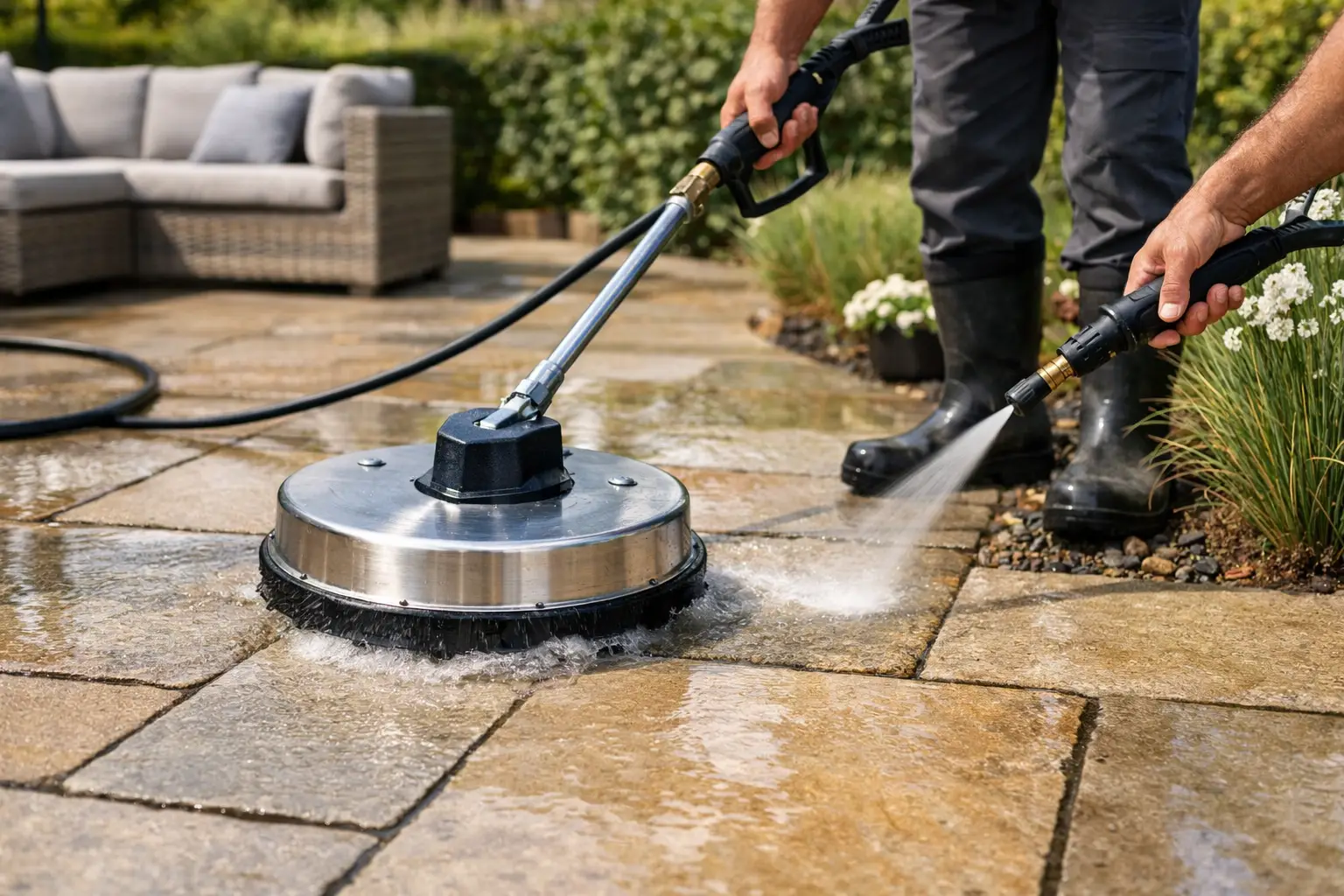
A patio can look tired long before the paving itself has reached the end of its useful life. Patio cleaning can remove the algae, moss, lichen, surface dirt and weather staining that make paths and seating areas look neglected or feel slippery. The right approach depends on the paving material, the type of contamination and the condition of the joints - not simply on using the highest pressure available.
For homeowners, landlords and property managers, the aim is usually straightforward: a cleaner, more presentable outside area that remains true to the character of the property. Refresh & Revive Exterior Cleaning is based in Bolton and provides assessed exterior cleaning across Greater Manchester, Cheshire, Lancashire and the wider North West, selecting controlled pressure washing or lower-pressure treatment according to the surface.
What patio cleaning can remove
Most patios collect more than ordinary dust. In shaded or damp areas, algae often develops as a green film that can make paving slippery underfoot. Moss takes hold in joints and sheltered corners, while lichen can form pale, crusty patches that are difficult to shift with domestic cleaning alone. Black spotting, leaf tannins, soil, barbecue residue and general traffic marks can all change the appearance of a patio over time.
Cleaning can substantially improve these issues where they are on or near the surface. It can also expose the true colour and texture of paving that has been obscured by grime. However, a professional assessment should distinguish removable contamination from permanent change in the material. Fading, natural colour variation, chipped edges, ingrained mineral marks and previous staining may remain visible after cleaning.
That distinction matters. A realistic expectation leads to a better decision than treating every mark as something that pressure washing will erase.
The surface decides the cleaning method
There is no single patio-cleaning setting that suits every property. A hard-wearing concrete slab patio may respond well to controlled pressure washing, whereas Indian sandstone, limestone, porcelain, block paving and older natural stone each need a more considered approach.
Indian sandstone and natural stone
Indian sandstone is valued for its varied colour and natural texture, but its surface and joints need sensible treatment. Excessive pressure, poor technique or unsuitable cleaning products can affect the appearance of the stone or disturb jointing material. Cleaning needs to lift organic growth and dirt without treating the patio as if it were a concrete yard.
Natural stone can also show natural veining, mineral variation and marks that were present before cleaning. These are not always signs of dirt or damage. An experienced assessment helps set out what is likely to improve and where the material’s natural character will remain.
Porcelain patios
Porcelain is typically less porous than many natural paving materials, but it can still become slippery with algae and show dirt, water marks or residue. Its smooth finish benefits from an approach that cleans the surface thoroughly without leaving avoidable streaks or pushing debris into edges and joints.
The grout, pointing and surrounding details still require care. A clean porcelain tile next to poorly maintained joints or stained edging will not give the finished appearance most property owners want.
Concrete slabs, block paving and older patios
Concrete paving can hold surface dirt in its texture, while block paving may need attention to joints following a thorough clean. On older patios, the condition of the pointing, loose slabs, cracks and repairs should be considered before work begins. Cleaning may reveal these existing defects more clearly, rather than cause them.
This is one reason a service should not be judged only by the amount of dirt removed. The preparation, pressure control and final tidy-up are part of achieving a finish you are proud of.
Why a domestic pressure washer is not always the answer
A domestic pressure washer can be useful for a small, sound patio with light surface dirt. The trade-off is that it can be easy to use too closely or too aggressively, especially around soft stone, joints, rendered walls, doors and planting. Uneven passes may leave striping, and dislodged jointing material can create another job after the cleaning is finished.
Professional equipment provides more capability, but capacity alone is not the point. It needs to be paired with correct pressure selection, appropriate tools and a clear understanding of where high pressure is unsuitable. Lower-pressure treatment may be the better choice where organic growth needs treating without aggressively working the surface.
A sensible patio-cleaning process considers access, drainage, nearby walls, furniture, garden features and the route for removing loosened debris. These practical details are easily overlooked, but they affect both the quality of the work and the condition of the surrounding area.
Patio cleaning and black spot: set realistic expectations
Black spot is one of the most common reasons people seek professional patio cleaning. The term is often used for dark, stubborn marks on paving, particularly in damp or shaded gardens. Some marks respond well to cleaning and treatment, while others have become deeply established or are linked to the stone’s texture and porosity.
The honest answer is that results vary. A contractor should avoid promising that every black mark will disappear completely, particularly on older or more porous stone. What can be assessed is the type of staining, the surface condition and the cleaning options that are sensible for that patio.