Table of Contents
- Why Homeowners Are Choosing Jetwashing Alternatives
- Soft Washing vs Pressure Washing: Understanding the Difference
- Low Pressure Exterior Cleaning Benefits for Your Property
- COSHH Compliant Exterior Cleaning: What It Means for Safety
- Specific Cleaning Solutions for Driveways, Patios, and Render
- DIY vs Professional Exterior Cleaning: Cost and Risk Analysis
- Maintenance Schedules to Prevent Regrowth and Long-Term Damage
- Conclusion: Choosing the Right Cleaning Method for Your Home
Last Updated: August 18, 2026
Why Homeowners Are Choosing Jetwashing Alternatives
High-pressure jetwashing has dominated exterior cleaning for decades, but homeowners across the North West are increasingly turning to jetwashing alternatives that protect their property whilst delivering superior long-term results. The reason is straightforward: conventional pressure washing damages surfaces, strips protective coatings, and forces water into gaps where it causes structural problems later.
At Refresh Revive Exterior Cleaning, we've seen the aftermath of aggressive pressure washing countless times. Driveways develop hairline cracks within months. Render fractures and allows moisture ingress. Roof tiles lose their protective granules, accelerating deterioration. Yet many homeowners believe high pressure is the only way to truly clean.
It isn't. Low-pressure cleaning methods, softwashing, chemical treatments, and surface-specific techniques, remove dirt, algae, and biological growth more effectively than pressure washing, with zero risk to your property. These alternatives work by targeting the root cause of discolouration rather than blasting surfaces clean.
This guide examines the science behind jetwashing alternatives, compares professional methods to DIY approaches, and helps you choose the right cleaning solution for your home's specific surfaces. We'll cover driveway restoration, patio protection, render cleaning, and maintenance schedules that actually prevent regrowth.
Soft Washing vs Pressure Washing: Understanding the Difference
Soft washing and pressure washing are fundamentally different approaches to exterior cleaning, and understanding the distinction is critical to protecting your property.
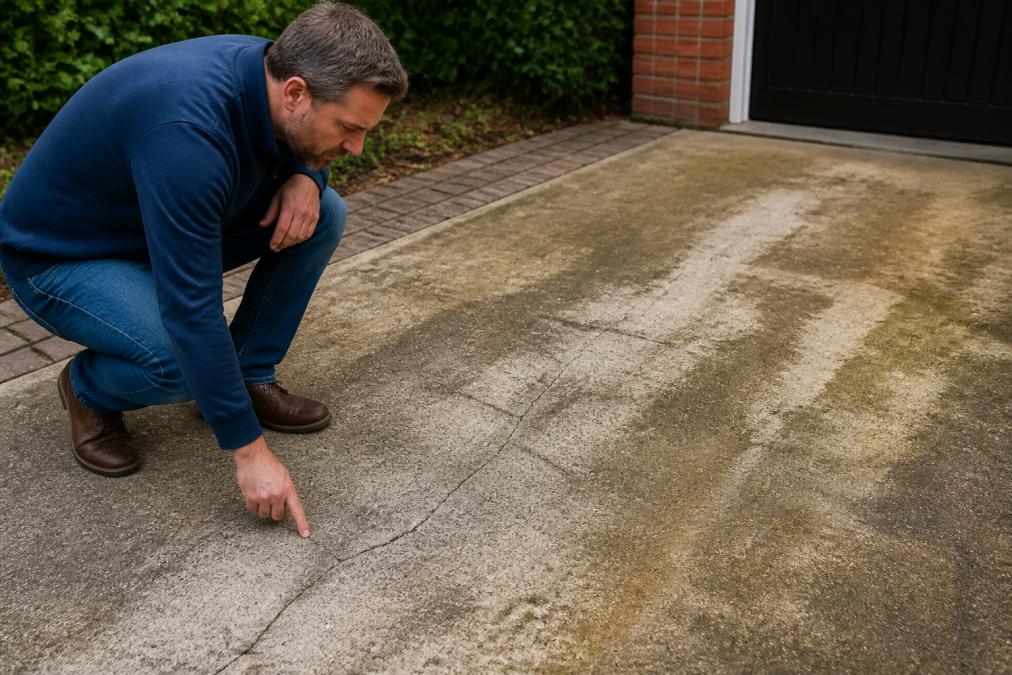
Pressure washing uses water jets at 2,000-4,000 PSI (pounds per square inch) to blast dirt from surfaces. It's fast and visually impressive, surfaces look clean immediately. However, this force damages friable materials, strips protective coatings, and forces water into mortar joints, cavity walls, and foundation cracks. On render, it can fracture the finish and expose the substrate to moisture damage. On driveways, it opens micro-fissures that expand with freeze-thaw cycles.
Soft washing applies cleaning solutions at low pressure (typically under 500 PSI) to kill organic growth at its source. The biocide in the solution penetrates algae, moss, and lichen, destroying them from within. After the treatment works, usually 7-14 days, a gentle rinse removes the dead growth. The surface remains intact, and the treatment prevents regrowth for months.
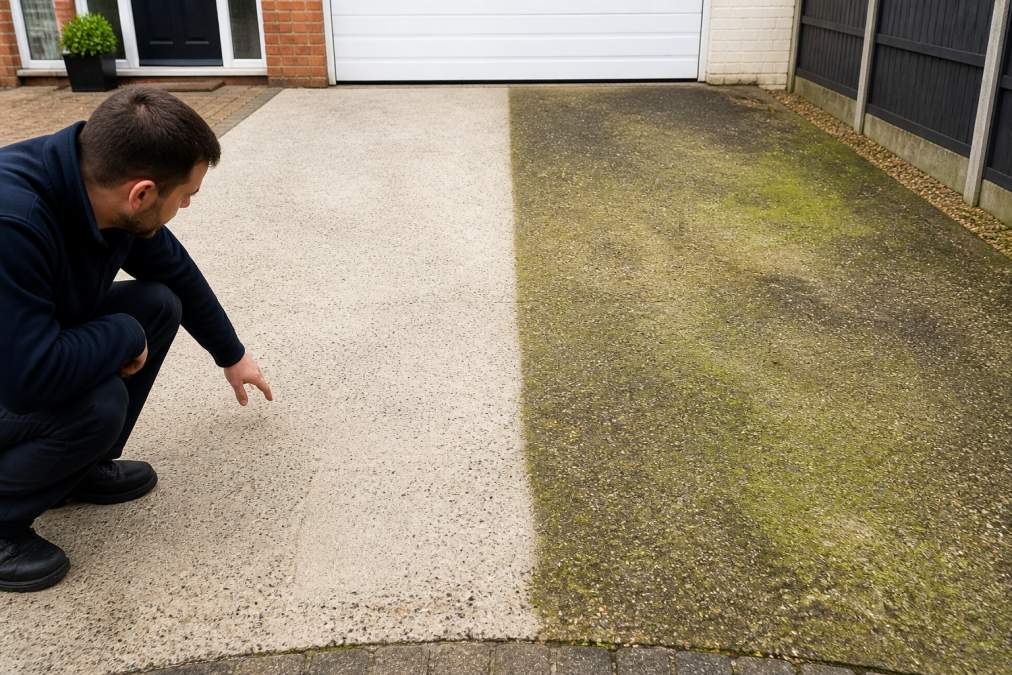
The difference in outcomes is stark. A pressure-washed driveway may look clean for weeks, but algae returns quickly because spores remain in the pores of the concrete. A soft-washed driveway stays cleaner for far longer because the biocide has eliminated the biological cause of the discolouration.
Pressure washing also creates safety risks. The force can knock you off balance, and the spray can penetrate protective barriers around plants and cause injury. Soft washing poses no such hazard, it's safe around landscaping, pets, and people.
Low Pressure Exterior Cleaning Benefits for Your Property
Low-pressure cleaning delivers benefits that high-pressure methods simply cannot match. The approach protects your investment whilst restoring surfaces to their original appearance.
Surface preservation is the primary advantage. Your driveway, patio, render, and roof are expensive assets. Low-pressure methods clean without degrading the material itself. Concrete, block paving, and imprinted concrete remain intact. Render doesn't fracture. Roof tiles keep their protective granule coating. This means your surfaces last longer and require fewer repairs.
Biocide treatment prevents regrowth. When soft washing is done properly, a biocide solution is applied to kill algae, moss, and lichen at the cellular level. This isn't just cosmetic cleaning, it's addressing the biological cause of the problem. Many homeowners report that their surfaces stay cleaner for 6-12 months after professional soft washing, compared to weeks after pressure washing.
Protection of landscaping and planting matters more than many realise. High-pressure jets damage delicate plants, strip bark from trees, and compact soil around root systems. Low-pressure cleaning poses no risk to your garden. If you've invested in establishing new lawns or planting schemes, soft washing is the only safe choice.
Reduced structural risk is significant. Water forced into mortar joints, cavity walls, and foundation cracks by pressure washing can cause damp, frost damage, and costly repairs. Low-pressure methods keep water where it belongs, on the surface being cleaned, and allow it to drain naturally.
Cost-effectiveness over time favours low-pressure methods. Yes, professional soft washing may cost more initially than DIY pressure washing. But when you factor in the cost of repairing pressure-damaged driveways, replacing cracked render, or fixing roof damage, low-pressure cleaning is genuinely cheaper.
COSHH Compliant Exterior Cleaning: What It Means for Safety
COSHH stands for the Control of Substances Hazardous to Health Regulations, the UK framework that governs how hazardous chemicals are used safely in the workplace and around properties.
When cleaning solutions are used for exterior restoration, COSHH compliance is essential. This means:
- Proper assessment of chemical hazards. The cleaning solution being used must be assessed for toxicity, skin contact risk, inhalation risk, and environmental impact.
- Safe handling and dilution. Solutions must be mixed and applied according to the product label and safety data sheet. Improvised mixing, adding vinegar, bicarbonate of soda, or other household substances, is never appropriate and can create hazardous reactions.
- Personal protective equipment. Operatives must wear appropriate PPE: gloves, eye protection, and respiratory protection where required.
- Containment and drainage. Runoff from treated surfaces must be managed so it doesn't contaminate soil, plants, or water courses.
- Safe disposal. Used solutions and contaminated water must be disposed of according to environmental regulations.
Professional exterior cleaning companies that follow COSHH guidance use tested, certified cleaning solutions applied at safe concentrations. They understand how to work around plants, pets, and people. They know which solutions are safe for which surfaces, for example, some biocides can damage certain types of render if used incorrectly.
Never attempt to create your own cleaning solutions or mix chemicals to enhance their effect. This is not only ineffective but genuinely dangerous. Chemical reactions can produce toxic fumes. Incorrect concentrations can damage surfaces or harm people and wildlife.
Specific Cleaning Solutions for Driveways, Patios, and Render
Different surfaces require different approaches. Generic "exterior cleaning" doesn't exist, each material has its own optimal method.
Driveway Restoration Without High-Pressure Damage
Concrete driveways accumulate algae, moss, and tyre marks that make them look neglected. Pressure washing removes the dirt but opens the concrete to water ingress and frost damage.
Low-pressure driveway cleaning uses a specialist biocide solution applied at low pressure. The solution kills algae and moss at the root, and the dead growth is rinsed away gently. The concrete surface remains intact, and the biocide residue continues protecting the surface for weeks.
For stubborn stains, oil marks, rust discolouration, or tyre marks, targeted chemical treatments can be applied before the general soft wash. These treatments are formulated to break down specific contaminants without harming the concrete substrate.
Block paving and imprinted concrete require even more care. High pressure can displace blocks, damage the decorative finish on imprinted surfaces, and wash away joint sand. Low-pressure soft washing is the only safe method for these materials. After cleaning, the joints may be re-sanded and sealed to prevent weed growth and water ingress.
The result is a driveway that looks restored, feels safer underfoot (because algae and moss are genuinely removed, not just blasted away), and lasts longer because the material has not been damaged.
Patio Cleaning That Protects Your Planting
Patios are often surrounded by borders, containers, and established planting. High-pressure cleaning risks damaging these plants and compacting soil.
Soft washing is ideal for patios. The low pressure poses no risk to adjacent planting, and the biocide solution is applied at a concentration that is safe around plants when used correctly. The cleaning takes longer than pressure washing, the solution must be left to work for several days, but the result is cleaner for longer and your garden remains undamaged.
Natural stone patios, in particular, benefit from low-pressure methods. Sandstone, slate, and other porous materials can be damaged by pressure washing. Soft washing removes algae and lichen without fracturing the stone.
After cleaning, patio surfaces can be sealed to prevent water ingress and reduce future biological growth. This is especially valuable for natural stone in the North West climate, where moisture is constant.
Render Cleaning and Moss Removal
Render is particularly vulnerable to pressure washing. The finish can fracture, exposing the substrate to moisture. Once moisture enters, frost damage and structural deterioration follow.
Render cleaning must be done with soft washing. A specialist biocide solution is applied at very low pressure (often by spray rather than jet). The solution kills algae, moss, and lichen that discolour the render. After 7-14 days, a gentle rinse removes the dead growth.
Different render types require different solutions. K-Rend, silicone, acrylic, pebbledash, and monocouche finishes all respond to soft washing, but the specific product used must be compatible with the render type. This is why professional cleaning matters, an operator knows which solution suits which finish.