
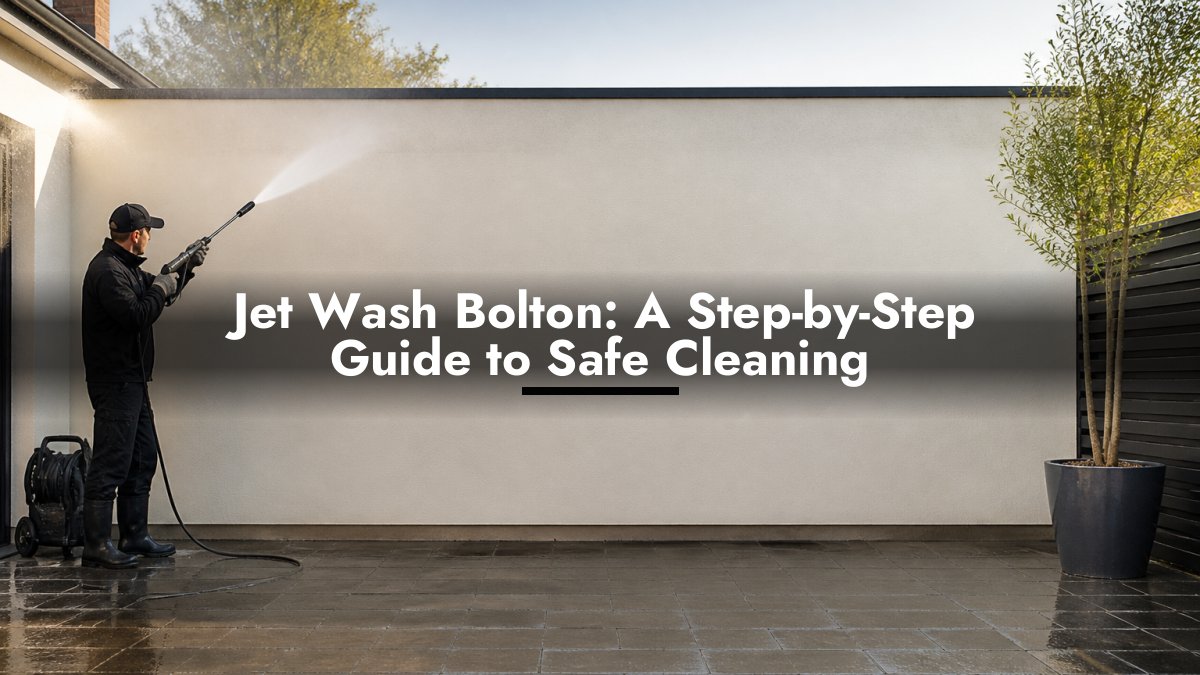
A driveway can look worn out when the main problem is a layer of dirt, organic growth and debris in the joints. For someone looking for a jet wash in Bolton, the useful question is what the paving needs and how it will be left afterwards. The answer starts with an assessment.
The first look at the driveway
When a homeowner contacts Refresh Revive Exterior Cleaning, photographs and the address help us understand the layout. We look at the material, staining, access and drainage before confirming the scope. A closer inspection may still be needed. The following describes how a typical suitable paving job is planned; it is not a report of a particular customer visit.
Loose blocks, failed pointing and damaged edges matter. Cleaning can reveal their condition more clearly, but it does not repair them. We explain limitations before work starts, particularly where staining or previous repairs may remain visible.
Preparation before the treatment
Cars, furniture and movable items need to be clear of the working area. Doors, adjacent finishes, planting and the route of water are considered before equipment is set up. The aim is to control the work around the property, including where dirty water and debris can be collected or managed.
We choose a method compatible with the surface. Suitable sound block paving, concrete or stone may respond to controlled pressure washing. Painted finishes, render, fragile stone and roof coverings need a different assessment. More pressure is not a substitute for choosing the right method.
Cleaning the surface and dealing with the staining
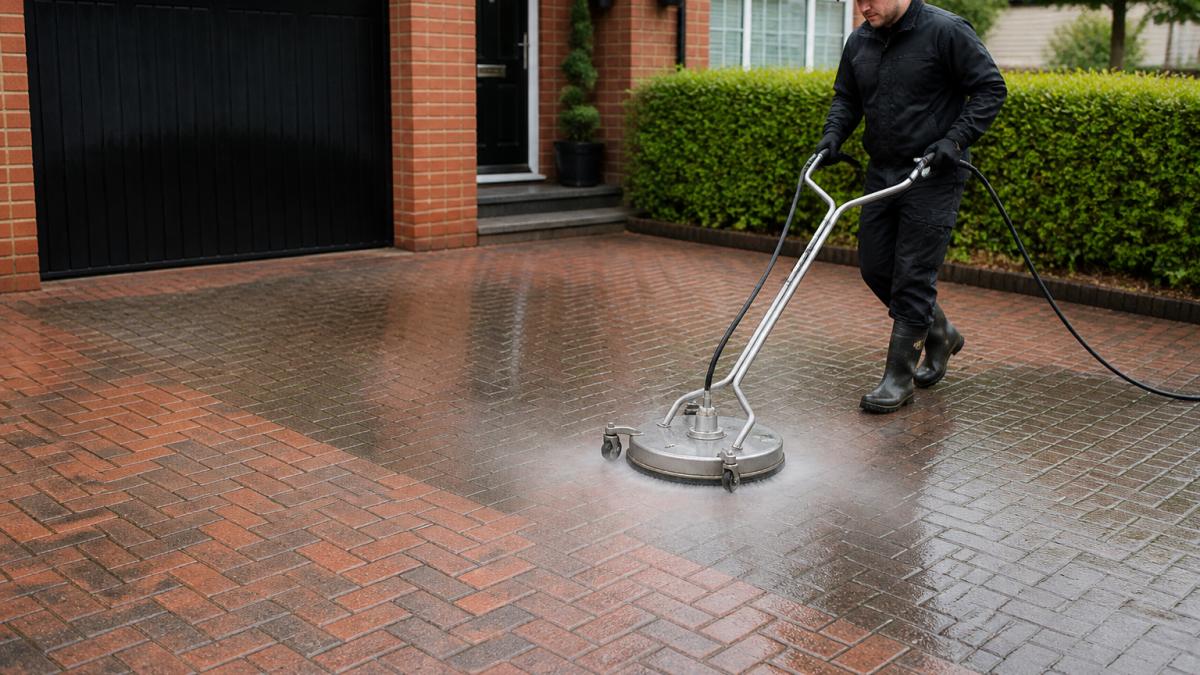
On suitable paving, a professional surface cleaner can help produce an even result. Edges and awkward areas are then addressed with care. Pressure, equipment and technique are selected for the material and condition.
Organic growth, oil marks and other staining are different problems. A suitable treatment may be recommended where the material and site allow it, following the product instructions and an assessment of surrounding surfaces and runoff. Some staining can remain, particularly where it has penetrated the paving. We do not promise that every mark will disappear.
For roofs, we do not use high-pressure washing on the covering. Roof moss needs a separate assessment and an appropriate treatment plan. It should never be treated as another section of driveway.
The work after the wash
On conventional sand-jointed block paving, cleaning may remove loose or contaminated jointing material. Suitable kiln-dried sand is reinstated when the paving and joints are sufficiently dry, where that work is included in the quotation. This can require a return visit rather than being rushed into wet joints.
Sealing is a separate decision. The paving, previous coatings, drying conditions and product compatibility need to be suitable first. Cleaning does not mean every driveway needs a sealer, and a sealer does not make a surface maintenance-free.
What the finished result should show
The handover should relate to what was agreed: the specified area cleaned, any agreed treatment completed, debris dealt with and jointing work finished or clearly scheduled. Comparable before-and-after photographs help show the change in the existing surface.