
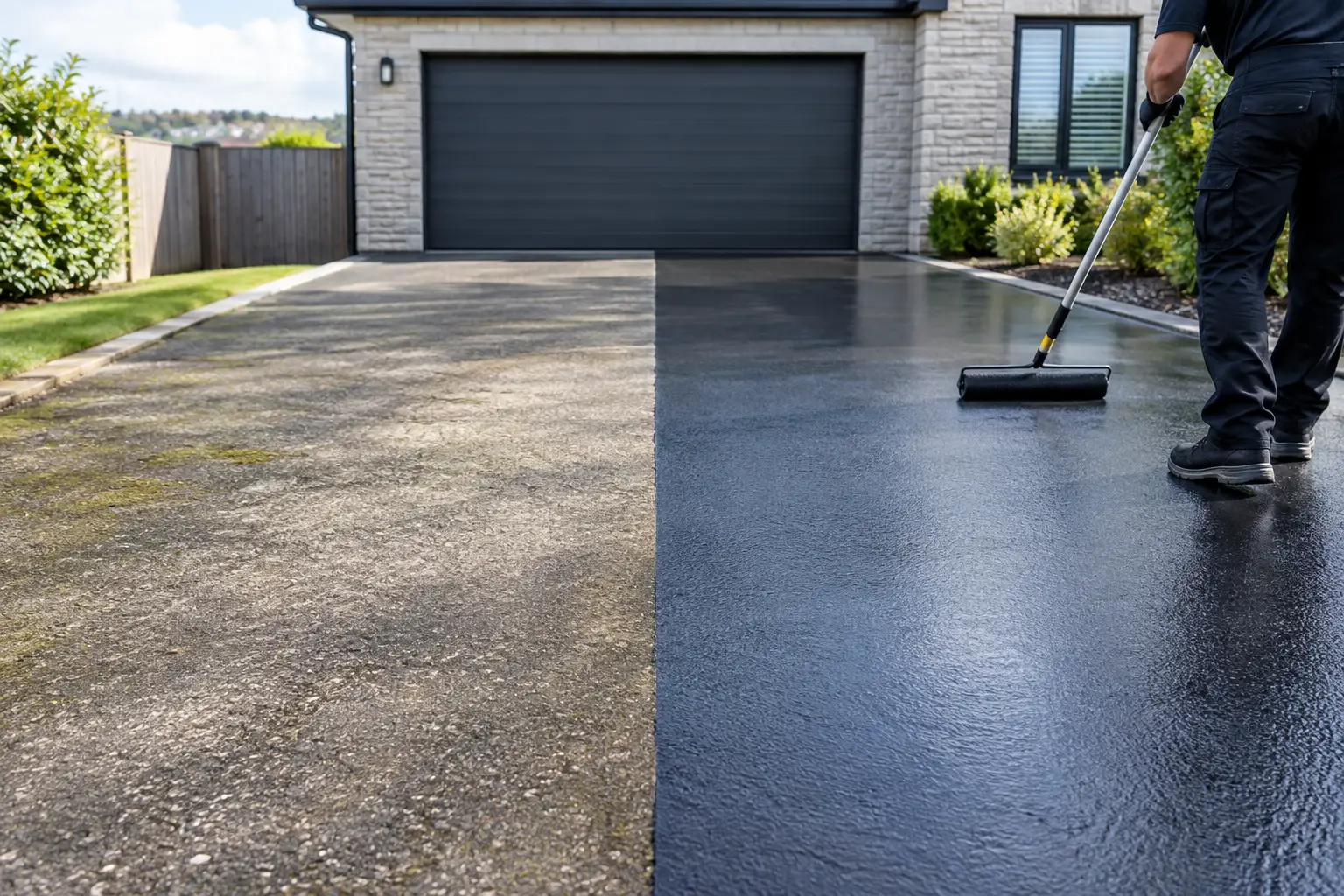
A driveway can look dramatically better after professional cleaning, but the next decision is less obvious: should it be sealed? In driveway sealing versus no sealing, sealing is not automatically the better option. The right choice depends on the material, its current condition, how water moves across it and what outcome you expect from the work.
For many block-paved driveways, a suitable sealer applied after cleaning and re-sanding can help keep the finished surface looking more consistent and make routine upkeep easier. For others, particularly worn, unstable or poorly drained surfaces, sealing too soon or choosing the wrong product can create more problems than it solves. A proper assessment should come before a recommendation.
What driveway sealing actually does
Driveway sealers are formulated to sit within or over the surface, depending on the product and material. Their purpose is usually to reduce surface porosity, improve colour definition or provide a more uniform finish. On block paving, sealing may also help stabilise correctly installed kiln-dried sand in the joints.
That does not mean a sealer repairs a driveway. It will not correct sunken blocks, failed edging, loose areas, cracked concrete or drainage that leaves standing water after rain. Those are condition issues that need addressing separately.
The appearance also changes. Some sealers leave a natural-looking finish, while others deepen the colour or create a visible sheen. That can be attractive on one property and unsuitable on another. Before sealing, it is sensible to be clear whether you want the driveway to retain a more natural appearance or look darker and more enhanced.
Driveway sealing versus no sealing: the practical difference
The main benefit of sealing is maintenance rather than magic. A suitable sealed surface may be less receptive to everyday dirt and certain spills, so cleaning can be more straightforward. It can also give weathered block paving a more finished appearance once the surface has been thoroughly cleaned, allowed to dry and re-sanded where required.
Leaving a driveway unsealed is equally valid. A clean, correctly maintained block-paved, concrete or tarmac driveway does not have to be sealed to perform its basic function. Some owners prefer the natural, matt finish of unsealed paving and do not want the ongoing responsibility of monitoring and eventually renewing a coating.
The trade-off is that unsealed porous surfaces can hold dirt, moisture and organic growth more readily. In shaded areas, algae, moss and lichen may return as conditions allow. Sealers can reduce this tendency on suitable surfaces, but they do not remove the causes: shade, moisture, leaf debris, poor drainage and regular vehicle use still matter.
Start with the driveway material
Block paving
Block paving is one of the most common candidates for sealing, but preparation is critical. Soil, green growth, tyre marks, old jointing material and residues should be dealt with first. Following appropriate cleaning, joints may need fresh kiln-dried sand before a compatible sealer is considered.
A sealer may improve the overall presentation of blocks that have faded or look uneven after years of use. However, it should not be used to disguise movement, open joints or blocks that have lost their level. If the driveway has widespread dips or water regularly pools in the same area, repair and drainage should be the priority.
Concrete paving and concrete slabs
Concrete can be porous and prone to staining, so sealing may be worth considering where appearance and easier cleaning are important. The product needs to suit the particular concrete finish. Some coatings can noticeably alter colour or texture, and a glossy result is not right for every entrance or path.
As with block paving, a clean, dry and sound surface is essential. Sealing over embedded contamination, dampness or loose material can leave an uneven-looking finish and make future cleaning more complicated.
Tarmac and asphalt
Tarmac is not simply another form of paving. It needs products intended for that surface and a different approach from block paving or concrete. A weathered tarmac drive may benefit from an appropriate treatment in some circumstances, but cracks, crumbling edges and structural deterioration need separate attention.
Aggressive cleaning is not a sensible default for tarmac. The cleaning method should be selected around the condition of the surface, contamination present and any existing coatings.
Resin-bound and specialist finishes
Resin-bound surfaces, imprinted concrete and decorative finishes should be assessed carefully before any cleaning or sealing work. Their construction and existing finish can vary considerably. Applying an unsuitable coating or using the wrong cleaning method may affect how the surface looks and performs, so assumptions are best avoided.
Cleaning comes before the sealing decision
A dirty driveway can make sealing seem essential when the real need is professional cleaning and restoration. Algae, black staining, moss, lichen, general traffic film and ingrained dirt can hide the actual condition of the paving.