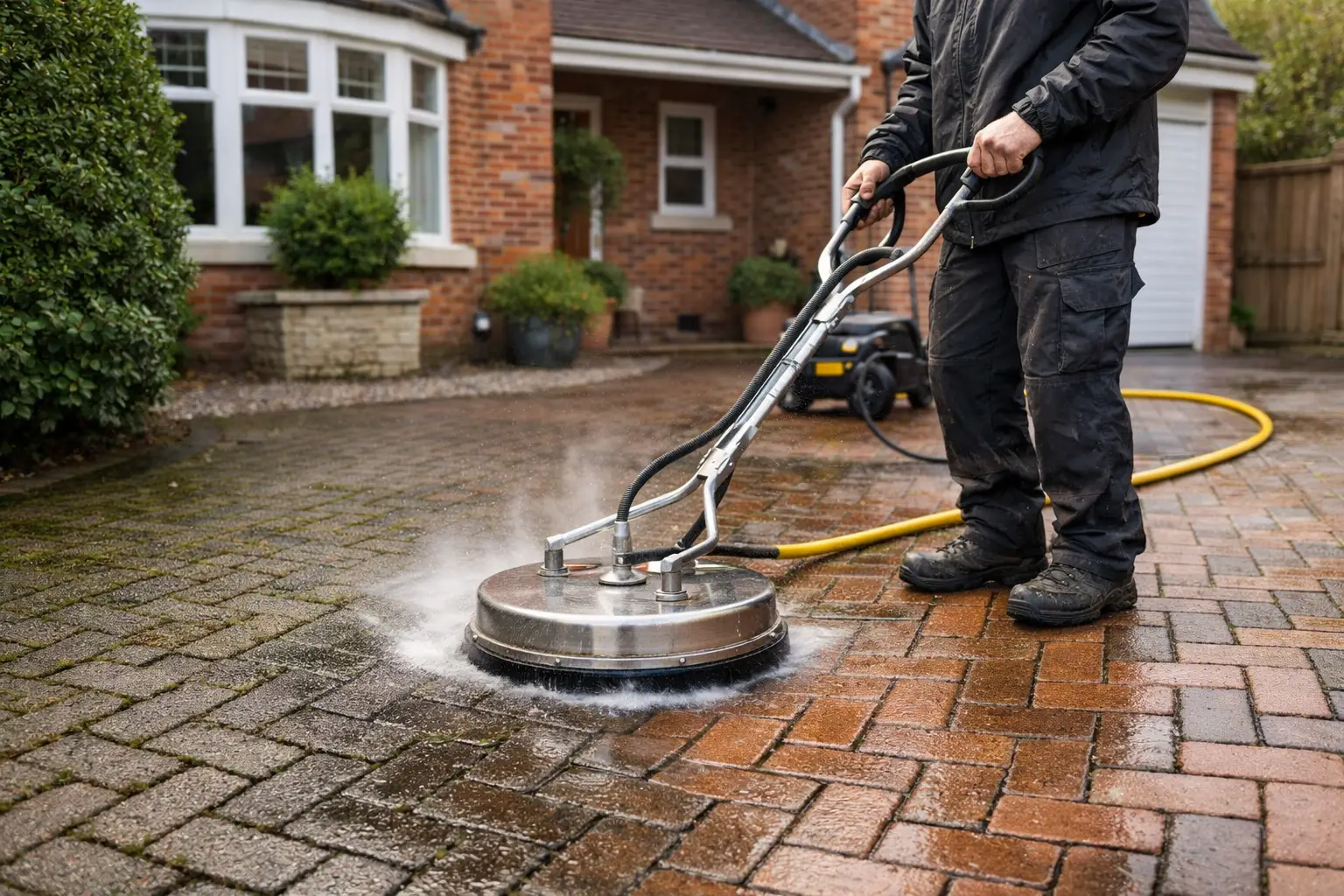
A driveway can look far older than the house around it. Green algae, black staining, moss in the joints and faded block paving all build up gradually, so the change is easy to miss until the entrance starts to feel neglected. Driveway restoration Bolton homeowners request is usually not about replacing a sound surface. It is about assessing what the paving needs, cleaning it with the right method and restoring the details that make it look cared for again.
Refresh & Revive Exterior Cleaning is based in Bolton and provides driveway cleaning and restoration for homeowners, landlords and property managers across Greater Manchester and the wider North West. The right approach depends on the surface, the contamination present and the condition of the joints, edges and drainage. A strong-looking result should not rely on cheap shortcuts or a one-size-fits-all cleaning method.
What driveway restoration actually involves
Restoration is a practical term rather than a single treatment. For many block-paved driveways, it begins with a thorough clean to lift ingrained dirt, algae, moss, lichen and traffic film. Once the surface is clean, the condition of the joints becomes clear. Sand that has been washed away or loosened over time may need replacing, particularly where blocks are moving or weeds are repeatedly taking hold.
A restored driveway can also involve dealing with specific marks, such as leaf staining, tyre marks, oil residues or dark areas caused by persistent shade and moisture. Not every stain will respond in the same way, and older marks may remain partly visible even after careful cleaning. Being realistic about that limitation is part of a proper assessment.
Where suitable, a cleaned and fully prepared surface may be sealed. Sealing is not automatically the right choice for every driveway, but it can be considered where the surface type and condition support it. The decision should be based on the paving rather than on a standard package.
Start with the driveway surface
The material underfoot determines how cleaning should be carried out. Pressure alone does not make a restoration service. Controlled pressure can be effective on durable paving, while other surfaces may need lower-pressure treatment, specialist products or a combination of methods.
Block paving
Block paving is one of the most common driveway surfaces around Bolton. Its joints are a particular consideration. Moss, weed growth and compacted debris can sit between blocks, while heavy or poorly controlled cleaning can remove loose jointing sand.
A sensible block-paving restoration process focuses on cleaning the face of the blocks and clearing contamination from the joints without treating re-sanding as an afterthought. Once the area is clean and dry enough for the next stage, kiln-dried sand can be brushed into the joints where appropriate. This helps restore the interlock between blocks and gives the finished driveway a more complete appearance.
If blocks have sunk, lifted or spread apart, cleaning will not correct the underlying movement. Those issues may require repair work before restoration makes sense. Similarly, badly broken or crumbling blocks may need replacing rather than simply washing.
Concrete and imprinted concrete
Concrete driveways can hold dirt, algae and tyre marks in a way that makes the whole surface appear dull. The finish, age and any existing coating all matter. A method suitable for plain concrete may not be suitable for decorative or imprinted concrete, particularly if a previous sealant is worn, patchy or failing.
The aim is to remove surface contamination while respecting the finish beneath it. Any decision about resealing should follow an inspection of the existing surface and coating, not an assumption that every concrete drive needs the same treatment.
Natural stone and mixed paving
Natural stone can be more variable than manufactured paving. Indian sandstone, for example, may have natural colour variation, textured faces and softer areas that require care. A driveway with mixed materials, decorative borders or stone setts also needs a more measured approach around the transitions.
Cleaning can make the natural character of stone clearer, but it cannot turn a weathered, uneven or damaged surface into newly laid paving. The best outcome is often a cleaner, more consistent appearance that still looks appropriate for the age and character of the property.
The common problems on Bolton driveways
Bolton's wet weather and shaded areas around homes create good conditions for biological growth. Algae can make paving green and slippery, while moss settles into joints and along edges where debris collects. Lichen can be more stubborn and may need targeted treatment rather than repeated aggressive pressure.
Black spotting and general darkening can have several causes, including organic growth, damp conditions, traffic film and accumulated soil. Oil staining is another common concern, particularly on driveways used every day. The age of the stain, the material it has penetrated and the driveway surface all affect how far it can be reduced.
Drainage should be part of the conversation too. If water repeatedly pools on a driveway or runs towards the property, cleaning may improve the appearance but will not resolve the cause. Blocked channels, poor falls, damaged edging and low areas need attention separately. Restoration works best when the surface is structurally sound and water can drain as intended.
Why method matters more than maximum pressure
Commercial cleaning equipment can deliver a substantial improvement on durable exterior surfaces, but the operator's judgement matters as much as the machine. Refresh & Revive Exterior Cleaning uses controlled pressure or low-pressure treatment according to the surface and its condition. That distinction matters where paving is soft, joints are weak, coatings are present or contamination needs treatment before rinsing.