

Last Updated: October 27, 2026
Quick Summary
The exterior jobs that make the biggest difference before selling are cleaning and maintenance tasks rather than full renovations. Focus on the driveway and paving, roof moss, gutters, fascias and soffits, render or brickwork, windows, and a tidy front garden. These shape a buyer's first impression of the home's curb appeal.
- Walk around the outside first and photograph it from the pavement opposite
- Clean paving with a method matched to the surface, not maximum pressure
- Roof moss treatment reduces growth but does not permanently prevent regrowth
- Clear gutters and wash fascias and soffits as separate jobs
- Clean windows, frames and conservatory roofs before viewings
Table of Contents
- Why Curb Appeal Matters Before You List Your Home
- Start With a Walk Around the Outside
- Clean the Driveway and Paving Properly
- Assess and Treat Roof Moss Safely
- Clear and Check the Gutters
- Refresh Render, Brick and Fascias
- Make Windows and Conservatories Sparkle for Viewings
- Tidy the Finishing Touches and Keep Them Looking Fresh
- Booking Your Exterior Clean Before the Viewings Start
- Frequently Asked Questions
Why Curb Appeal Matters Before You List Your Home
Kerb appeal is the first impression a buyer gets, often before they step through the door. Getting the outside right is one of the most practical ways to prepare a home for sale.
The good news is that you do not need a full renovation. Many of the jobs that make the biggest visual difference are cleaning and maintenance tasks. This guide from Refresh Revive Exterior Cleaning covers the exterior jobs we would prioritise before a viewing, and explains how each one is approached.
Kerb appeal is how a property looks from the street, and it shapes whether a buyer wants to view at all.
- Viewers form an opinion within seconds of pulling up
- Dirty paving, green roofs and stained render suggest the home has been neglected
- Clean, well-kept surfaces suggest the rest of the property has been looked after too
Start With a Walk Around the Outside
Before booking any work, walk slowly around the property as if you were a buyer seeing it for the first time. Stand on the pavement opposite and take a photograph. Note anything that catches your eye, good or bad.
Most people notice the same problems:
- Green or black staining on the roof, render and north-facing walls
- Blocked or sagging gutters, sometimes with plants growing from them
- Driveway and path surfaces with moss, weeds or dark patches
- Grimy windows, frames and conservatory roofs
- Faded fascias and soffits
Keep a short list in order of priority. Start with anything that is a safety concern, such as slippery moss on steps, then move on to the items that most affect the first impression.
Clean the Driveway and Paving Properly
The driveway is often the largest visible surface on the property, so it has a big effect on the first impression. Oil stains, moss and algae can make even a newer drive look neglected.
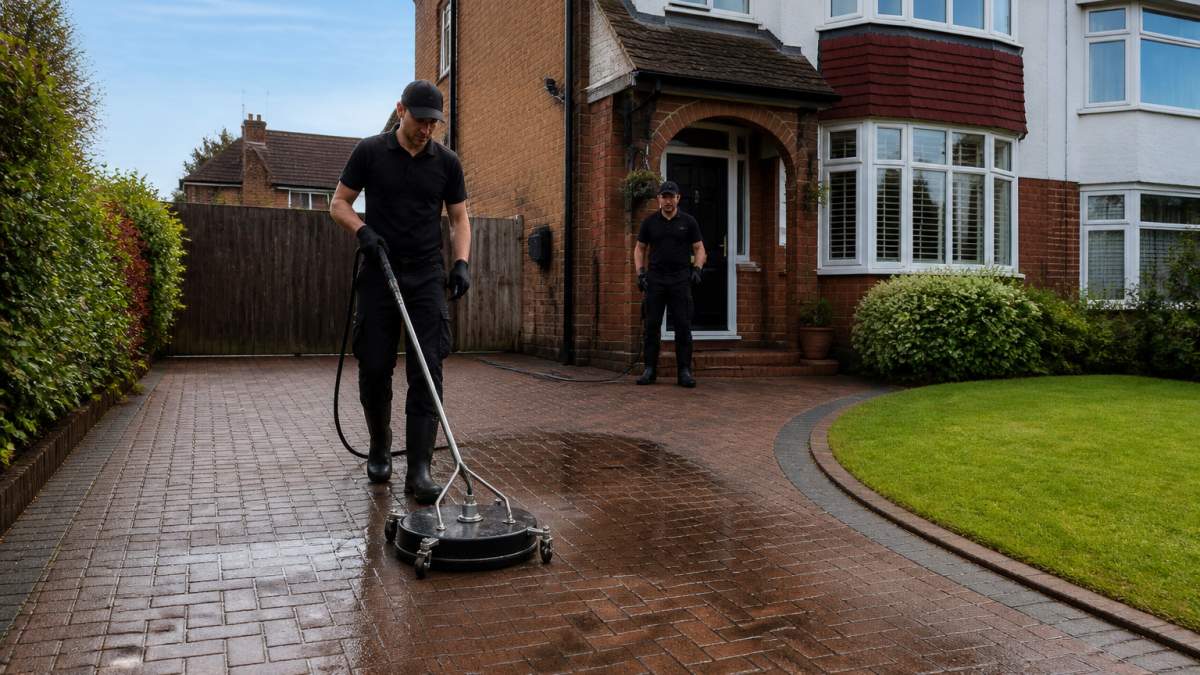
The right method depends on the surface. Block paving, Indian sandstone, porcelain and concrete all respond differently to cleaning. A careful approach usually means:
- Using rotary cleaning on flat areas for an even finish, with professional driveway cleaning available if you would rather have the work done for you
- Hand-lancing the edges where the machine cannot reach
- Treating oil and rust stains separately, rather than hoping pressure will lift them
- Reinstating kiln-dried sand between block paving joints so the blocks stay locked in place
Pressure matters here. More pressure does not mean a better clean. Too much force can etch the surface, scour away the top layer of natural stone or dislodge jointing sand.
The right method depends on the surface, and a few points are worth checking before any work starts.
| Surface | Method | Note |
|---|---|---|
| Block paving | Rotary cleaning, then hand-lancing edges | Reinstate kiln-dried sand between joints |
| Oil and rust stains | Treated separately | Pressure alone will not lift them |
| Natural stone and sandstone | Controlled, low-pressure cleaning | Excess force can scour the top layer |
| General paving | Pressure matched to the surface | More pressure does not mean a better clean |
Assess and Treat Roof Moss Safely
Moss on a roof is one of the most visible signs of neglect from the street. It also holds moisture against the covering, which can shorten the life of the roof over time.
The first step is an assessment. The treatment should suit the roof covering and the manufacturer's guidance.
Important points to understand:
- Roof treatment reduces moss growth. It does not permanently remove the risk of regrowth, so ongoing maintenance helps
- High-pressure washing on a roof can damage tiles, dislodge the protective surface and force water under the covering. We do not use aggressive high-pressure roof washing
- Roof work should only be carried out by people trained and equipped to do it safely (Health and safety in roof work)
If the roof has visible damage, slipped tiles or areas that look structurally unsound, address those first before cleaning.
Clear and Check the Gutters
Gutter clearance is a separate job from fascia and soffit washing, and both matter. Blocked gutters overflow, stain the render and fascias below, and can cause damp problems over time. Buyers often spot overflow marks and streaks from the pavement.
A typical gutter service involves:
- Clearing debris from the gutters using a high-reach gutter vacuum
- Using a camera inspection
Once the gutters are clear, fascia and soffit cleaning is a separate step. This removes the green and black staining that builds up under the eaves and makes white plastic look dull and grey.
Gutter work is quoted per property after assessment.
Refresh Render, Brick and Fascias
Render and brickwork set the tone for the whole front of the house. Algae and black streaking on render look like damp, even when the wall is perfectly sound. Cleaning it well can change how the house looks from the road.
Render and brick need a method suited to the surface. Soft washing and pressure washing are different approaches, and the method should be selected for the surface being cleaned. You can read about render softwash versus jet washing to see which suits algae-stained render.
Things to consider before cleaning:
- Render types vary, from silicone and acrylic to traditional lime or cement finishes, and each responds differently
- Painted or sealed surfaces need a method that will not strip the finish
- Old, cracked or crumbling render should be checked before any cleaning starts
