29 August 2026 · Last updated 30 August 2026 · Refresh Revive Exterior Cleaning — 10 years of industry experience and £5 million insurance cover.
Build a commercial exterior maintenance plan that protects property value, prevents costly repairs, and keeps premises looking professional. Learn the.
What Is a Commercial Property Exterior Maintenance Plan?
A commercial property exterior maintenance plan is a structured schedule of regular inspections, cleaning, repairs, and preventive treatments designed to protect and preserve the outside surfaces of a building. It covers roofing, gutters, driveways, siding, landscaping, and drainage systems. The goal is to identify problems early, prevent deterioration, and maintain the professional appearance that reflects your business.
Unlike reactive maintenance, where you fix things only when they break, a planned approach stops problems before they start. A small roof leak becomes structural rot. Early algae growth on a driveway becomes a slippery, damaged surface. Deferred maintenance costs significantly more when repairs become emergencies.
An effective plan documents what needs attention, when, and how often. It assigns responsibility, tracks completion, and creates a record of work done. For commercial property managers overseeing multiple sites, this documentation is essential for compliance, insurance, and asset protection.
Why Preventive Exterior Maintenance Matters for Business Premises
Preventive maintenance protects three critical areas: structural integrity, liability exposure, and your bottom line.
Structural protection is foundational. Water ingress is the primary cause of building deterioration (rics.org). Clogged gutters allow water to spill behind siding. Eroded roof granules develop leaks. Failed drainage systems crack foundations. These expensive structural failures take years to manifest but decades to repair. Routine inspection prevents catastrophic damage.
Liability and compliance matter significantly. A slippery driveway, loose debris, or inadequate drainage creates hazards. If someone is injured on your property and maintenance records show neglect, you're exposed. Documented preventive maintenance demonstrates due diligence. Your insurance provider expects it. Your local authority's building control standards reference it.
Curb appeal and tenant retention drive financial performance. Commercial tenants notice condition. Properties with clean, well-maintained exteriors command higher rents, attract quality tenants, and reduce vacancy. A professional appearance signals responsible management.
Prevention costs far less than repair. A gutter clean twice yearly costs less than replacing water-damaged fascia. Regular roof inspection costs less than roof replacement. Seasonal pressure washing prevents permanent staining.
Core Areas of Exterior Maintenance
Commercial property exteriors involve multiple systems, each with its own maintenance requirements and failure modes.
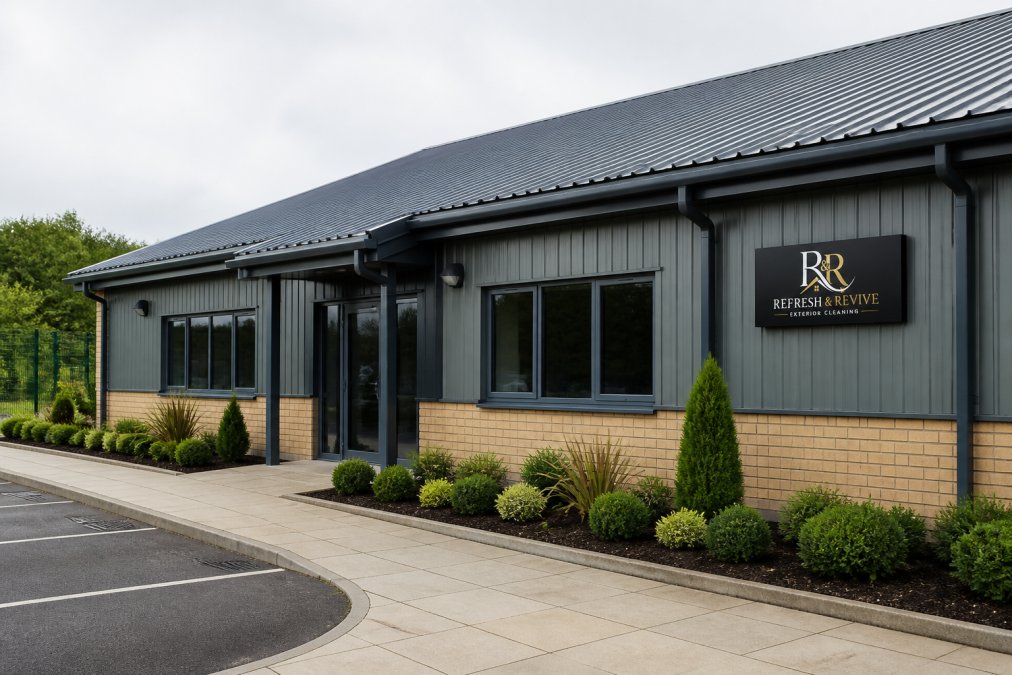
Commercial building exterior displaying clean, well-maintained roof with clear gutters, professional siding in good condition, and landscaped grounds with defined hardscaping areas
Roofs, gutters and drainage systems
Your roof is your building's primary defence against water. Inspect roofs twice yearly, in spring and autumn. Look for missing or damaged tiles, cracked mortar, deteriorated flashing, and debris accumulation. Gutters and downpipes must be clear; blockages cause water to back up and overflow, damaging siding, fascia, and foundations.
Flat roofs require particular attention. Ponding water accelerates deterioration. Check for membrane damage, debris, and drainage blockages. Pitched roofs with moss or algae growth need treatment to prevent further colonisation. Never use high-pressure methods on roofs; the force can strip protective granules and damage tiles.
Drainage systems extend beyond gutters. Check that downpipes discharge properly, that ground-level drainage isn't blocked, and that water flows away from the building foundation. Poor drainage is often invisible until damage appears.
Driveways, car parks and hardscaping
Driveways and car parks experience constant wear. Cracks allow water penetration, which freezes and expands in winter, widening damage. Regular cleaning prevents algae and moss growth, which makes surfaces slippery and accelerates deterioration. Pressure washing removes contaminants but must be done carefully; excessive pressure damages concrete and tarmac.
Hardscaping includes paving, steps, and edging. These need routine inspection for trip hazards, settlement, and drainage problems. Weeds growing through joints indicate sub-base failure. Regular cleaning prevents staining that becomes permanent if left too long.
Seal coating protects surfaces from weather and UV damage. Most surfaces benefit from resealing every 2-3 years. Documentation of when sealing was last applied helps you schedule the next treatment before protection fails.
Building facade and siding
Your building's facade is its face. Render, brick, stone, timber, and composite cladding all require different maintenance approaches. Render can crack, allowing water behind the surface. Brick can effloresce or spall. Stone can weather and lose mortar. Timber can rot or be colonised by insects.
Regular cleaning removes algae, moss, and grime that accelerate weathering. However, the cleaning method matters enormously. High-pressure washing can damage render, strip mortar from brickwork, and harm delicate materials. Surface-specific, low-pressure methods preserve the substrate while restoring appearance.
Cracks and missing mortar should be repaired promptly. Water entering through small gaps causes expanding damage. Inspect joints, flashings, and areas around windows and doors, which are common water entry points.
Landscaping and grounds
Landscaping affects both appearance and drainage. Overgrown vegetation can damage gutters, block downpipes, and grow into siding. Trees planted too close to buildings can crack foundations. Poor drainage around planting beds can direct water toward the building rather than away from it.
Grounds maintenance includes lawn care, border maintenance, and removal of debris and fallen branches. A well-maintained landscape protects the building, improves curb appeal, and demonstrates professional management.
Seasonal changes require different maintenance. Autumn leaf drop clogs gutters and drainage. Winter frost can damage poorly maintained surfaces. Spring growth can block gutters and downpipes. Summer heat stresses landscaping and can cause expansion in paving.
Creating a Commercial Building Maintenance Checklist
A practical maintenance checklist becomes your operational tool. It defines what to inspect, how often, and who is responsible. Without a checklist, tasks slip through gaps. With one, accountability is clear.
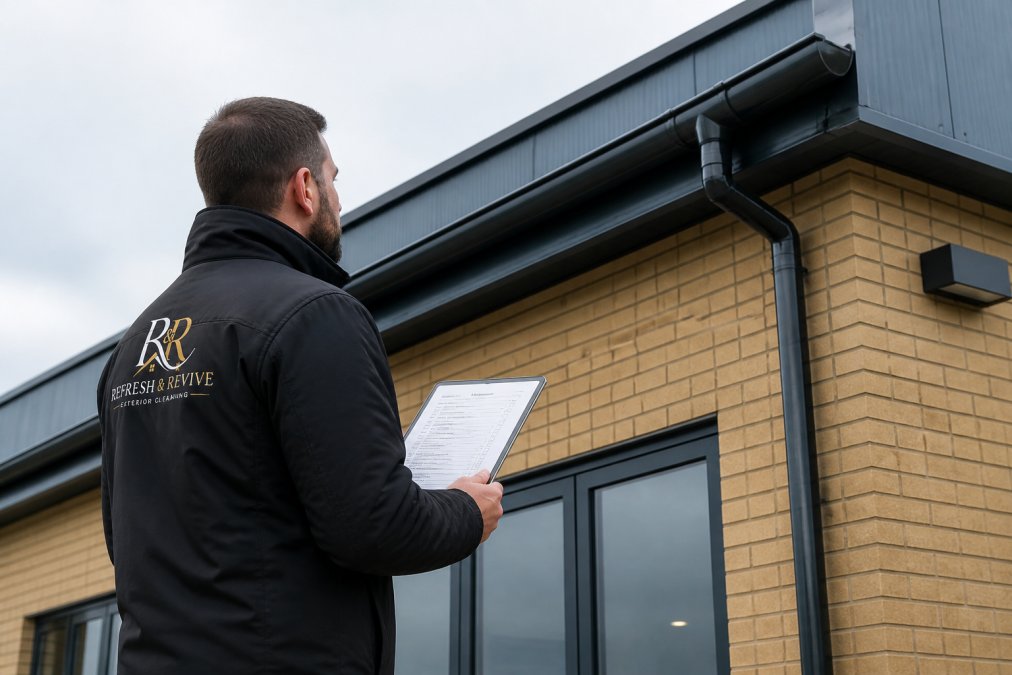
Facilities manager reviewing exterior maintenance documentation and checklist on a tablet while standing outside a commercial building, examining the roof line and gutters
Your checklist should be organised by system and frequency. Monthly tasks might include visual inspection of gutters for obvious blockages. Quarterly tasks might include detailed roof inspection. Annual tasks might include professional gutter cleaning and drainage system flushing. Seasonal tasks address weather-specific needs.
Each line item should specify:
What to inspect or maintain
How often (weekly, monthly, quarterly, annually)
What to look for (signs of damage, blockage, deterioration)
Who is responsible
How to document completion
Documentation matters. Record dates, findings, any work done, and photographs if possible. This creates a maintenance history that proves due diligence, helps you spot patterns, and justifies budget allocation for repairs.
Your checklist should be specific to your building. A multi-storey office building with a complex roof has different needs than a single-storey retail property. Climate matters too. Properties in areas with high rainfall need more frequent drainage checks. Areas with heavy leaf fall need more frequent gutter clearing. Coastal properties face salt spray damage. Build a checklist that reflects your actual building and location.
Review and update your checklist annually. If you discover a recurring problem, add it to the checklist. If a task consistently shows no issues, you may be able to extend the interval.
Exterior Surface Restoration Frequency and Scheduling
Different surfaces deteriorate at different rates and require restoration on different schedules.
Gutters and downpipes should be cleared of debris at least twice yearly, spring and autumn. In areas with heavy tree coverage, quarterly clearing may be necessary. After clearing, inspect for damage. Leaks or separation indicate repair needs.
Roofs benefit from inspection twice yearly. If your roof is over 15 years old, annual professional inspection becomes important. Moss or algae growth should be treated promptly; it accelerates deterioration. Repairs should happen immediately after discovery.
Driveways and car parks need cleaning annually at minimum. More frequent cleaning maintains appearance and prevents permanent staining. Resealing typically occurs every 2-3 years, depending on traffic and climate.
Building facades need cleaning every 2-3 years to prevent permanent staining from algae, moss, or pollution. More frequent cleaning may be needed in damp areas or near trees. Repairs to render, mortar, or cladding should be done as soon as damage is discovered.
Landscaping requires seasonal attention. Spring and autumn need heavier maintenance. Summer may require more frequent watering. Winter needs preparation for frost and ice.
The key principle is frequency without excess. Cleaning too frequently wastes resources. Cleaning too infrequently allows damage to become permanent. The right frequency depends on your building's exposure, climate, and materials.
COSHH Compliance for Exterior Cleaning and Safety
Exterior cleaning involves chemicals, working at height, and hazardous surfaces. COSHH (Control of Substances Hazardous to Health) regulations require that anyone using cleaning products understands the hazards and follows safe practices (hse.gov.uk).
Chemical safety begins with the product label and safety data sheet. Never mix cleaning chemicals. Never use improvised solutions (vinegar, bicarbonate of soda, acids, alkalis, or neutralisers) after professional treatment unless the product label explicitly permits it. Follow the manufacturer's instructions exactly. Use appropriate personal protective equipment (gloves, eye protection, respiratory protection if specified).
Working at height requires precautions. Roof work, gutter cleaning, and high-level facade work all carry fall risk. Ensure workers are trained, use appropriate fall protection, and follow safe work procedures. Ladders must be stable and properly positioned. Scaffolding must be erected by competent personnel.
Hazardous surfaces include slippery areas, unstable surfaces, and areas with poor drainage. Wet surfaces become slippery quickly. Loose debris or deteriorated surfaces can collapse under weight. Assess the site before work begins and take precautions.
When you engage a professional cleaning contractor, verify their COSHH compliance. Ask about their safety procedures, training, and insurance. A responsible contractor will have documented procedures and appropriate insurance to cover damage or injury.
Never attempt advanced exterior cleaning without proper training and equipment. Professional contractors have the knowledge and equipment to do this safely and effectively.
Budgeting and ROI for Property Upkeep
Maintenance budgets are an investment, not an expense. They preserve asset value, prevent emergency repairs, and protect liability.
Start by calculating the cost of deferred maintenance. What would it cost to replace a roof? To repair water-damaged structure? To repaint a facade after permanent staining? Now calculate the cost of preventive maintenance: annual gutter cleaning, regular inspections, seasonal treatments. The preventive cost is usually a small fraction of the deferred maintenance cost.
A simple ROI calculation compares preventive maintenance cost versus avoided emergency repair cost. If annual gutter cleaning costs less than 5% of the cost of repairing water-damaged fascia, the ROI is positive. If annual roof inspection costs less than 10% of the cost of roof replacement, the ROI is positive.
Beyond direct repair costs, consider operational impact. A building that leaks requires emergency repairs that disrupt tenants. A building with slippery surfaces creates liability exposure. A building with poor curb appeal loses tenants. Preventive maintenance reduces these hidden costs.
Budget allocation typically follows this pattern: allocate a percentage of property value to annual maintenance. For commercial properties, 1-2% of property value annually is a reasonable benchmark. This covers routine maintenance, minor repairs, and some larger items. Major capital projects may require separate budgeting.
Track spending by category. This helps you understand where money goes and identify opportunities to improve efficiency. Document all maintenance work. This creates a record that justifies spending and helps you plan future budgets. It also protects asset value; a well-maintained property retains value better than a neglected one.
Maintaining a commercial property exterior is an ongoing commitment, not a one-time project. A structured plan transforms maintenance from a reactive scramble into a predictable, manageable process. Start by documenting your building's specific needs, create a realistic schedule, and track completion. The discipline of regular inspection and timely treatment prevents expensive failures and keeps your property looking professional.
At Refresh Revive Exterior Cleaning, we've helped commercial property managers across the North West develop maintenance routines that work. Our surface-specific, low-pressure cleaning methods protect your building while restoring brilliant results. We're fully insured and committed to quality, offering responsive service with one working day turnaround. Whether you need a one-off deep clean or regular maintenance visits to prevent regrowth, we provide no-obligation quotations tailored to your building's needs. Get in touch for a free quote and let's build a maintenance plan that keeps your property protected and professional.
Frequently Asked Questions
What should be included in a commercial property exterior maintenance plan?
A comprehensive exterior maintenance plan covers roof and gutter inspections, drainage system checks, driveway and car park condition assessments, building facade and siding inspection, landscaping maintenance, exterior lighting checks, and pressure washing or surface restoration schedules. Documentation should track inspection dates, findings, completed work, and costs. The plan should identify which surfaces need routine cleaning, when professional restoration is required, and seasonal tasks like autumn gutter clearing. A commercial building maintenance checklist ensures nothing is overlooked and provides accountability for asset lifecycle management.
How often should commercial exterior surfaces be professionally cleaned?
Exterior surface restoration frequency depends on surface type, local weather exposure, and foot traffic. High-traffic driveways and car parks typically need professional cleaning annually or bi-annually. Roofs and gutters require inspection and clearing at least twice yearly, especially after autumn leaf fall. Building facades in areas with heavy pollution or salt spray may need restoration every 12-24 months. Regular preventive maintenance visits between major cleanings help prevent algae, moss, and grime regrowth. Your maintenance schedule should reflect your property's specific conditions and use patterns.
What are the legal responsibilities for exterior building maintenance?
Property owners and managers must maintain commercial premises in safe condition under Health and Safety at Work etc. Act 1974 and the Building Regulations. This includes ensuring the building envelope is structurally sound, drainage systems function properly, and exterior surfaces pose no slip or fall hazards. When using cleaning chemicals or professional cleaning services, COSHH compliance for exterior cleaning is mandatory, products must be used according to label instructions and safety data sheets, with appropriate controls to protect staff, visitors, and the environment. Regular inspections and documented maintenance create an audit trail demonstrating duty of care.
How does a maintenance plan improve commercial property value?
A documented exterior maintenance plan demonstrates responsible asset management, which increases property valuation and tenant retention. Properties with visible curb appeal and well-maintained building envelopes command higher rents and attract quality tenants. Preventive maintenance reduces costly emergency repairs and extends the lifespan of exterior components like roofs and siding. When selling, a maintenance log and schedule show buyers that the property has been cared for, reducing perceived risk. Operational efficiency improves when maintenance is planned rather than reactive, lowering downtime and service disruption costs.
Why is preventative exterior maintenance important for business premises?
Preventive maintenance stops small issues becoming expensive problems. Regular roof and gutter cleaning prevents water damage and structural decay. Routine driveway and car park maintenance prevents potholes that create liability risks. Consistent building facade cleaning maintains professional appearance, supporting tenant retention and customer perception. Preventive measures reduce deferred maintenance backlog and capital expenditure spikes. By scheduling routine inspections and surface restoration, you protect structural integrity, manage risk, and maintain the property's market value, all while avoiding the disruption and cost of emergency repairs.
What is the White Glove Standard™ for exterior cleaning?
The White Glove Standard™ is a meticulous, surface-specific cleaning approach that prioritises protection alongside restoration. It uses low-pressure treatment methods tailored to each surface type, whether roof shingles, render, driveways, or delicate landscaping, ensuring brilliant results without damage to protective coatings or surrounding property. The standard includes before-and-after documentation, careful site inspection, and consideration of weather conditions and environmental factors. This approach prevents the damage sometimes caused by high-pressure cleaning while delivering professional results that support your maintenance plan's goals.
How do I know if a cleaning service will actually prevent regrowth, or just provide a temporary fix?
Effective exterior cleaning should include surface preparation and, where appropriate, preventive treatments that slow regrowth of algae and moss. Ask about the cleaning method, low-pressure, surface-specific approaches are more likely to remove growth at the root than high-pressure blasting. Enquire whether the service offers maintenance visits to catch early regrowth before it becomes visible. Request before-and-after documentation to verify results. A professional service should provide transparent information about how long results typically last on your specific surface type and what conditions (shade, moisture, season) affect regrowth rates. Regular scheduled maintenance, rather than one-off cleaning, is the most reliable way to prevent regrowth.
What happens if something goes wrong during exterior cleaning, what's the protection for my property?
A reputable exterior cleaning service should be fully insured, covering damage to your property, landscaping, or structures during work. Before booking, confirm the level of insurance cover and ask for a copy of the certificate. Discuss any concerns about delicate surfaces, new plantings, or areas needing extra care, a professional service will adjust methods accordingly. Request a clear agreement outlining what work will be done, the method used, and any guarantees on results. Document the condition of your property before work begins. A service offering no-obligation quotations and responsive communication should be willing to discuss your concerns and explain how they'll protect your property during cleaning.
Professional block paving cleaning and re-sanding across Bolton, Greater Manchester, Cheshire and Lancashire. Remove moss, algae, weeds and grime and restore tired block-paved driveways.
Learn how to select, negotiate, and manage commercial exterior maintenance contracts. Discover what to include, compliance requirements, and cost-benefit.
Managing a commercial site?
We work to scheduled visits and out-of-hours access, fully insured, with before and after photography.