
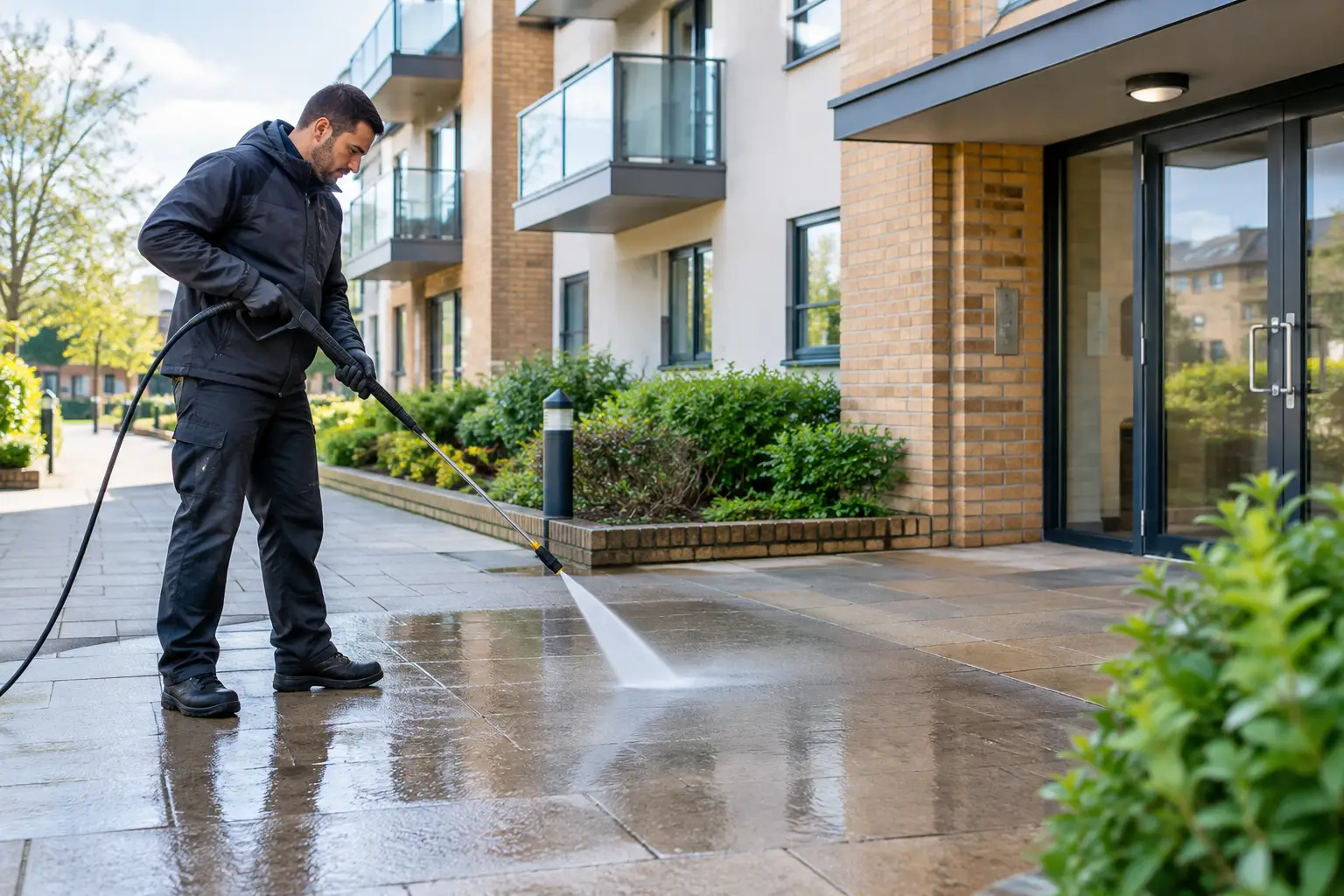
A stained entrance, slippery path or moss-filled gutter can quickly make a well-managed building look neglected. Flat block cleaning addresses the shared external areas that residents, visitors and contractors see and use every day, from access paths and bin-store surrounds to façades, windows and roofline drainage. The right approach depends on the surface, the contamination and how the space is used - not simply on applying more pressure.
For property managers, landlords and facilities teams, the aim is usually straightforward: keep communal areas presentable, reduce avoidable slip hazards and prevent dirt or organic growth from becoming a larger maintenance issue. That calls for a planned assessment, clear access arrangements and a method suited to each part of the building.
What flat block cleaning should cover
There is no single definition because flat blocks vary widely. A converted property with a shared front path has different requirements from a larger development with parking, rendered elevations, enclosed bin areas and multiple entrances. A useful scope separates the building into surfaces and identifies what is actually affecting each one.
Hard surfaces often need the most regular attention. These can include block paving, concrete walkways, steps, patios, forecourts, retaining walls and car-park edges. Algae, moss, lichen, tyre marks, leaf staining and general grime can dull their appearance and, in wet conditions, leave walking routes slippery.
The building itself may also need attention. Render can become marked by algae and atmospheric dirt, while brickwork can show staining around downpipes, entrances and low-level walls. Fascias, soffits and external cladding collect dirt over time. Gutters and valleys can hold moss and debris that restrict drainage, although their condition and access need to be considered separately from ground-level cleaning.
Communal glazing, entrance canopies, handrails, bollards and bin-store areas are easy to overlook. Yet they often have an outsized effect on first impressions because they sit close to the route residents and visitors take into the property.
Start with the surface, not the machine
Pressure washing is useful on many durable hard surfaces, but it is not a universal answer. The cleaning method should follow an inspection of the material, its condition, the type of soiling and the surrounding area.
A heavily soiled concrete access route may respond well to controlled pressure washing. Block paving may require cleaning followed by re-sanding once the surface is dry, as jointing sand can be displaced during the process. Where paving has settled, broken edges or loose blocks, cleaning will not correct those underlying defects. In some cases, repairs should be completed before the area is cleaned.
Render, painted finishes, delicate stone and certain roof surfaces need more caution. A low-pressure treatment or soft washing approach may be more appropriate where biological growth is the main problem. This can treat algae or organic staining without relying on aggressive pressure. The result still depends on the age and condition of the surface, and existing cracks, failed coatings or worn render should be identified before work begins.
Hot-water capability can be useful for some stubborn marks and greasy areas, such as around commercial-style refuse spaces or vehicle access points. However, it is not automatically necessary for every job. A sensible specification explains what is being cleaned, why a particular method is suitable and where the limitations lie.
Why over-cleaning can create problems
Using excessive pressure can disturb mortar, strip weak coatings, lift surface material or scatter debris into entrances and planting beds. It can also leave a block-paved area looking clean while removing too much jointing sand if re-sanding is not included in the maintenance plan.
Equally, treating every dark mark as surface dirt can lead to disappointment. Some stains are embedded, some discolouration is permanent weathering, and some defects are signs that the surface itself needs repair. Good flat block cleaning sets realistic expectations before work starts.
Access, resident communication and site control
Cleaning a communal property is not only a technical task. People still need to enter and leave the building, delivery drivers need access and residents may have mobility requirements. These practical details affect the order of work and the safest time to clean particular areas.
For a small block, it may be possible to work around normal foot traffic with clearly managed sections. At a larger site, entrances, walkways and parking bays may need to be cleaned in stages to keep routes available. Wet surfaces, hoses and equipment all require care, particularly around steps, ramps and shared doorways.
Property managers should also consider where water, debris and loosened moss will go. Gullies, drains and thresholds need protecting from heavy deposits, while vehicles, ground-floor windows and planted areas may need suitable precautions. Bin-store cleaning, for example, can involve stubborn residue and confined access, so it benefits from a clear plan rather than being treated as an afterthought.
Clear communication helps residents understand which areas are affected and why. It also reduces the frustration that can arise when a parking space, front entrance or preferred pedestrian route is temporarily unavailable.
Flat block cleaning as planned maintenance
Waiting until an entrance is visibly green or a gutter is overflowing tends to narrow the options. Planned exterior maintenance allows managers to address early build-up before it becomes harder to remove or begins to affect day-to-day use.