
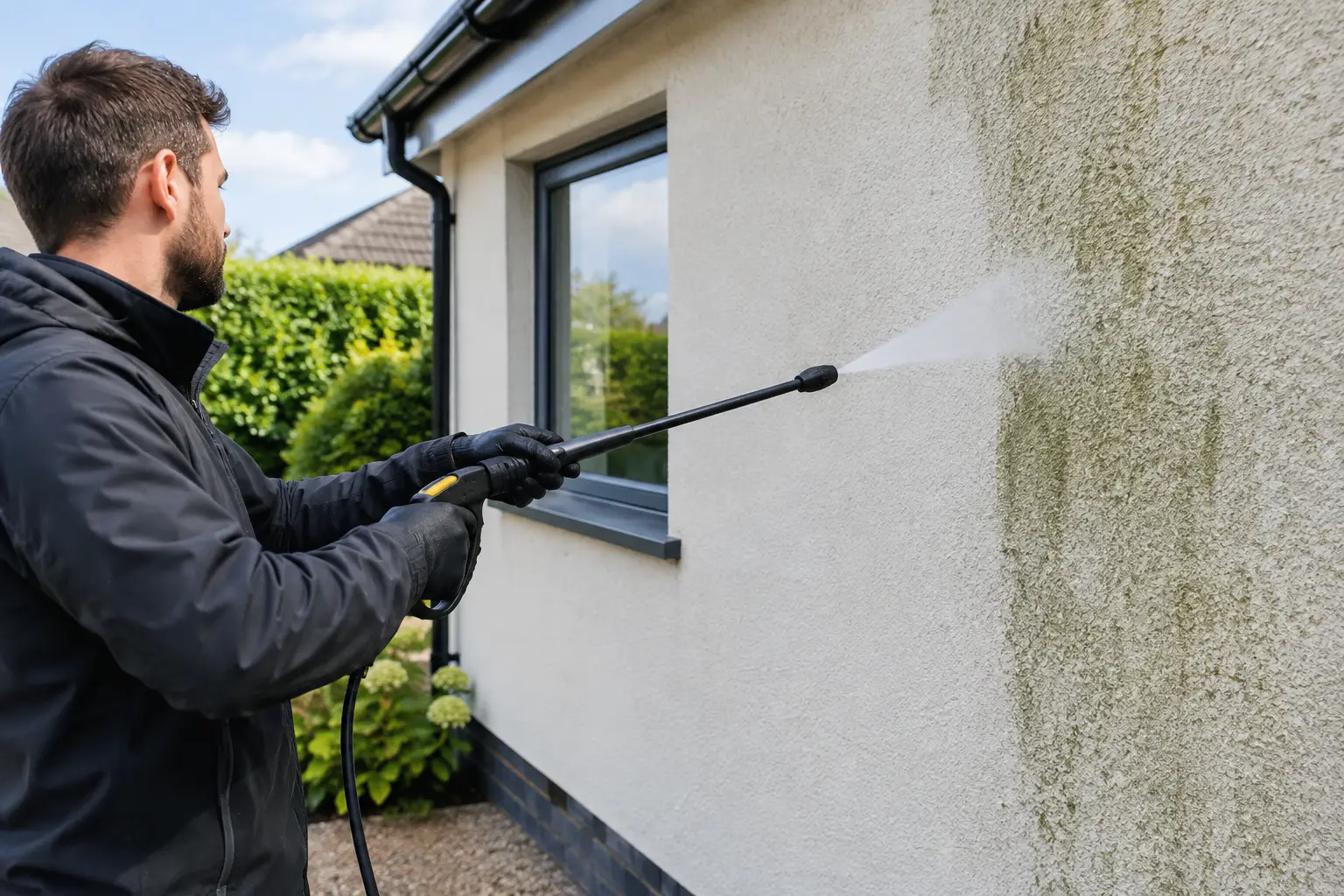
A clean render finish can make a property look sharply maintained. Once green algae, black streaks or patchy discolouration take hold, however, the building can quickly appear tired even where the render itself is still sound. If you are asking when should render be cleaned, the practical answer is when biological growth or staining becomes visible - before it spreads widely, becomes harder to remove or obscures a developing defect.
Render does not need cleaning simply because a calendar says so. Its exposure, finish and condition matter far more. A sheltered north-facing wall in Bolton may show algae sooner than a sun-exposed elevation, while a property near trees can collect organic debris and moisture more readily. The right time is based on what is happening on the wall, not an arbitrary annual schedule.
When should render be cleaned at home?
Most homeowners first notice that the render no longer looks even. Green growth often develops in damp or shaded areas, particularly around downpipes, beneath sills, behind bins and close to planting. Black spotting, dull grey deposits and runoff marks can also make an otherwise clean façade look neglected.
Cleaning is sensible when the staining is clearly visible from normal viewing distance, when algae is spreading beyond a small local patch, or when the appearance of the front or rear elevation is affecting how the property feels to live in. For landlords and property managers, this can be relevant before a tenancy inspection, marketing photographs or planned exterior maintenance.
Do not wait until the whole wall is heavily green if there is an opportunity to deal with early growth. Lighter contamination is generally simpler to assess and treat than years of built-up biological staining. That does not mean every faint mark needs immediate intervention. A small amount of weathering on an older finish may be expected, and cleaning should always be proportionate to the surface condition.
The signs that call for an assessment
Algae is the most common reason for render cleaning across Greater Manchester, Cheshire and Lancashire. It thrives where surfaces remain damp after rain and where daylight is limited. It may look green, dark green or almost black depending on its density and the render colour.
Lichen can appear as flatter, more defined patches in grey, white, green or yellow tones. Atmospheric grime, splashback from paths and staining beneath faulty gutters may look similar at first glance, but they do not necessarily need the same approach. This is why a close assessment matters before any cleaning begins.
There are also signs that cleaning should pause until another issue is addressed. Cracks, loose areas, hollow-sounding render, failed seals around openings, leaking gutters or persistent damp can all contribute to recurring stains. Cleaning will improve surface contamination, but it cannot repair a defect behind or within the render. Where water is continually running down a wall, resolving the source first is usually the more sensible decision.
Look closely at shaded and sheltered areas
North-facing elevations are often the first place homeowners notice green staining, but they are not the only risk area. Side passages, walls close to neighbouring buildings, recessed entrances and areas beneath overhanging trees can all stay damp for longer.
Check low-level render as well. Rain splash from dirty paving can leave a darker band at the base of a wall, while soil and vegetation against the render can hold moisture in place. Clearing leaves, keeping planting back and dealing with overflowing gutters will not eliminate every mark, but it can help reduce the conditions that encourage new growth.
Why the cleaning method matters
Render is not paving. A powerful pressure washer may be useful on suitable hard surfaces, but high pressure is not automatically the right answer for a rendered wall. An unsuitable method can leave uneven areas, drive water into vulnerable points or alter the appearance of a textured finish.
K Rend and silicone render, in particular, require a considered approach. These are specialist surface finishes with different properties from brick, concrete or block paving. The aim is to remove biological contamination and surface soiling while respecting the condition, age and texture of the render.
Refresh & Revive Exterior Cleaning uses surface-led cleaning methods for exterior walls, selecting controlled pressure or low-pressure treatment according to the material and contamination present. Soft washing is often considered for delicate rendered surfaces because it is designed to work at low pressure rather than relying on force alone. The exact approach should follow an inspection of the wall, the level of growth and any visible vulnerabilities.
A wall that has been recently rendered needs extra care. Follow the render manufacturer's and installer's guidance on curing and maintenance before arranging a clean. Cleaning too early can be unwise, especially if the finish has not fully cured or if there are unresolved installation concerns.
Cleaning can improve appearance, but it has limits
A professional clean can remove a substantial amount of organic growth and surface dirt, bringing back a more even, cared-for appearance. It can be especially worthwhile when algae has made pale render look green or when dark runoff marks are distracting from the rest of the property.
Yet cleaning cannot turn every aged wall back into newly applied render. Permanent pigment variation, old repairs, rust staining, embedded marks, failed paint coatings and damage to the finish may remain visible. Some stains may need additional investigation rather than repeated cleaning.
This distinction matters when comparing quotations or deciding whether to attempt the work yourself. The cheapest-looking approach can be a false economy if it uses excessive pressure or treats a cosmetic issue without identifying the reason it returned. A proper assessment should be honest about the likely visual improvement and any limitations before work is agreed.