

A pale rendered wall gradually turns green. Dark streaks appear beneath the roofline, and the owner starts wondering whether it needs repainting. Before choosing a render cleaner in Bolton, the first question is whether the problem is contamination, a defective finish or both.
Understanding the wall before cleaning it
This is how a typical render assessment and treatment is approached, rather than a record of a particular customer job. At Refresh Revive Exterior Cleaning, photographs and access details help us decide what needs checking before a quotation can be confirmed.
Cracks, loose material, failed paint, old repairs and vulnerable window edges all matter. Cleaning can make existing defects more visible; it cannot repair them. Where the finish needs attention from a suitable repair specialist first, that should be explained before cleaning is booked.
Following the staining to its source
A narrow stain beneath a gutter joint or sill deserves a look above it. Repeated runoff may keep the wall wet. Cleaning the mark improves the symptom, but a defective gutter or drainage detail also needs assessment.
Shade, orientation and nearby trees affect how long a wall stays damp. That is why neighbouring elevations can look different and why a treatment should be chosen for the finish in front of us.
Choosing the right treatment
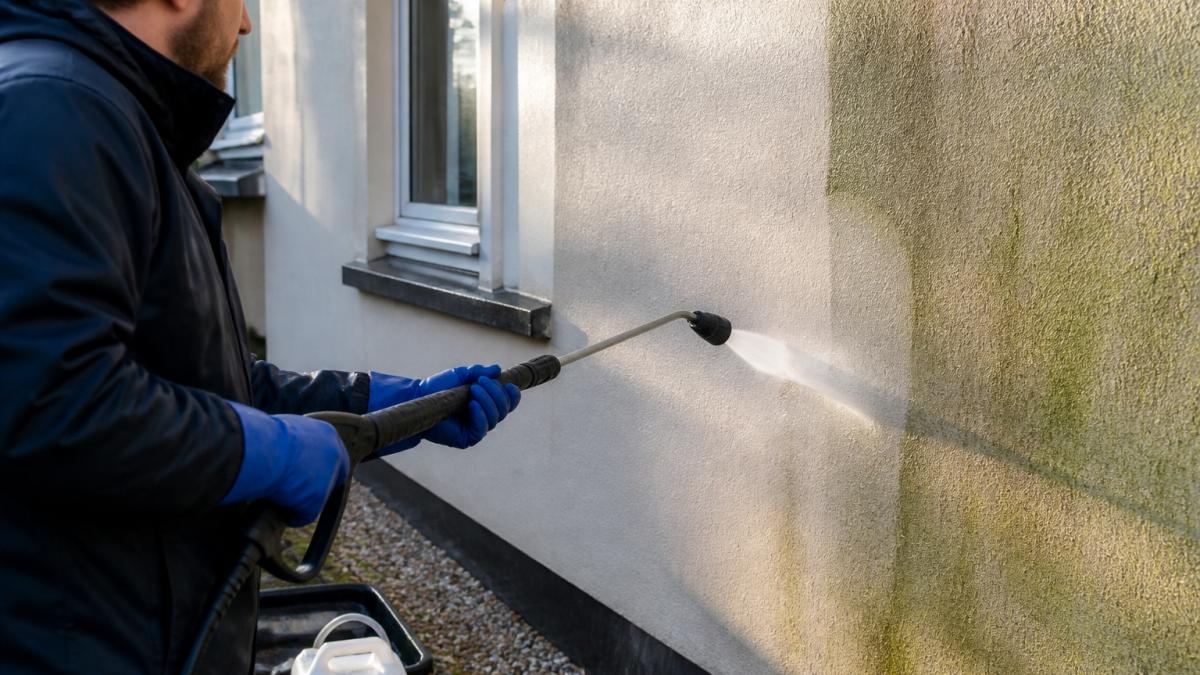
Sound render affected by organic growth may suit a treatment-led, low-pressure approach. The render, coating, condition and manufacturer guidance determine the method. A small test area may be appropriate where the finish or its history is uncertain.
Ask the contractor to explain the treatment, protection and likely result in plain language. Windows, doors, vents, paintwork, lawns and borders are close to the work. Access and runoff need to be considered before the treatment is applied, with products used according to their instructions.
High pressure should not be used simply to force a quicker visible result. The purpose is to improve contamination without needlessly disturbing a vulnerable finish.
What a good result looks like
Where the staining responds, the elevation can look cleaner and more even. Weathering, old repairs and colour differences may remain. An older wall should not be promised a newly rendered appearance.
Comparable photographs help record the change. The handover should explain which elevations were treated, any areas that could not be reached, defects reported and what improvement may continue afterwards. Genuine before-and-after evidence should show the existing surface fairly.