
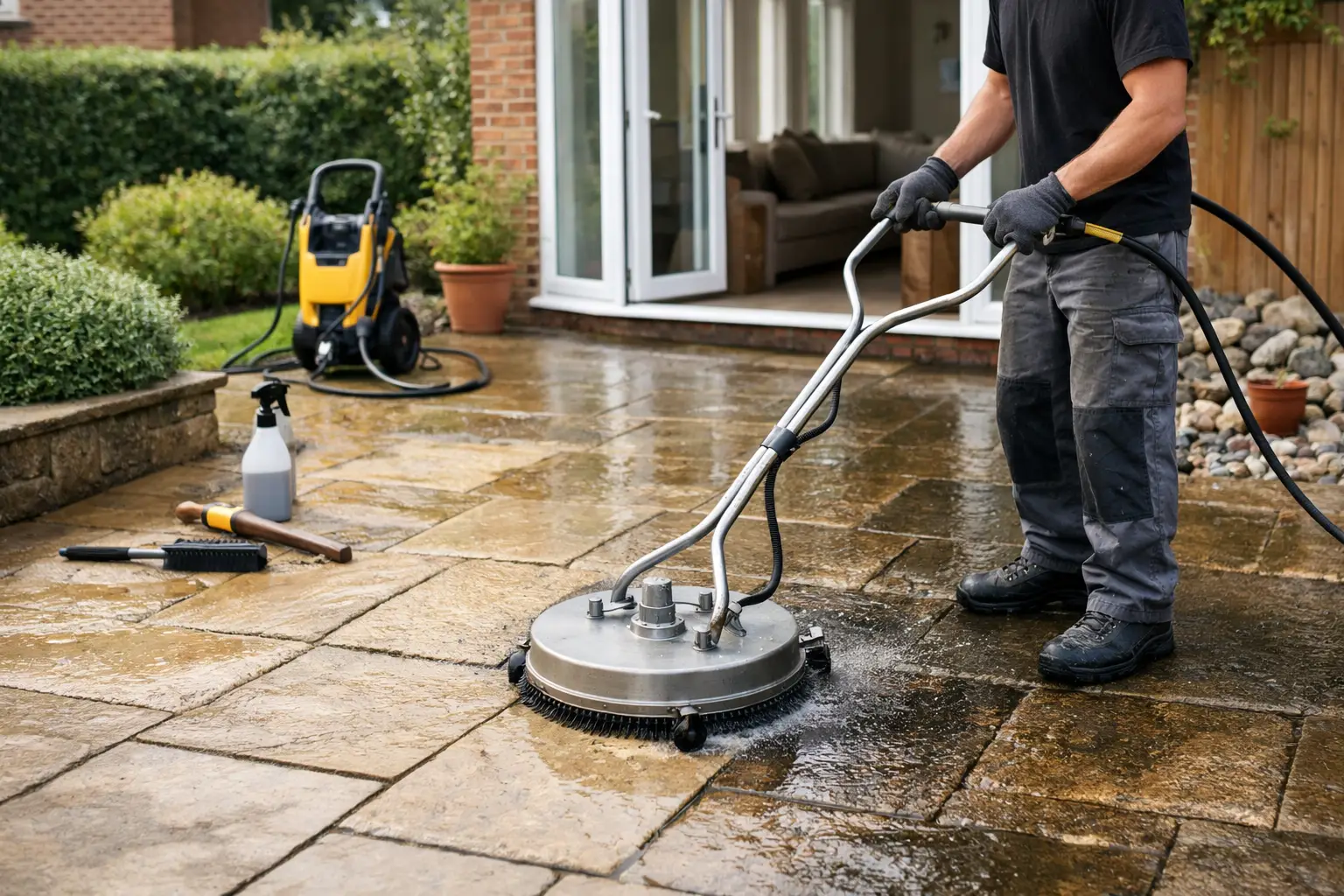
A tired patio is not always a patio that needs replacing. In many cases, patio restoration in Bolton begins with a proper assessment of the paving, the type of staining and the condition of the joints. Algae, moss, lichen, ingrained dirt and black spot can make an otherwise sound outdoor area look neglected and become slippery when wet. The right cleaning approach can bring back definition, colour and a more usable surface without treating every patio as though it were the same.
Refresh & Revive Exterior Cleaning is based in Bolton and provides patio and Indian sandstone cleaning across Greater Manchester, Cheshire, Lancashire and the wider North West. The work starts with the surface itself. A dense concrete slab, block-paved patio, porcelain tile and natural sandstone each respond differently to water pressure, cleaning treatments and post-cleaning care.
Patio restoration Bolton: cleaning before replacement
Patio restoration is often used to describe several different jobs. It may mean removing organic growth, lifting years of ground-in grime, cleaning staining around planters and furniture, clearing joints, or preparing paving for re-sanding or sealing where appropriate. It does not automatically mean every mark will disappear or that damaged paving can be cleaned back into perfect condition.
That distinction matters. Surface dirt can usually be addressed, while worn coatings, deep rust marks, permanent discolouration, loose slabs, crumbling pointing and broken paving may need separate repair work. A careful assessment makes it possible to distinguish what is contamination and what is physical wear.
For homeowners, landlords and property managers, this is a more sensible starting point than replacing a whole patio because it looks dull. Cleaning may improve the appearance considerably, but the likely outcome should always reflect the age, material and existing condition of the surface.
What is making your patio look tired?
Bolton patios spend much of the year exposed to rain, shade and falling debris. North-facing areas, patios beneath trees and paving close to fences or garden walls are particularly prone to damp conditions. This gives algae and moss a place to establish, while leaves and soil can leave dark staining in textured paving and joints.
Black spot is another common frustration, especially on natural stone. It is often more stubborn than ordinary green algae and may remain visible after a quick wash. Lichen can also cling tightly to the surface, leaving pale patches that need measured treatment rather than repeated aggressive blasting.
Other problems are less biological. Barbecue grease, spills from pots, tyre marks near access routes, mortar residue and rust staining all need to be identified before work begins. The treatment that suits one type of stain may not suit another, and using excessive pressure to compensate can be the wrong answer.
Indian sandstone needs a considered method
Indian sandstone is popular because its natural variation gives a patio character, but it needs thoughtful cleaning. The stone can have a riven texture and naturally porous areas, so dirt and organic growth may settle into the surface. Very harsh cleaning can affect the finish, disturb weak jointing or leave an uneven-looking result.
A professional approach considers the stone's condition, how heavily it is soiled and whether low-pressure treatment or controlled pressure is the suitable route. The aim is to remove contamination while respecting the material, rather than chasing a uniform colour that the stone never had naturally.
It is also worth recognising that natural stone can show variations after cleaning. Those tones, fossils and mineral markings are part of the paving, not necessarily marks that need removing.
Concrete slabs, block paving and porcelain have different needs
Concrete flags and textured paving can hold substantial amounts of dirt in their surface profile. Controlled pressure washing can be effective here, provided the pressure, equipment and technique are matched to the condition of the slabs and joints.
Block paving brings another consideration: cleaning can dislodge jointing sand. Where this happens, re-sanding may be needed once the blocks are clean and dry. The joints help support the blocks, so they should not be treated as an afterthought.
Porcelain is generally less porous than natural stone, but it can still become slippery with algae and collect grime in grout lines or textured finishes. Its appearance can be deceptive - a tile that looks smooth may need a different approach to a polished indoor tile. The correct method depends on the finish, installation and contamination present.
Choosing pressure washing or low-pressure treatment
Pressure washing has a place in patio restoration, but it is a tool rather than a one-size-fits-all solution. Commercial equipment can provide the control and cleaning power needed for heavily soiled hard surfaces, yet more pressure is not automatically better. Poorly directed or excessive pressure can aggravate weak pointing, disturb loose material and create an inconsistent finish.
Low-pressure cleaning methods may be more suitable where organic growth needs treating on a sensitive surface, or where the condition of the material calls for a gentler process. Cleaning treatments can help address algae, moss and lichen at their source before, during or after rinsing, depending on the surface and the assessment.
The practical question is not whether pressure washing is good or bad. It is whether the selected method is appropriate for your specific patio. A reliable contractor should be able to explain the surface, the contamination and the expected scope of improvement in plain terms.