
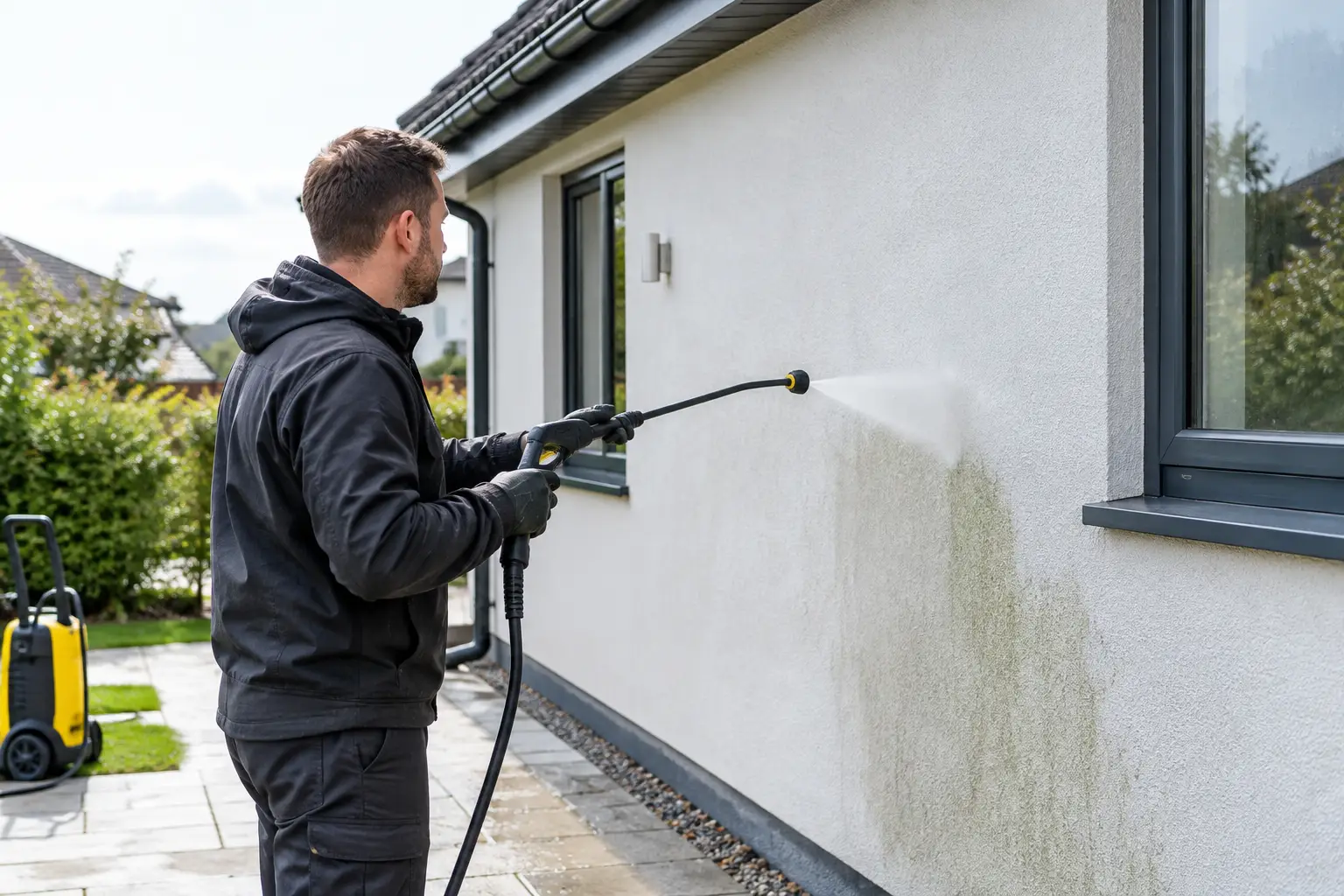
A clean rendered wall should look even in colour, not streaked with green algae, black spotting or traffic film. This K Rend maintenance guide explains how to look after silicone and coloured render without using harsh methods that can leave the finish looking patchy. For most homes, regular visual checks and the right low-pressure cleaning approach are more useful than aggressive washing.
K Rend is often chosen for its crisp, modern appearance, but its textured surface can still collect airborne dirt, algae and moisture over time. North West weather can make this more noticeable, particularly on shaded elevations, walls beneath trees and areas exposed to regular rain.
What makes K Rend look dirty?
Not every mark on render has the same cause, so it should not be treated in the same way. Green growth is usually algae, which develops where a wall remains damp for longer periods. Black marks may be a combination of atmospheric soiling, fungal growth and runoff from gutters, roof edges or window sills.
You may also see pale streaking, splashback around the base of walls, cobwebs, bird mess or staining beneath overflowing gutters. On a textured finish, contamination settles into the small recesses of the surface. Brushing or blasting at it can affect the appearance without properly addressing the growth.
Before arranging cleaning, look at where the staining is concentrated. A single dark strip beneath a gutter joint points to a maintenance issue above the render. Persistent green growth on one side of the house may be caused by shade, nearby planting or restricted airflow. Cleaning improves the wall's appearance, but dealing with the source where possible helps it stay cleaner for longer.
K Rend maintenance: the right routine
A simple routine is normally enough to prevent a neglected appearance. Walk around the property occasionally and inspect the render in daylight, especially after winter or prolonged wet weather. Check guttering, downpipes and overflow points at the same time, as water repeatedly running over render can cause staining and encourage growth.
Keep shrubs, climbing plants and stored items away from the wall where practical. They can hold moisture against the surface and make it harder for air to circulate. Take care when washing windows, too. Dirty water running from old frames or sills can leave tracks on pale render.
Light surface dust can sometimes be rinsed away with clean water at low pressure. However, do not treat a render wall like block paving or a concrete driveway. The aim is to clean the finish, not force water into the surface or remove material from its textured face.
Why pressure washing is rarely the answer
High-pressure cleaning may appear to offer a quick fix, but it is not the default method for K Rend. Too much pressure, a close nozzle distance or an unsuitable angle can leave visible lines, disturb the surface texture or push water where it should not go. The risk is greater on older walls, areas with existing cracking, poorly detailed edges and render already showing signs of failure.
This does not mean every machine-cleaning method is automatically unsuitable. It means the method, pressure, water volume and working distance must be selected for the condition of the render. A contractor should assess the wall rather than apply the same approach used for patios, brickwork and paving.
How professional K Rend cleaning works
For established algae, black staining and general soiling, a low-pressure render-cleaning treatment is often the sensible route. The cleaning solution is applied in a controlled way, allowed appropriate contact time and then gently rinsed where required. This approach is designed to treat organic growth rather than relying on force alone.
The surface and surrounding areas matter. Render around doors, windows, flowerbeds, paths, timber features and drainage should be considered before work begins. A careful assessment also identifies areas that may need a different approach, such as fragile render, failed sealant, open cracks or staining caused by rust.
Refresh & Revive Exterior Cleaning provides exterior cleaning from its Bolton base across Greater Manchester, Cheshire, Lancashire and the wider North West. For K Rend and silicone render, the cleaning method is selected around the finish, contamination and condition of the wall, with controlled pressure or low-pressure treatment used as appropriate.
A professional clean can remove much of the visible biological growth and dirt that makes render look tired. It cannot repair damaged render, correct poor installation, permanently prevent future algae or remove every stain where the contamination has altered the surface. That distinction matters when deciding whether cleaning or repair is the better next step.
When cleaning should wait
Cleaning should not be used to hide a problem that needs repair. If you can see cracks, hollow-sounding areas, loose render, exposed substrate, water ingress or staining that returns quickly after rain, investigate the cause first. Gutter leaks, failed flashing, damaged coping stones and overflowing downpipes can all affect the wall below.