
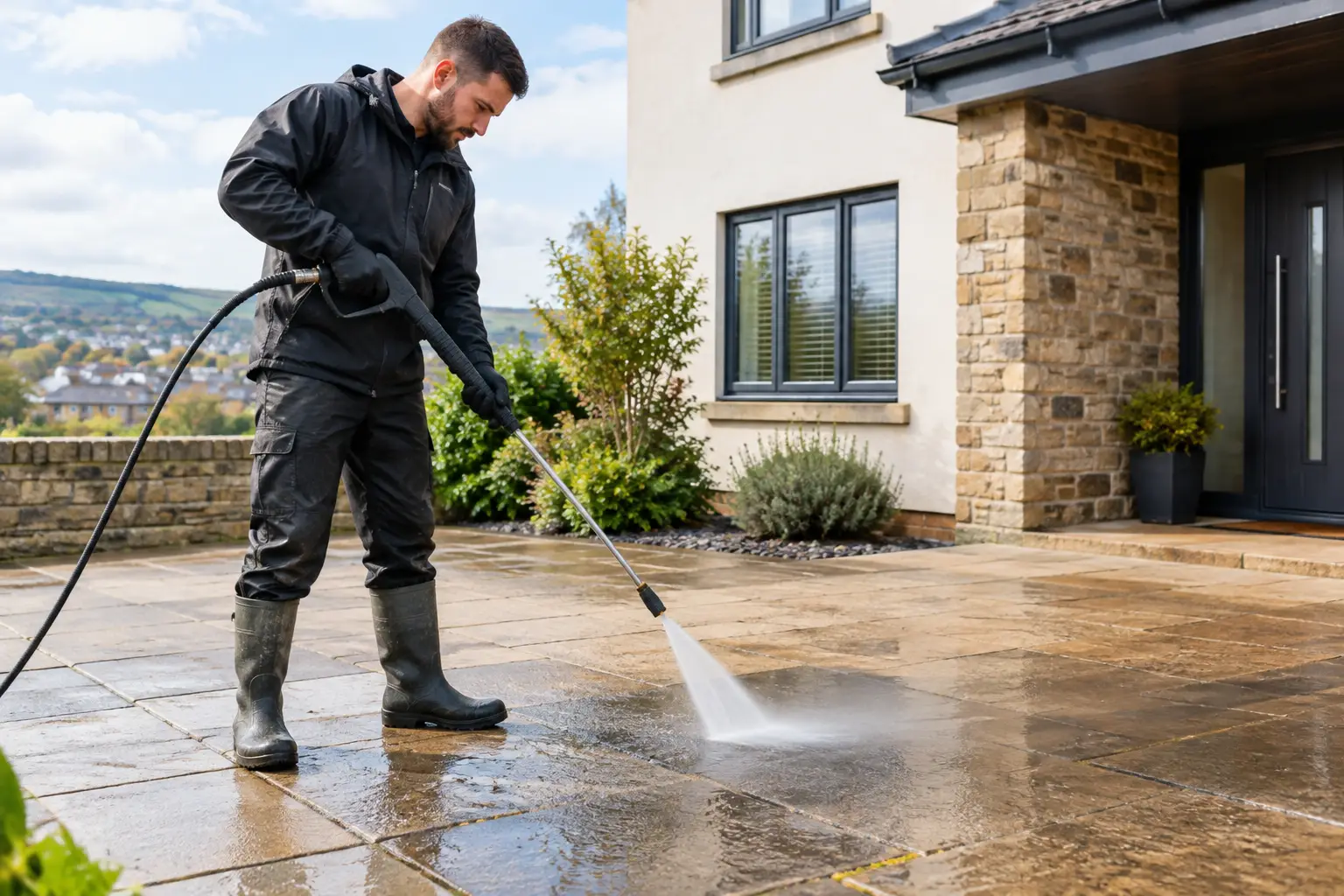
A grimy driveway, green render or overflowing gutter can make an otherwise well-kept property look neglected. This Bolton exterior cleaning guide explains how to match the cleaning method to the surface and the problem, rather than treating every outdoor area with the same high-pressure approach. For homes, rental properties and commercial premises, the right assessment is the difference between a surface that looks refreshed and one that has been cleaned too aggressively.
Refresh & Revive Exterior Cleaning is based in Bolton and works across Greater Manchester, Cheshire, Lancashire and the wider North West. The practical starting point is simple: identify what the surface is made from, what is causing the staining, and whether cleaning alone is suitable.
Bolton exterior cleaning guide: start with the surface
Exterior contamination is not all the same. Algae creates a green film, moss forms thicker growth, lichen can bond firmly to roofs and paving, while black spot and ingrained dirt can be particularly stubborn on patios. Traffic film, oil marks, leaf tannins and rust staining each need a considered approach too.
The material beneath that contamination matters just as much. Dense concrete and some block paving can tolerate controlled pressure washing where appropriate. Indian sandstone, older brickwork, painted surfaces, render, roof tiles and timber need more care. Using pressure simply because a machine is available can remove surface material, disturb mortar, strip coatings or leave an uneven finish.
A professional assessment should consider the age and condition of the surface, loose or damaged areas, drainage, surrounding planting and access. It should also account for what happens after cleaning. For example, block paving may need re-sanding once it is clean and dry, while a surface seal may be worth discussing only after the paving is sound and properly prepared.
Driveways and block paving
Driveways collect tyre marks, mud, oil, weeds and organic growth. On block paving, dirt also settles between the joints, making the whole area appear dull even where individual blocks remain in reasonable condition.
Controlled pressure washing can lift built-up grime from suitable paving, but it is only one part of the job. Jointing sand can be displaced during cleaning, so re-sanding is often necessary once the blocks have dried. This helps restore the joints and gives the driveway a more complete appearance.
Not every stain will disappear completely. Deep oil contamination, previous paint spills, old tyre marks and permanent discolouration may remain visible to some degree. A clear quotation should distinguish between general cleaning, stain treatment where appropriate, re-sanding and optional sealing, so the expected result is realistic from the outset.
Patios, sandstone and decking
Patios often become slippery under a layer of algae, particularly on shaded areas that receive little direct sunlight. Black spot, moss and soil can make slabs look much darker than their original colour. The temptation is to use the strongest possible pressure, but that is not always the best answer.
Concrete flags and hard-wearing paving may respond well to controlled pressure washing. Indian sandstone, however, needs a more measured method to avoid unnecessary surface erosion or an inconsistent appearance. The cleaning approach depends on the stone, its condition and the staining present. Cleaning can improve colour and definition, but it cannot repair cracked slabs, failing pointing or natural weathering.
Decking presents a different challenge. Timber can be marked or roughened by unsuitable pressure and may already have worn coatings or damaged boards. A careful cleaning plan should account for the timber’s condition and whether the aim is routine cleaning or preparation for later maintenance by the owner.
Roof cleaning and moss removal
Moss-covered roof tiles are highly visible from the street and can shed debris into gutters, valleys and downpipes. Roof cleaning should not be treated like driveway cleaning. Roof tiles, ridge mortar, flashings and roof access all require a surface-specific approach.
Depending on the roof and the growth present, moss may be removed carefully and a low-pressure treatment may be considered to address remaining organic contamination. The method should be chosen after viewing the tile condition and access, not assumed from a photograph alone. Fragile tiles, existing defects and unsafe access can limit what is sensible to undertake.
Roof work is also closely connected to gutter clearance. Removing moss without addressing blocked gutters can leave a recurring drainage issue. Where gutters are full of leaves, moss or sediment, clearing them helps rainwater move as intended and gives the property a tidier overall finish.
Render, walls, fascias and soffits
Green or red staining on K Rend, silicone render and painted exterior walls is often caused by algae and other biological growth. These surfaces should not routinely be blasted with high pressure. Low-pressure soft washing is commonly the more appropriate option because it is designed to treat contamination while being mindful of the finish underneath.
A clean can improve the appearance of render substantially, particularly where staining is widespread but the coating remains intact. It cannot rectify cracks, loose render, fading, poor previous repairs or defects in the underlying wall. If the render is already damaged, that should be identified before work begins.
Fascias, soffits and exterior cladding can also collect grime and spider webs. These areas benefit from a careful clean that considers joints, vents and nearby windows. The aim is a clean, even presentation, not an overly aggressive method that risks forcing water where it should not go.