Best Method for Removing Black Spots From Exterior Walls
8 November 2026 · Last updated 23 November 2026 · Refresh Revive Exterior Cleaning — 10 years of industry experience and £5 million insurance cover.
Black spots on render, brickwork or paving can be removed safely with the right method. Find out when to call a professional.
Last Updated: November 6, 2026
Quick Summary
The best method for removing black spots from exterior walls is controlled soft washing: apply a biocide solution at low pressure, let it dwell for around 10 to 15 minutes, then rinse gently from the top down. This kills the growth at its roots, protects render and mortar, and stops the black spots returning quickly.
Identify whether the marks are algae, fungi, soot or lichen before choosing a treatment.
Match the method to the surface, since render, brick and stone react differently to water.
Wet surrounding plants first and apply solution from the bottom of the wall upwards.
Allow the solution to dwell for around 10 to 15 minutes before rinsing.
Avoid high pressure, which strips the surface and can damage mortar and render.
What Black Spots Are and Why They Appear on Exterior Walls
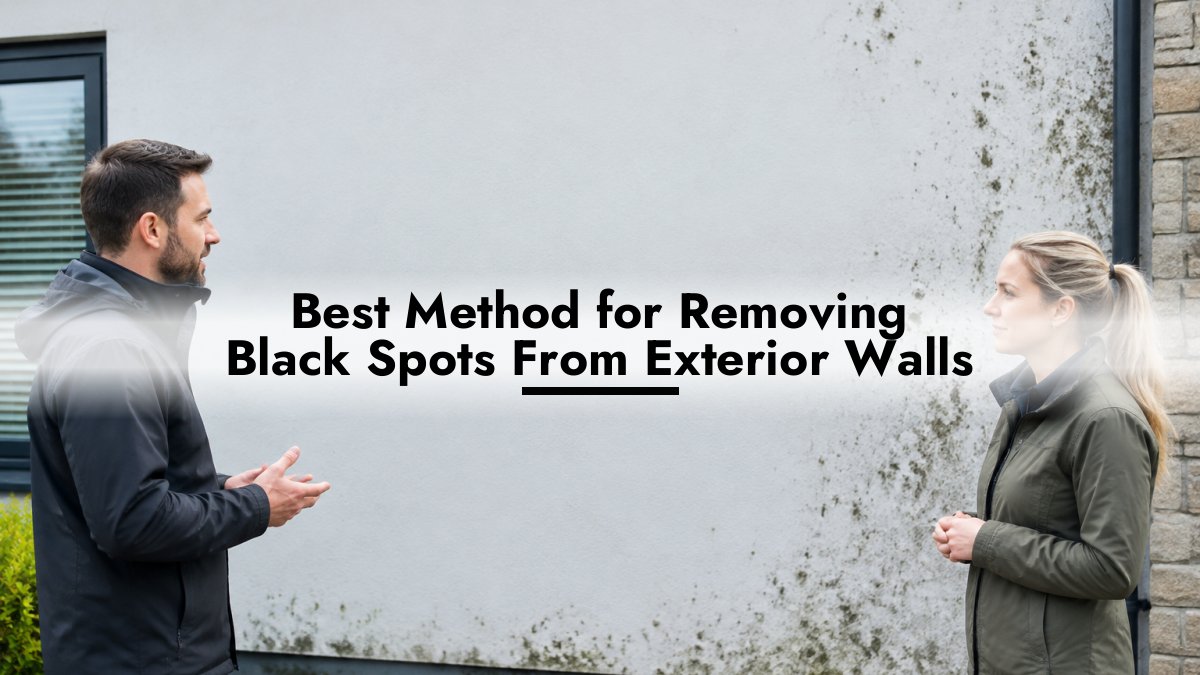
Black spots on exterior walls are usually a build-up of algae, fungi, lichen or dirt that has taken hold where the wall stays damp. In Bolton and across the North West, the damp, mild climate gives these organisms the moisture they need, so rendered and painted walls on shaded or north-facing elevations are often the first to show them. The good news is that most black spots can be removed safely with the right method, and the right method is rarely the highest pressure you can find.
Knowing what you are dealing with matters. Algae form a green or black film. Fungal growth can look dark and patchy, and it tends to penetrate the surface. Dirt and soot form a grey or black layer that sits on top. Each one responds to a different treatment, which is why a proper assessment should come before any cleaning begins.
Algae: thin, greenish-black film, often on shaded walls
Fungi: dark, patchy growth that can sink into porous surfaces
Soot and pollution: grey-black grime that builds up over time
Lichen: raised, crusty patches, usually on older masonry
Identify the Surface Before You Choose a Method
The surface decides the method. Render, painted masonry, brick and stone all react differently to water and cleaning chemicals, so the same approach can do good on one and real harm on another. Silicone and acrylic render handle gentle cleaning well, while traditional lime-based render and softer brick can be damaged by strong pressure or harsh products.
Before you start, check the following:
Render type: silicone, acrylic or traditional lime-based
Condition: cracks, loose areas or flaking paint need attention first
Porosity: porous surfaces soak up staining more deeply
Aspect: north-facing and shaded walls usually hold more growth
If you are not sure what your wall is made of, a professional inspection is a sensible first step.
Step 1: Assess the Growth and Gather Your Equipment
Start by looking at the wall in daylight. Note how far the marks spread, whether they are on the surface or sunk in, and whether any cracks or loose areas need repair before cleaning. Take a few photographs so you can compare the results later.
Gather the basic equipment before you begin:
A soft brush and a bucket of clean water
A garden hose with a low-pressure setting
Protective gloves, eye protection and non-slip footwear
Dust sheets for plants, lawns and windows
A ladder or access platform if the wall is high, used with care
Work safely. Never climb a ladder alone on uneven ground, and keep clear of power lines when using any water equipment.
Step 2: Apply Soft Washing to Exterior Walls
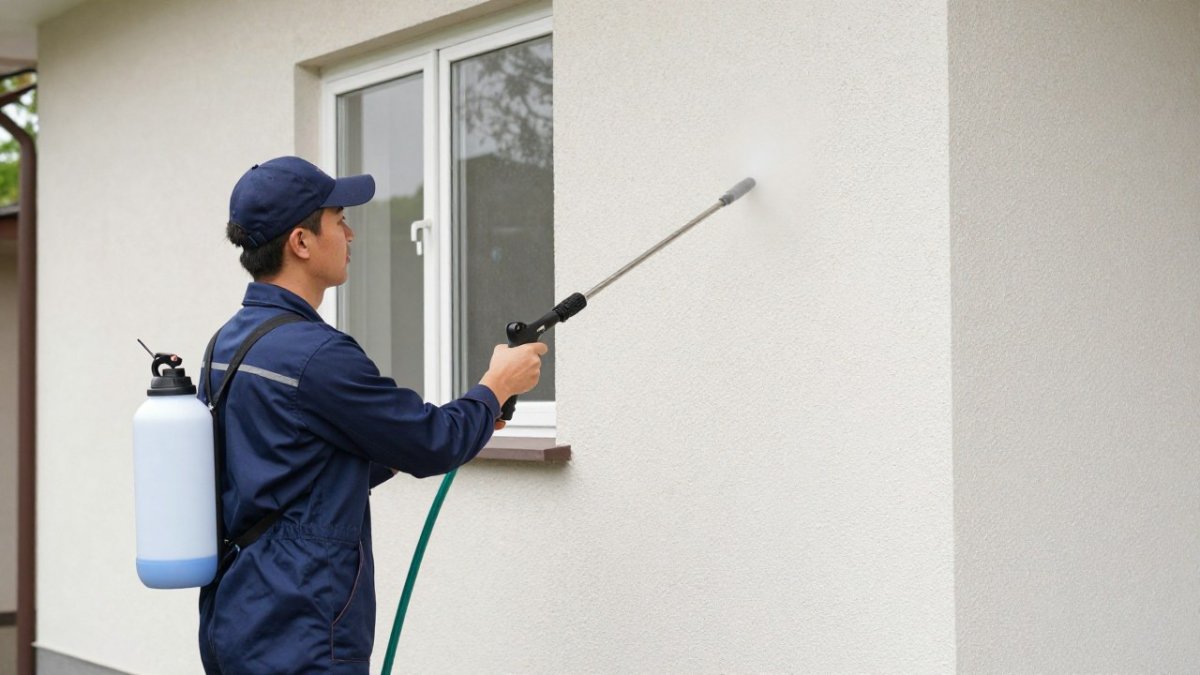
Soft washing is a method well suited to most black spot removal. It applies a biocide solution at low pressure and lets the product do the work over time, rather than blasting the growth off. This protects the surface and keeps the mortar and render intact.
Professional cleaner using a soft wash wand to remove black spots from a rendered exterior wall
The basic process runs like this:
Wet the wall and surrounding plants with clean water so the solution does not soak into them.
Apply the cleaning solution from the bottom of the wall upwards, which stops streaks running over dry areas.
Allow the solution to dwell, usually for around 10 to 15 minutes, so it can kill the growth.
Rinse gently from the top down with a low-pressure setting.
Soft washing is effective because the solution kills the organisms at their roots. Pressure alone removes the surface layer and can leave the growth to return quickly.
The steps of the soft washing process are set out below, with the dwell time and rinse guidance from the article.
Step
What to do
Time or frequency
1
Wet the wall and surrounding plants with clean water
Before applying solution
2
Apply cleaning solution from the bottom upwards
Continuous application
3
Allow the solution to dwell
Around 10 to 15 minutes
4
Rinse gently from the top down on low pressure
After dwell time
Step 3: Treat and Lift Stubborn Marks on Render
Render needs particular care. Silicone and acrylic render tolerate gentle treatment well, but traditional lime-based render is softer and easily damaged. For stubborn marks, we recommend a second, targeted application rather than increasing pressure.
Work in small sections, and keep the pressure low throughout. Stop if the surface starts to look rough, pitted or discoloured. Patches of render that are already flaking should be repaired first, because cleaning will only expose the damage.
If marks remain after a careful clean, the stain may be ingrained rather than surface growth. In that case, a professional assessment will tell you whether further treatment will help.
Step 4: Clean Brickwork Without Damaging the Mortar
Brick cleaning calls for a gentle approach, because the mortar between the bricks is usually softer than the bricks themselves. High pressure can erode the joints, leaving the wall weaker and more open to water.
Keep the following in mind:
Use low pressure and keep the nozzle at a safe distance from the mortar
Apply solution rather than relying on force to lift the growth
Rinse thoroughly so no residue is left on the brick
Avoid strong acids, which can damage both brick and mortar
Brick that is heavily stained or pitted may need a specialist assessment before any treatment.
Preventing Black Spots on Walls in Damp Weather
Cleaning removes the growth, but prevention keeps it from coming back. Damp, shaded walls will recollect algae and fungi unless you reduce the moisture that feeds them.
Trim back plants so they do not hold moisture against the wall
Clear gutters and downpipes so water runs away from the wall rather than down it
Improve airflow around shaded elevations where possible
Schedule a maintenance clean once or twice a year, depending on exposure
A maintenance visit is often more cost-effective than letting growth build up to the point where a full clean is needed.
Common Mistakes to Avoid When Removing Black Spots
Most damage to exterior walls comes from a handful of avoidable mistakes. Some are cosmetic; others affect the fabric of the building or the safety of the person doing the work. The list below covers the errors most often seen on walls across the North West, and explains why each one matters.
Using too much pressure. It strips the surface, drives water into the wall and can permanently damage render and mortar. The damage is often invisible until the next winter, when freeze-thaw action opens up the cracks. Watch out: maximum pressure is almost never the best method for removing black spots on render, brick or stone.
Skipping the dwell time. Rinsing too soon lets the growth regrow within weeks. A biocide needs time to work at the root, not just on the surface film.
Mixing products. Combining cleaning chemicals can release harmful fumes (Chemicals - safe use and handling). Use one product at a time, follow the label and never mix bleach-based and acid-based products.
Ignoring plants and lawns. Chemicals and run-off can scorch planting, so always pre-wet and protect borders, and rinse thoroughly afterwards.
Cleaning in direct sun. Solutions dry too quickly and leave streaks, and the surface can be shocked by rapid temperature change. Work in shade or on an overcast day where possible.
Treating a stain you have not identified. A dark patch is not always algae. Rust, oil, tannin and pollution staining need different treatment, and applying the wrong product can set the stain or damage the surface.
Cleaning over existing damage. Cracks, loose render and flaking paint should be repaired first, because cleaning will only expose the problem and can force water behind the surface.
Assuming a new or changing spot is harmless. On walls this is rarely a health issue, but the same principle applies to any dark mark you cannot explain: identify it before you treat it, and if it is on a surface you are unsure about, ask before you act.
If you are unsure which mistake you might be about to make, send a photograph to Refresh Revive Exterior Cleaning through refreshrevivecleaning.co.uk and the team can advise on what the mark is likely to be and which method suits the surface.
When to Call a Professional for Exterior Wall Cleaning
Some jobs are better left to trained cleaners, and the decision is usually about access, surface condition or the level of growth rather than simply the size of the wall. The guidance below is written for homeowners, facilities managers and property managers across Bolton, Greater Manchester, Lancashire and Cheshire who need to judge whether a job is a sensible DIY task or one that should be handed to a professional team.
Call a professional if any of the following applies:
The wall is multi-storey or hard to reach. Working at height on ladders, scaffolding or a tower is a leading cause of serious injury (Safe use of ladders and stepladders). A professional team will use the right access equipment and a documented method statement.
You cannot reach the wall safely. Sloping ground, conservatories, glass roofs, overhead cables and narrow side returns all change the risk profile.
The render is cracked, hollow or flaking. Cleaning over damaged render can force water behind the surface and make the problem worse. Repair should come first.
The marks have not responded to careful cleaning. If a stain remains after a correct soft wash and dwell time, it may be ingrained, or it may not be biological at all. A professional assessment will identify it before more product is applied.
The growth is extensive or recurring. Large areas of algae, lichen or moss usually need a treatment-led approach with the right biocide and dwell time, not repeated blasting.
The property is commercial. Care homes, schools, hotels, offices, retail units and construction sites often need documented risk assessments and method statements (RAMS), COSHH assessments for any chemicals used, and evidence of insurance. A professional exterior cleaning company can provide these as standard.
The surface is historic or delicate. Traditional lime render, soft brick, stone and older masonry need a gentler approach than modern silicone render.
You are unsure what the surface is. If you cannot identify the material, you cannot safely choose a method. A professional inspection removes the guesswork.
What a professional assessment should include
A reputable exterior cleaning company should be willing to look at the wall before quoting, explain which method they propose and why, confirm that they carry insurance, and set out how they will protect plants, drains and neighbouring property. For commercial work, ask to see RAMS and COSHH documentation before work begins. If a company cannot explain the method in plain English, that is a warning sign in itself.
Refresh Revive Exterior Cleaning is based in Bolton and works across Greater Manchester, Lancashire and Cheshire. The team assesses the surface first, matches the method to the material, and uses controlled soft washing, professional pressure washing and hot water cleaning only where each is appropriate. To request a free, no-obligation quote or to send photographs for assessment, get in touch through refreshrevivecleaning.co.uk.
Book a Quote or Send Photographs for Assessment
Every wall is different, so the most accurate way to plan the job is to look at it. Pricing depends on the size of the wall, the surface type, the level of growth and access requirements, so a quote is based on what is seen on site rather than a fixed figure.
To request a free, no-obligation quote, get in touch with Refresh Revive Exterior Cleaning through refreshrevivecleaning.co.uk. You can also send clear photographs of the affected walls, and we will assess the surface and advise on the best method before any work begins.
Frequently Asked Questions
What is the best method for removing black spots from exterior walls?
For most exterior walls, the best method is a controlled soft wash. This means applying a suitable biocidal cleaning solution at low pressure, allowing it to dwell long enough to kill the growth, then rinsing gently. Pressure washing alone often leaves the roots of the growth behind, and a high-pressure jet can damage render and softer brick. Stubborn marks may need a targeted treatment first. A professional assessment helps confirm the surface and the growth type before any work starts.
Is soft washing safe for render?
Soft washing is generally considered safer for render than high-pressure cleaning because it relies on the cleaning solution to do most of the work rather than force. The water pressure stays low, which reduces the risk of cracking or stripping the finish. Render condition matters, so any hairline cracks or loose areas should be checked first. The correct solution strength and dwell time are important to avoid staining or discolouration.
Will black spots come back after exterior cleaning?
They can return, particularly in damp, shaded or sheltered areas where moisture stays on the wall for long periods. Removing the growth is only part of the job. Improving drainage, trimming back overhanging vegetation and keeping gutters clear all reduce the conditions black spots need. Some surfaces also benefit from a breathable protective treatment after cleaning. A maintenance visit at a sensible interval helps keep the wall looking clean.
Can bleach be used to remove black spots from outside walls?
Household bleach can kill surface growth, but it is not always the right choice. It can lighten or stain some masonry, harm nearby plants and lawns, and leave the underlying growth partly intact if it is not applied properly. Specialist exterior cleaning solutions are formulated for the job and are used with controlled dwell times and rinsing. If you are unsure, a professional can match the solution to your surface.
Choosing render softwash versus jet washing? Learn which method suits algae-stained render, why pressure can be risky, and how cleaning is assessed first.
Our brickwork cleaning methods guide explains how to tackle algae, soot and staining while protecting mortar and older brick surfaces across the North West.
Talk to us about the surface first
Method depends on the substrate. Tell us what you have and we'll explain what we would use and why.