
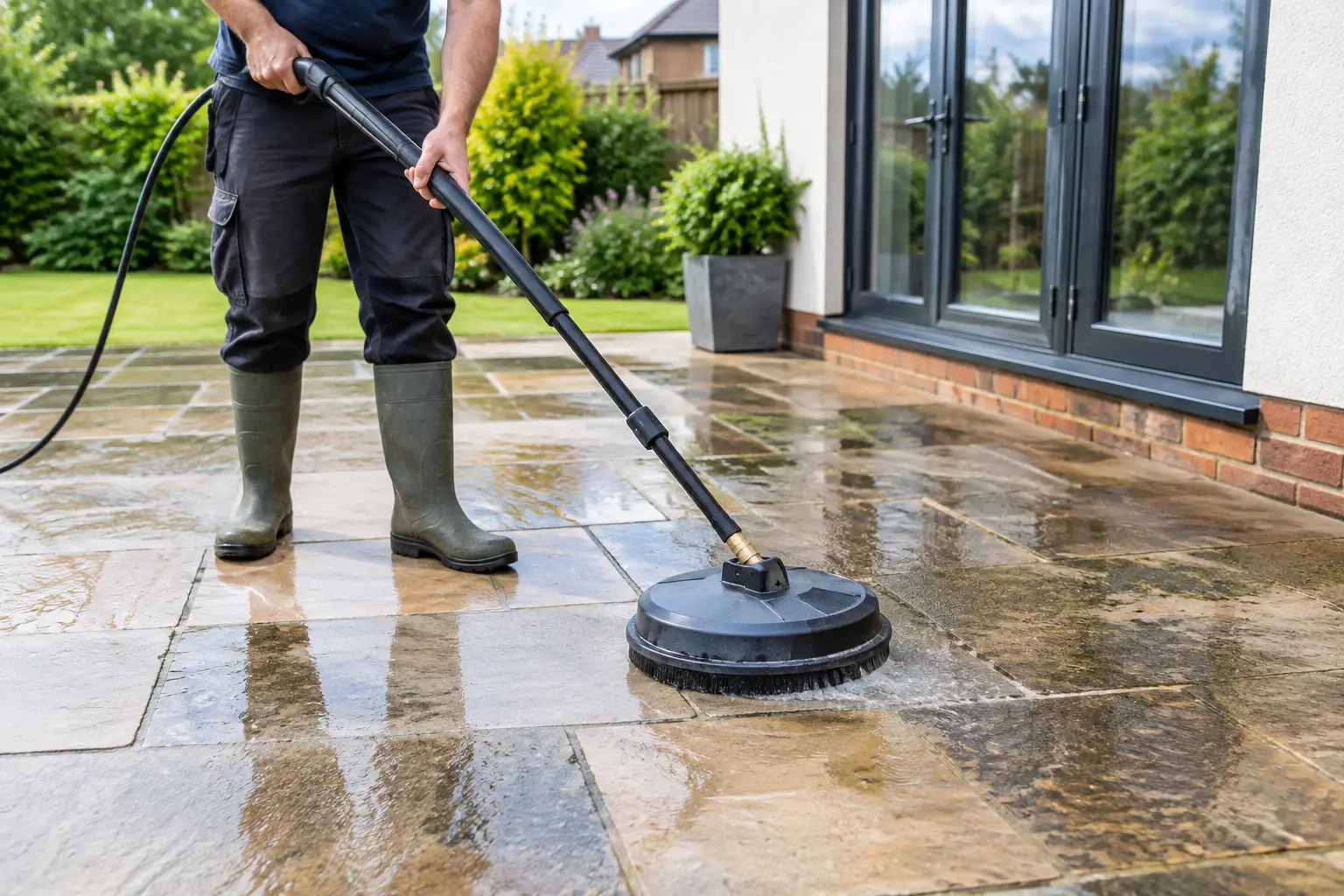
A patio can look tired long before the paving itself has reached the end of its useful life. Green algae, black lichen marks, barbecue grease and leaf staining can all change the colour of flagstones and make an otherwise well-kept garden feel neglected. To clean flag paving stains properly, the key is to identify both the paving material and the type of stain before choosing a cleaning method.
Flag paving is not one single surface. It may be concrete flags, natural Indian sandstone, limestone, slate or another stone product. What works well on one can leave unwanted marks, alter the surface texture or disturb jointing on another. A measured approach gives the best chance of improving the patio without taking cheap shortcuts.
Why flag paving becomes stained
Most paving stains develop gradually. Damp weather, shade from fences or trees, poor air flow and organic debris create conditions where algae, moss and lichen can establish themselves. On patios across Bolton, Greater Manchester and the wider North West, this is particularly common on north-facing areas and paths that receive little direct sun.
Other stains are more localised. Oil may drip from a barbecue or outdoor heater. Rust can transfer from metal furniture, planters or tools. Fallen leaves, berries and wet timber can release tannins that darken pale stone. Cement, mortar and paint are usually connected to building work or DIY projects, and they need especially careful treatment.
The visible mark does not always tell the full story. A black spot may be lichen attached to the surface rather than simple dirt sitting on top. A pale patch could be weathering, residue from a previous cleaning product or a change in the stone itself. This is why applying a powerful cleaner immediately is rarely the sensible first move.
Clean flag paving stains by type, not by guesswork
Algae, moss and general green staining
Algae often leaves paving slippery as well as discoloured. Moss tends to collect in joints, along edges and where soil or leaves have built up. Surface dirt can make both problems appear worse.
Cleaning normally begins by removing loose debris and assessing the condition of the flags and joints. Depending on the paving and contamination, controlled pressure washing or a low-pressure treatment may be appropriate. The aim is to lift the growth and accumulated grime while avoiding unnecessary force on the paving face or jointing material.
Pressure alone is not always the full answer. Where biological growth is established, a suitable treatment may be needed to deal with remaining spores and improve the overall result. Even then, future regrowth depends on shade, moisture, surrounding trees and routine maintenance. No cleaning method can permanently stop a damp, shaded patio from becoming green again.
Black spot and lichen marks
Black spot is one of the most frustrating flag paving stains because it can remain visible after an initial wash. It is often lichen, which bonds tightly to the surface and may have a pale or greenish edge around a darker centre.
Aggressively blasting black spot can be counterproductive, particularly on natural stone. It can leave an uneven finish, expose softer material or make the cleaned areas stand out sharply against the rest of the patio. A professional approach usually combines appropriate cleaning with enough dwell time for the treatment to work, rather than relying solely on force.
Some established lichen marks may lighten in stages rather than disappearing in one pass. The surface type, depth of growth and age of the staining all affect the result. That is not a reason to accept a stained patio, but it is a reason to set realistic expectations before work begins.
Oil, grease and barbecue stains
Fresh oil responds differently from old, baked-in grease. If a spill has only just happened, absorb as much as possible with an appropriate dry absorbent material before rain or foot traffic spreads it. Avoid scrubbing it hard into the pores of the paving.
Older oil staining usually needs a product designed to break down the contamination, followed by controlled rinsing. The difficulty depends on how porous the flags are. Concrete and some natural stones can absorb oil below the visible surface, so a stain may improve significantly without vanishing completely on the first attempt.
Do not use a strong solvent simply because it appears to shift the mark quickly. It may spread the stain, affect nearby jointing or leave a different discolouration behind. This is one of the areas where a test patch and a surface-specific method matter.
Rust stains from furniture and planters
Rust marks are common beneath cast-iron furniture, metal pots and garden ornaments. They can range from a light orange stain to a dark, stubborn patch that has penetrated porous stone.
Rust removers must be chosen carefully. Products suited to concrete flags may not be appropriate for every natural stone, particularly calcareous materials such as limestone. Acidic products can react with certain surfaces and leave etching or colour variation that is harder to correct than the original stain.
If the stain comes from a planter or furniture leg, remove the source as part of the job. Otherwise, the mark can return after the next period of rain.
Leaf, berry and organic staining
Brown and purple marks often appear after wet leaves, flower petals, berries or timber have been left on paving. These are tannin stains, and they can be surprisingly persistent on pale flags.
Sweeping debris away promptly helps, but established marks may need targeted treatment and rinsing. Bleach-based household products are not a universal solution. They may affect surrounding plants, leave uneven results or fail to address the source of the stain. The right approach depends on the flag material and whether the staining is recent or weathered in.
Cement, mortar, paint and construction residue
Construction residue needs more caution than ordinary patio grime. Scraping mortar from natural stone, for example, can scratch the face of the slab. Strong cement removers can react badly with some flags and damage nearby pointing if used without care.