
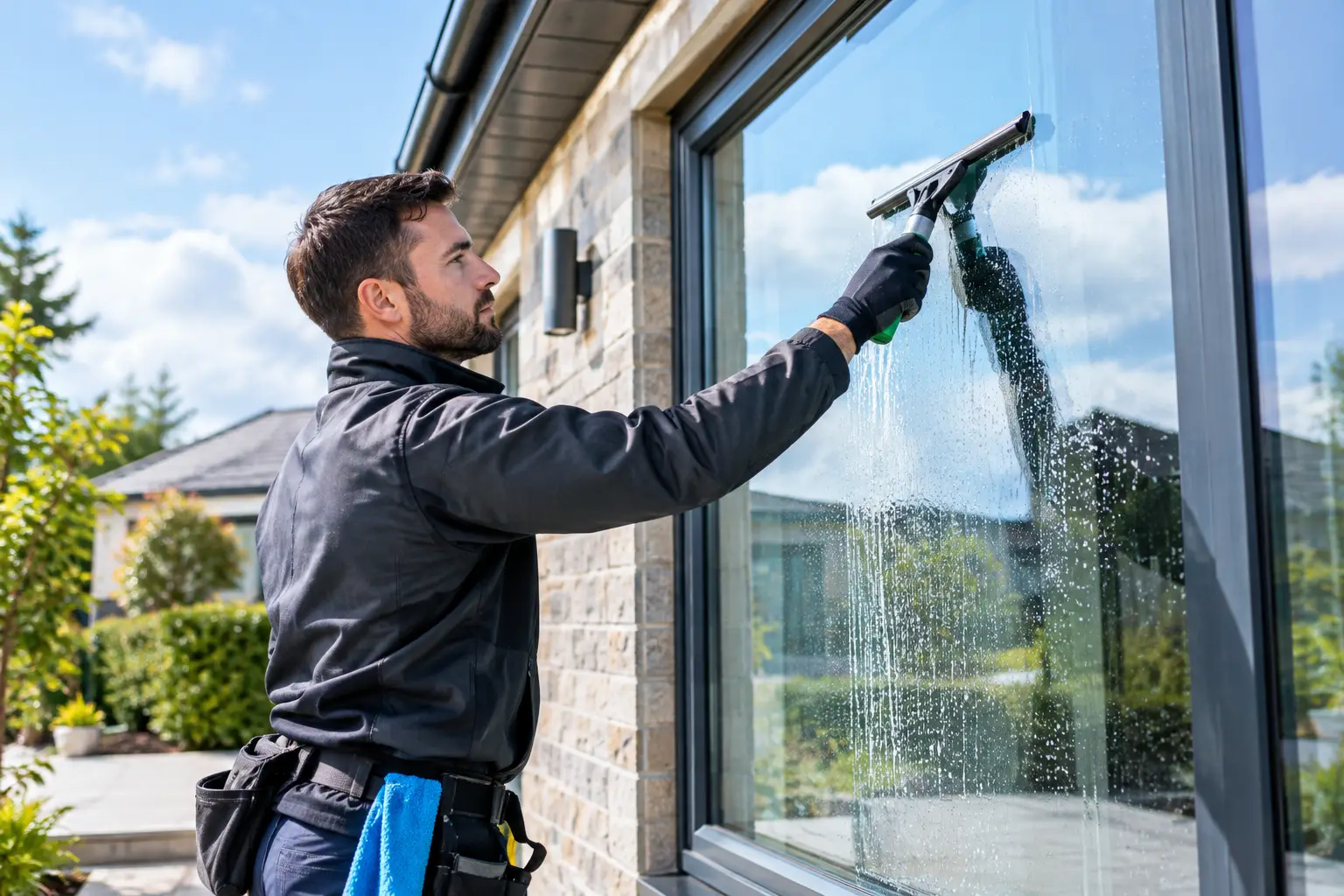
A clean window changes more than the view. It lifts the appearance of the whole property, lets daylight work properly indoors and stops grime building up around frames, sills and doors. Professional window cleaning is particularly worthwhile where upper-storey glass, conservatory roofs or awkward access make a DIY clean impractical or unsafe.
Refresh & Revive Exterior Cleaning is based in Bolton and provides pure-water window cleaning for homes, landlords, managed properties and commercial sites across Greater Manchester, Cheshire, Lancashire and the wider North West. The right approach depends on the glass, the frame material, the level of contamination and how easily each area can be reached.
What builds up on exterior windows?
Exterior glass is constantly exposed to rain, road dust, pollen, airborne pollution and residue from nearby trees. In damp or shaded positions, algae can also develop around window edges, seals, sills and uPVC frames. It is easy to assume that rain keeps windows clean, but rainfall often dries with dissolved dirt already on the surface, leaving a dull film or spotting behind.
Windows near busy roads, gardens, building work or coastal air can need more regular attention. A property with gutters that overflow or a roof carrying heavy moss may also see dirt washing onto windows and frames. Cleaning the glass alone can improve the view, but a proper exterior clean should take account of the surrounding sills and frames where appropriate.
The aim is not simply to make glass look brighter for a day. It is to remove the visible contamination carefully, without treating every window, frame or access situation as though it is the same.
How pure-water window cleaning works
For many modern properties, pure-water window cleaning is a practical method for exterior glass, frames and sills. Water is purified before use so that, once the cleaned surface dries, it is less likely to leave the mineral residue associated with ordinary tap water.
The water is applied through purpose-made equipment and a brush head, allowing the cleaner to agitate dirt on the glass and surrounding external surfaces while working from ground level in many cases. This can be useful for first-floor and upper-floor windows, roofline glazing and conservatories where ladders would not be the best option.
A pure-water clean is not a shortcut. Heavily soiled glass may need a more thorough initial clean than glass on an established maintenance schedule. Edges, old deposits and awkward details can take additional attention, and the result may also be affected by the condition of seals, paintwork, frames or the glass itself.
When a different method may be needed
Not every window-cleaning job is identical. Traditional hand cleaning can be appropriate for certain internal panes, ground-floor glass, small details or areas where a squeegee finish is the most suitable option. Pure-water equipment is generally intended for exterior cleaning and is chosen with access, the window design and the property layout in mind.
There are also limitations that no honest cleaner should ignore. Scratches, failed double-glazed units, etched glass, damaged seals, staining within the glazing and faded frame finishes are not surface dirt and may remain visible after cleaning. Likewise, paint splashes, cement residue and adhesive marks require assessment before any attempt is made to remove them. Using excessive force or the wrong chemical on these problems can make matters worse.
For this reason, the cleaning method should follow an inspection of the surface rather than a one-size-fits-all promise. Controlled cleaning is especially relevant on older properties, delicate finishes and windows with restricted access.
Window frames, sills and doors matter too
Glass can look clean while the surrounding uPVC, aluminium or painted timber still appears tired. Dust gathers along ledges, insects collect in corners and algae can leave green or dark marks in sheltered areas. Including accessible frames and sills in an exterior window-cleaning visit can give the whole elevation a more finished appearance.
The material matters. uPVC often responds well to suitable exterior cleaning, but neglected surfaces may have permanent discolouration or weathering that washing will not reverse. Painted timber needs particular care, especially where the coating is flaking or exposed. Aluminium frames can also show water marks and atmospheric grime differently from uPVC.
Patio doors, French doors and bi-fold doors benefit from the same consideration. Their larger glass panels make streaks and marks more noticeable, while tracks and lower frames tend to collect garden debris. A cleaner should focus on what can be safely and sensibly cleaned rather than overpromising a restoration result from routine washing.
Conservatory windows and roof glazing
Conservatories can quickly lose their brightness because roof panels and high-level glass collect dirt that is difficult to see from inside. Tree sap, algae, bird mess and general weathering can all reduce the amount of light coming through. The roofline is also often difficult to access safely without the right equipment and plan.
Pure-water cleaning can be suitable for conservatory glass, frames and roof glazing, subject to condition and access. It is not the same as pressure washing. High pressure is not a default answer for windows, seals or glazing bars. A lower-risk approach that matches the surface is usually the sensible starting point.
Where a conservatory has longstanding staining, brittle seals, damaged panels or heavy biological growth, an assessment helps set realistic expectations. Cleaning can improve presentation significantly, but it cannot repair failed components or remove defects within the material.