
Last Updated: 2 November 2026
Quick Summary
The signs of chemical burn on garden plants from cleaning are browning at the leaf tips and margins, yellowing between the veins, or bleached patches on the foliage, caused by contact with a cleaning product. Damage often appears on the side of the plant facing the cleaned surface, usually within 24 to 72 hours for direct leaf contact.
- Root and soil contamination can take one to three weeks to become obvious after a clean.
- Bleach-based washes strip the waxy coating from leaves and leave bleached patches.
- Chemical injury usually clusters on the side of the plant facing the cleaned surface.
- Treat chemical burn by rinsing foliage, flushing the soil and removing damaged leaves.
- Photograph damaged foliage before pruning if a contractor's cleaning is responsible.
Table of Contents
- What Chemical Burn Looks Like on Garden Plants
- Signs of Phytotoxicity in Plants After a Clean
- How Long Does Plant Chemical Damage Take to Show?
- Cleaning Products That Cause the Most Damage
- How to Tell Chemical Burn Apart from Sun Scorch, Drought and Fertiliser Burn
- How to Treat Chemical Burn on Plants
- Protecting Plants During Soft Washing and Pressure Washing
- What to Do If a Contractor's Cleaning Damages Your Plants
- Book a Garden-Safe Exterior Clean with Refresh Revive
- Frequently Asked Questions
What Chemical Burn Looks Like on Garden Plants
The signs of chemical burn on garden plants from cleaning are damage to leaves, stems and roots caused by contact with a cleaning product, and they usually show as browning at the leaf tips and margins, yellowing between the veins, or bleached patches on the foliage. Where a surface is cleaned and run-off reaches a border, scorching of nearby shrubs can follow within days.
The signs of chemical burn on garden plants from cleaning are rarely dramatic at first. A few brown tips. A dull patch on a hedge. It builds from there.
Watch out: symptoms alone do not prove a cleaning product caused the damage. The University of Maryland Extension guide to phytotoxicity makes the point clearly: leaf spots, yellowing and burn symptoms are not exclusive to chemical injury. You need the timeline and the circumstances as well as the look of the plant.
Signs of Phytotoxicity in Plants After a Clean
Phytotoxicity is the technical term for chemical injury to a plant, and it covers any harm caused by a substance the plant was never meant to absorb. Most cases after an exterior clean follow a predictable pattern.
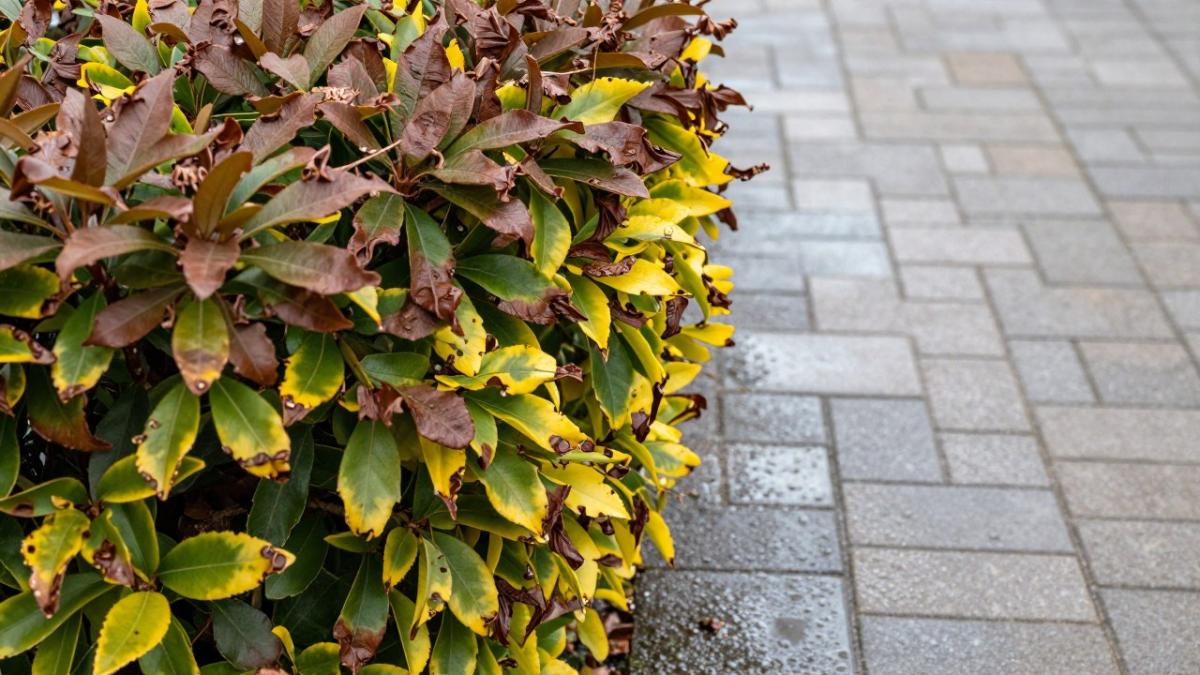
Look for these signs of phytotoxicity in plants:
- Leaf burn and leaf scorch: brown, papery edges on the leaf margins and leaf tips
- Yellowing: pale or bleached patches where droplets landed
- Crispy leaves: foliage that crumbles rather than bends
- Deformed leaves: new growth that comes through twisted or cupped
- Wilting: drooping that does not recover after watering
- Stunted growth: a plant that simply stops putting on size
- Root damage and soil contamination: poor recovery even when moisture is fine
Damage often appears on the side of the plant facing the cleaned surface. That directional pattern is a useful clue.
How Long Does Plant Chemical Damage Take to Show?
Plant chemical damage usually shows within 24 to 72 hours for direct leaf contact, while root and soil contamination can take one to three weeks to become obvious. The delay catches people out. By the time the leaves brown, the clean is long finished and the cause is easy to miss.
Several things change the timeline:
- Concentration: a stronger mix acts faster and cuts deeper
- Weather conditions: heat and strong sun speed up leaf burn
- Plant type: soft new growth and sensitive plants react first
- Exposure route: spray drift on foliage shows quickly, soil contamination shows slowly
Watch out: if you spot browning a fortnight after a clean, do not assume it is unrelated. Root damage from run-off into the soil often takes that long to surface.
Cleaning Products That Cause the Most Damage
The products most likely to burn garden plants are those containing bleach, strong detergents, and any acidic or caustic stone cleaner. If you want to know which specific cleaning chemicals are risky and why, read are harsh chemical cleaners safe for stone walls?. These are the ones that cause the clearest cases of chemical injury we come across.
A few to treat with real care:
- Bleach-based washes: strip the waxy coating from leaves and leave bleached patches
- Strong detergents: break down cell walls and cause wilting
- Acidic patio and stone cleaners: burn foliage on contact
- Caustic degreasers: severe leaf burn and root damage if they reach the soil
- Sealants and biocides: can scorch anything they drift onto
The safe approach is simple: match the product to the surface, keep the mix no stronger than it needs to be, and keep it off the planting.
How to Tell Chemical Burn Apart from Sun Scorch, Drought and Fertiliser Burn
Chemical burn is not the only thing that browns a leaf, and misreading the cause wastes time and money. The reliable way to separate the look-alikes is to combine three things: the pattern of the damage, the exposure history, and the timing relative to weather or feeding. Since the cleaning method affects the damage risk, it helps to understand soft washing vs pressure washing before comparing symptoms. Symptoms on their own are rarely conclusive.
Start with where the damage sits on the plant and on the leaf. Chemical injury from a cleaning product usually clusters on the side of the plant facing the cleaned surface, and on the upper surfaces where droplets settled. It often shows as brown, papery margins and tips, bleached patches where droplets pooled, or a sharp boundary between damaged and healthy tissue. That directional, droplet-shaped pattern is the single most useful clue.
Here is how the main look-alikes differ.
| Cause | Where it shows first | Key clue |
|---|---|---|
| Chemical burn | Leaf tips and margins facing the clean | Follows a clean or spray event; droplet-shaped patches |
| Sun scorch | Outer, sun-facing leaves | Follows hot, bright weather; often uniform on exposed side |
| Drought | Whole plant, oldest leaves first | Soil is dry at depth; recovers after deep watering |
| Fertiliser burn | Leaf edges, uniform across the bed | Follows feeding or over-application; affects whole bed evenly |
| Nitrogen scorch | New growth, dark and curled | Excess nitrogen in the soil; soft, floppy growth |
| Frost damage | New growth and tender tips | Follows a cold snap; blackened, limp tissue |
| Pest damage | Chewed edges, holes, speckling | Visible insects, webbing, or sticky residue |
| Disease | Spots with halos, mould, or wilting from the base | Spreads over days; often worse in humid weather |
| Nutrient deficiency | Yellowing between veins, oldest or newest leaves | Slow onset; improves with feeding |
Fertiliser burn and nitrogen scorch from excess nutrients often look very close to chemical injury. The difference is timing and location: fertiliser damage tends to hit a whole bed evenly after feeding, while cleaning damage clusters near the cleaned surface and follows the direction of run-off or spray drift.
Drought and heat stress cause wilting and crispy leaves too, but the soil tells the story. Push a finger in. If it is dry well below the surface, suspect moisture before chemicals. Frost damage is usually blackened and limp rather than papery, and it follows a cold night rather than a clean. Pest damage leaves physical evidence, chewed edges, holes, speckling, webbing or sticky honeydew, that chemical injury does not. Disease often spreads over days and worsens in humid weather, whereas chemical injury appears once and then stabilises or slowly recovers.
Nutrient problems are the slowest of all. Yellowing between the veins that develops over weeks, without any recent clean or feed, points to a deficiency rather than a burn.
Watch out: a plant can suffer more than one problem at once. A drought-stressed shrub is more vulnerable to chemical burn, so a mixed pattern does not rule out a cleaning product as a contributing cause. Record the exposure history before you decide.
How to Treat Chemical Burn on Plants
Treat chemical burn by removing the plant from further exposure first, then flushing and supporting recovery. Quick action gives the plant the best chance.
Work through these steps:
- Stop further exposure. Move pots, cover borders, or pause any nearby cleaning.
- Rinse foliage. Gently wash leaves with plain water to remove residue.
- Flush the soil. Water deeply to push contaminants below the root zone.
- Remove damaged leaves. Cut back burnt foliage so the plant can focus on new growth.
- Hold off on fertiliser. Feeding a stressed plant makes things worse.
- Monitor symptoms. Check daily for the first week, then weekly.
- Watch for new growth. Fresh, healthy shoots are the real sign of recovery.
Not every plant pulls through. Severe root damage or heavy soil contamination can lead to plant death, and a badly burnt specimen may be better replaced than nursed for months.
